Last updated November 18, 2026






Free written scope consultation - allowances, timeline, and change-order rules on paper before a single trade is scheduled
Kitchen Remodeling Warning Signs Every Homeowner Should Know
A contractor who asks for 50% down before pulling a permit isn’t just being aggressive. In California, that request violates the Contractors State License Board payment rules, and it’s the single most reliable predictor of a kitchen that gets abandoned halfway through. The pattern behind most remodeling fraud and contractor walk-offs is almost formulaic, and nearly every warning sign shows up before the first cabinet is delivered, not after. This guide walks you through a stage-by-stage checklist of red flags that experienced contractors never trigger, so you can spot the problem in Irvine before the check clears.
Quick Answer
The biggest kitchen remodeling warning signs are a deposit request above 10% or $1,000 (whichever is less, per California law), a license number you can’t verify on CSLB.ca.gov, an estimate that lists “cabinets” instead of an actual model or SKU, and any contractor who treats a wall opening as an open-ended verbal agreement rather than a written contingency. If you see two or more of these together, slow down before you sign anything. Legitimate contractors give you a written itemized price and a written guarantee before work starts, not after demo day.
Styles & brands we work with
- Kitchen remodeling
- Bathroom remodeling
- Home additions & ADU
- Roofing
- Windows & doors
- Driveway & pavers
- Fence
Table of Contents
- Pre-Contract Red Flags: What to Check Before You Sign
- Payment Structure Violations and What California Law Actually Says
- Scope Creep: How Real Contractors Handle “We’ll Know More Once We Open the Wall”
- Subcontractor Red Flags That Show Up on Demo Day
- Inspections: The Phase-by-Phase Check Nobody Should Skip
- What a Real Written Guarantee Looks Like for a Kitchen Remodel
- What a Kitchen Remodel Should Cost in Irvine
- Common Mistakes to Avoid
- When to Call a Professional
- Frequently Asked Questions
Pre-Contract Red Flags: What to Check Before You Sign
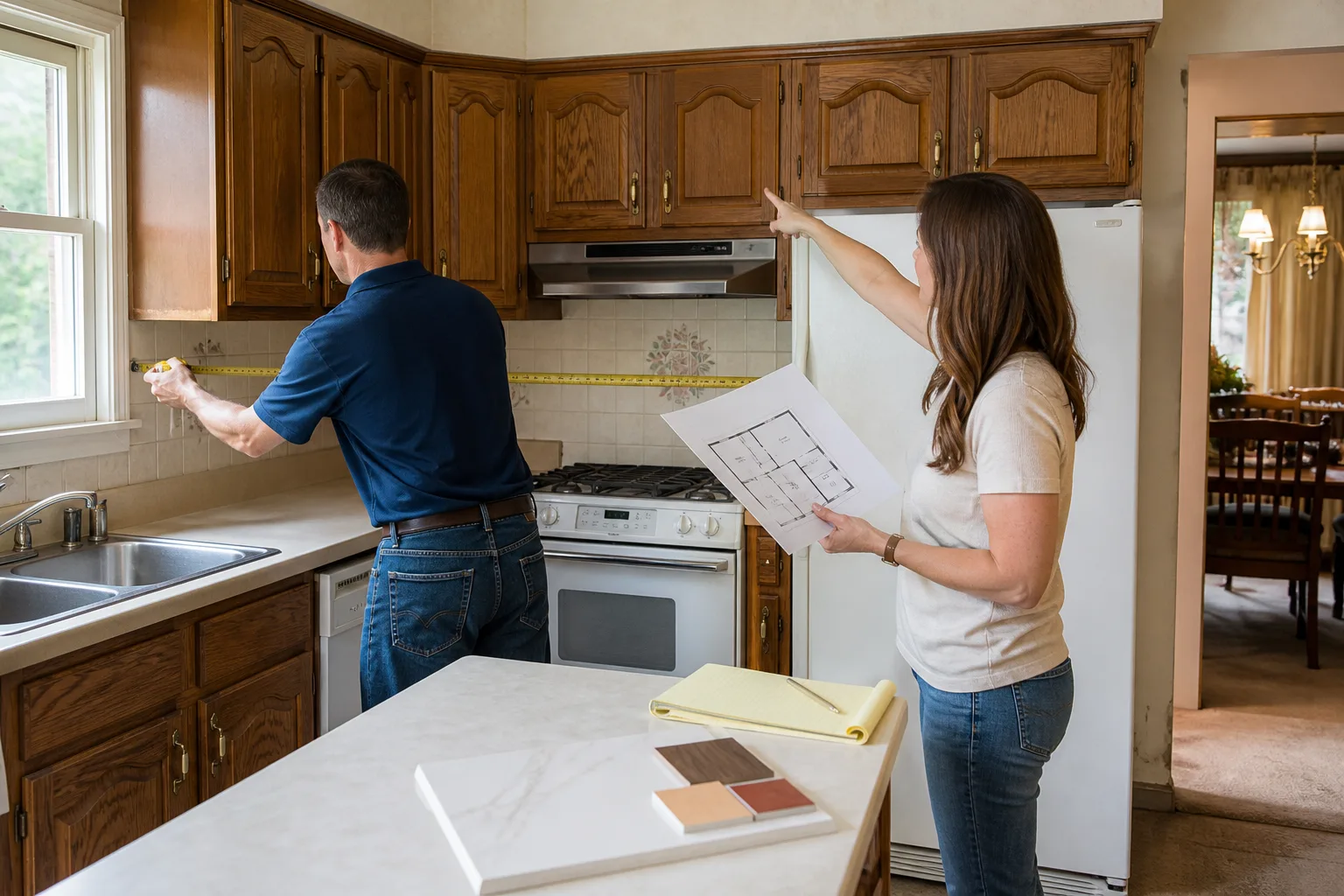
The pre-contract stage is where almost every bad kitchen remodel is decided. By the time a crew is pulling cabinets, the outcome is largely set by what was in writing, or wasn’t, before the first payment. Here’s what we tell homeowners to check in Irvine before committing.
Start with the license. Every California contractor doing a kitchen remodel over $500 must hold an active license with the Contractors State License Board. Ask for the number, then verify it yourself at CSLB.ca.gov. Look for the classification (a general building contractor holds a B license), the expiration date, and whether there’s a disciplinary history. A contractor who dodges the question or says “we’re licensed through our subs” is telling you something important.
Then look hard at the estimate. A real itemized estimate lists cabinets by brand and model line, not just the word “cabinets.” If a quote names a KraftMaid or Wellborn line, or specifies Cambria quartz rather than “countertops,” you can actually compare bids. When every line item is a vague category, the price can move anywhere later.
Finally, check whether the estimate mentions permits for scope that clearly needs them. Moving a wall, relocating a gas line, or changing electrical circuits all require permits in Irvine, and a contractor who waves that away is either cutting corners or planning to.
- License number not provided or not verifiable at CSLB.ca.gov
- Estimate lists categories (“cabinets,” “countertops”) instead of brands and models
- No mention of permits for scope that obviously needs them
- No physical office address or business license shown on request
- Pressure to sign “today” with no time to review the contract
To understand how a straight answer on scope and price should look, our Kitchen Remodeling in Irvine page walks through what a written itemized project plan includes.
Payment Structure Violations and What California Law Actually Says
California caps the down payment on a home improvement contract at 10% of the total price or $1,000, whichever is less. That’s not a guideline; it’s the rule in the Business and Professions Code. Any contractor asking for 30, 40, or 50% down before pulling a permit is operating outside the law, and in our experience that single ask predicts abandonment better than anything else.
The reasoning is simple. A contractor who collects $15,000 up front on a $40,000 kitchen and then runs into trouble has already been paid for work not done. When the money’s spent on the wrong job, the crew stops showing up, and the homeowner is left with a torn-apart kitchen and a contractor who won’t return calls.
The legitimate structure looks like this:
- Deposit: No more than 10% or $1,000 at signing, typically used for permit fees and initial material orders.
- Progress payments: Tied to defined milestones, such as after rough-in passes inspection or after cabinets are set.
- Final payment: A meaningful holdback released only when the job is complete and you’ve inspected the work.
Get the payment schedule written into the contract, milestone by milestone. A written number on day one should be the number on the invoice, and the payment timing should match the work actually delivered. If a contractor asks for most of the money up front, walk. There’s no version of that request that ends well.
When a project hits problems mid-stream, the honest fix is a written change order with its own price, not a check collected off the books. We follow The Kingswell Way on every job: say the price before the work. That applies to the first payment just as much as to the last.
Scope Creep: How Real Contractors Handle “We’ll Know More Once We Open the Wall”
Every kitchen remodel has unknowns behind the drywall. Old galvanized plumbing, undersized electrical, water damage from a past leak. The honest contractors say so up front and build a written contingency allowance into the contract. The warning sign isn’t that unknowns exist; it’s that nobody planned for them in writing.
An open-ended “we’ll figure it out once we open the wall” agreement is how a $30,000 kitchen becomes a $50,000 kitchen with no paper trail. Ask what the contingency allowance is, how it’s calculated, and what happens to unspent money. A written allowance of, say, 10% of the contract value, with clear line items for what triggers a draw, keeps both sides protected.
Here’s how a professional handles a wall opening:
- Demo reveals an unexpected condition, such as a rusted shutoff valve or knob-and-tube wiring.
- You get a written change order with the exact cost and a revised schedule before any of the new work starts.
- You sign, the contingency draw is documented, and work proceeds.
- If the allowance isn’t used, it’s credited back on the final invoice.
The point isn’t to slow down every decision; it’s to make sure the money and the work stay in sync. A verbal “don’t worry, we’ll sort it out” is the language of a nightmare project. For more on how we structure project planning in Irvine, see our General Contractor in Irvine page.
Subcontractor Red Flags That Show Up on Demo Day
The subcontractors who show up on demo day tell you a lot about the company you hired. Some red flags are obvious; others are easy to miss if you don’t know what to watch for. We’ve seen homeowners in Irvine discover on the first morning that the “crew” is actually a parade of strangers with no documented connection to the contractor.
Watch for these:
- Unlicensed subs introduced only on demo day. Ask for the sub’s license number and verify it. Licensed subs carry their own liability insurance; unlicensed ones don’t, and if someone gets hurt on your property, you can end up responsible.
- No proof of insurance. A legitimate electrical sub or plumber carries liability coverage. Skilled trades don’t operate without it.
- Work proceeding without inspections. In Irvine, rough framing, electrical, plumbing, and gas work all require inspection before they’re covered up. A crew that keeps building over un-inspected work is hoping nobody notices.
- Strangers you can’t identify. Background-checked, uniformed technicians who identify themselves are a baseline expectation. If the people in your kitchen could be anybody, that’s a problem.
The best defense is a contractor who brings vetted subs into the plan from the start, with their credentials documented before demo day. If you’re hiring through a Penhallow Remodeling Irvine home project, every person on site has been background-checked and arrives in uniform. That’s the standard we hold, and it’s a reasonable one to hold any contractor to.
Inspections: The Phase-by-Phase Check Nobody Should Skip
Inspections aren’t red tape. They’re the moment a city inspector confirms that the electrical behind your new range can handle the load, that the gas line to your cooktop is properly sealed, and that the rough framing is sound. In a kitchen, skipping or delaying an inspection is one of the most dangerous cost-cutting moves a contractor can make, and it’s hard to undo once the drywall is up.
A legitimate kitchen remodel in Irvine goes through several inspection checkpoints before final sign-off:
- Rough framing and structural: after walls are opened and framing is done, before anything is covered.
- Electrical rough-in: after circuits are wired, before drywall.
- Plumbing and gas rough-in: after lines are run and pressure-tested.
- Insulation: after the walls are insulated, before drywall goes up.
- Final inspection: after everything is installed and functional.
Ask your contractor to show you the inspection cards and to walk you through each pass. If someone says “the inspection got delayed, we’ll do it later” or “we don’t need one for that,” that’s a flag. Work that got covered up before an inspector saw it is work nobody can verify. In our experience, kitchen failures that show up months later often trace back to an inspection that never happened.
What a Real Written Guarantee Looks Like for a Kitchen Remodel
A business card with “satisfaction guaranteed” printed on the back isn’t a guarantee. A real kitchen remodel guarantee is a written document that spells out what’s covered, how long it lasts, and exactly what the contractor is obligated to do if something fails. At Penhallow, every project carries our 365-Day Done Right Promise, which means that if the work fails within the guarantee period, we come back and fix it at no charge. That’s written down, not promised verbally.
When you review a guarantee, check these elements:
- Coverage term: 365 days from completion is a common standard for labor and installation. Manufacturer warranties on cabinets or stone generally run longer and are separate from the labor guarantee.
- Scope: which failures are covered (installation defects, leaks, gaps, hardware issues) and which aren’t (damage from misuse, water leaks from an unrelated source).
- Obligation: what the contractor commits to do if something fails, whether that’s a return visit, a repair, or a replacement, and whether there’s a charge or a re-inspection fee.
- Return policy: a free return visit if the repair fails should be explicit and in writing.
Don’t confuse brand warranties with a labor guarantee. Cambria quartz carries its own warranty on the stone; the labor and installation behind it is where a written guarantee matters most. Think of them as layers of protection, and know which layer sits with whom.
This is why we don’t hand over a verbal estimate and an oral promise. If you’re planning a kitchen project and want to see what a written guarantee looks like, Bathroom Remodeling in Irvine follows the same standard, and either project can be quoted the same way.
What a Kitchen Remodel Should Cost in Irvine
A kitchen remodel in Irvine typically runs $18,000 to $55,000 depending on layout, cabinet line, and countertop material. A moderate-sized galley kitchen with semi-custom cabinets and quartz counters lands in the $32,000 to $42,000 range more often than not. A larger Irvine home with a full redesign, moves to walls or utilities, and a premium cabinet line can easily run past $60,000.
Here’s a rough breakdown of where the money goes:
- Cabinetry: $8,000-$22,000 for a semi-custom line; stock and high-end custom sit outside that range.
- Countertops: $3,000-$8,000 for granite or quartz depending on square footage.
- Labor and installation: $9,000-$18,000, typically the single biggest line item.
- Permits and inspections: $500-$1,500 depending on the scope.
- Appliances and fixtures: varies widely, and usually the biggest swing factor.
What drives costs up in Irvine specifically: the city’s requirements on structural work, the age of the housing stock (a 1970s home often needs electrical and plumbing updated along with the kitchen), and the level of finish you choose for countertops and cabinetry. Homes in neighborhoods like Woodbridge, Turtle Rock, and Northpark often have plumbing and electrical that hasn’t been touched in decades, which is where a well-planned contingency earns its keep.
The single best protection against a cost blowup is a written, itemized price before any work starts. That protects you more than any verbal estimate, no matter how good the contractor’s references are.
Common Mistakes to Avoid
- Paying more than 10% or $1,000 as a deposit. Most homeowners don’t realize this is a legal limit in California. A contractor asking for half up front is either unaware of the law or ignoring it, and neither is good.
- Comparing bids without line-item detail. A $28,000 bid and a $34,000 bid aren’t comparable if one includes KraftMaid cabinets and Cambria counters and the other just says “cabinets” and “countertops.” Compare the actual materials and you’ll usually see where the difference comes from.
- Trusting a verbal change order. In Irvine, we’ve seen more budgets break on an unwritten verbal agreement than on any single material cost. If it isn’t in writing with a price, it isn’t real.
- Skipping the inspection check. Ask to see the inspection cards and confirm each phase was signed off. A contractor who can’t produce them is a contractor you should stop paying.
- Accepting a business-card guarantee. Get the coverage in writing with a duration, scope, and the contractor’s obligation spelled out.
- Choosing the lowest bid. The lowest bid on a kitchen is often the one with the most room to grow after demo day. Look for the most honest written scope, not the smallest number.
- Not verifying the sub’s license and insurance. A few minutes on the CSLB website before demo day can save months of headaches later.
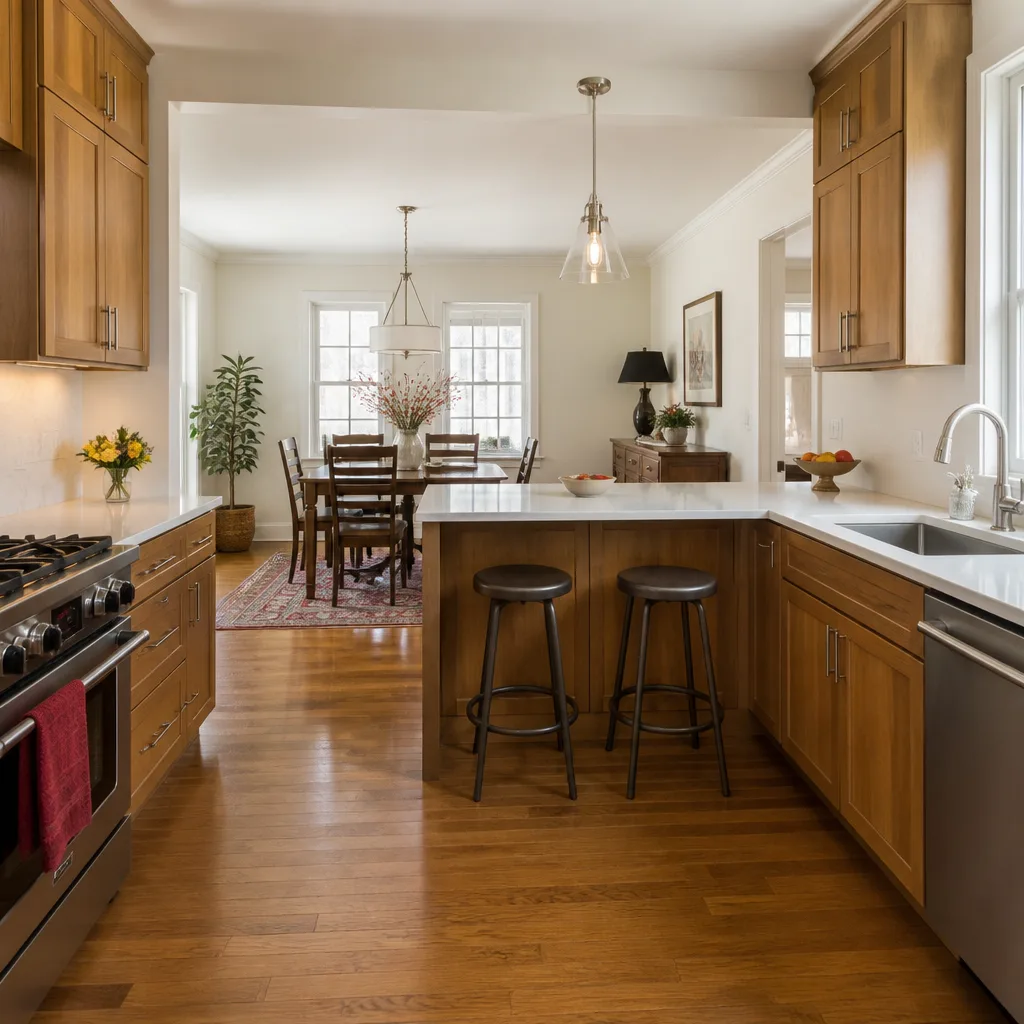
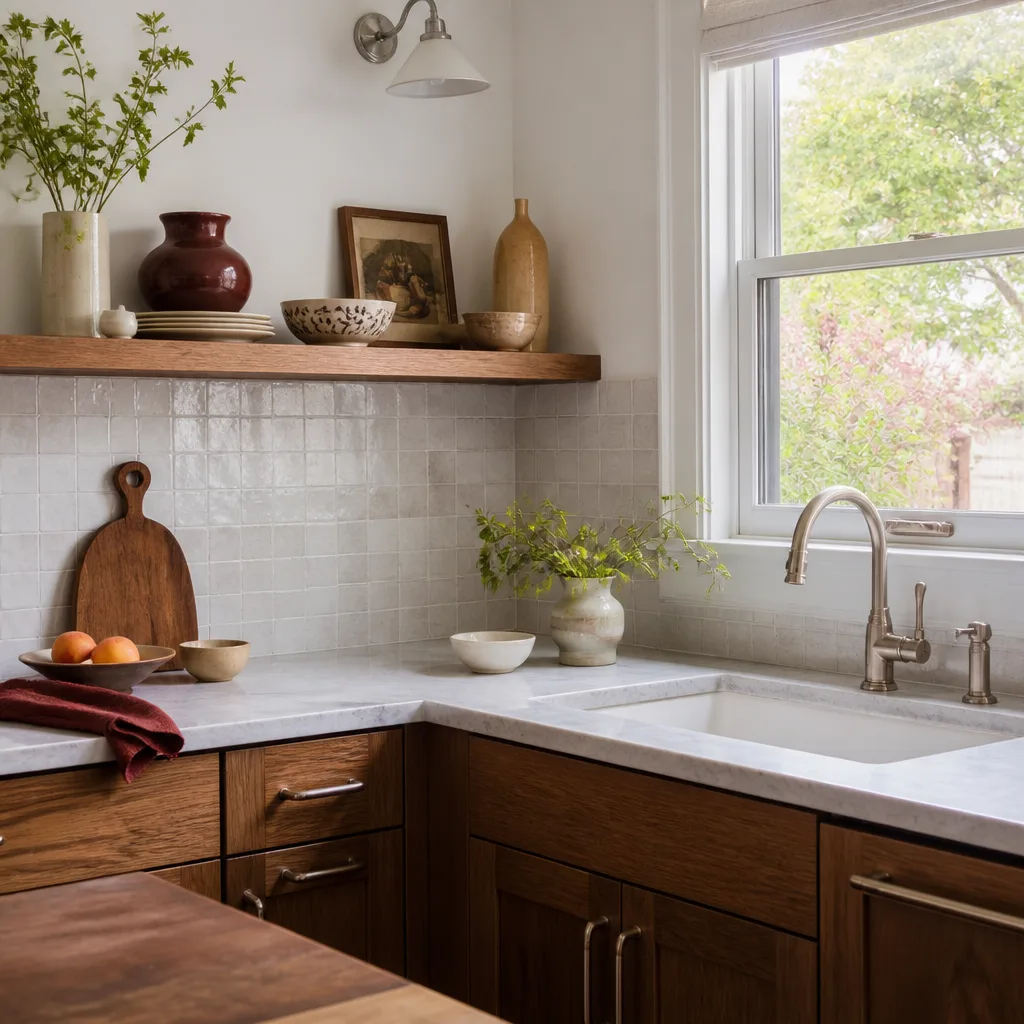
See the difference
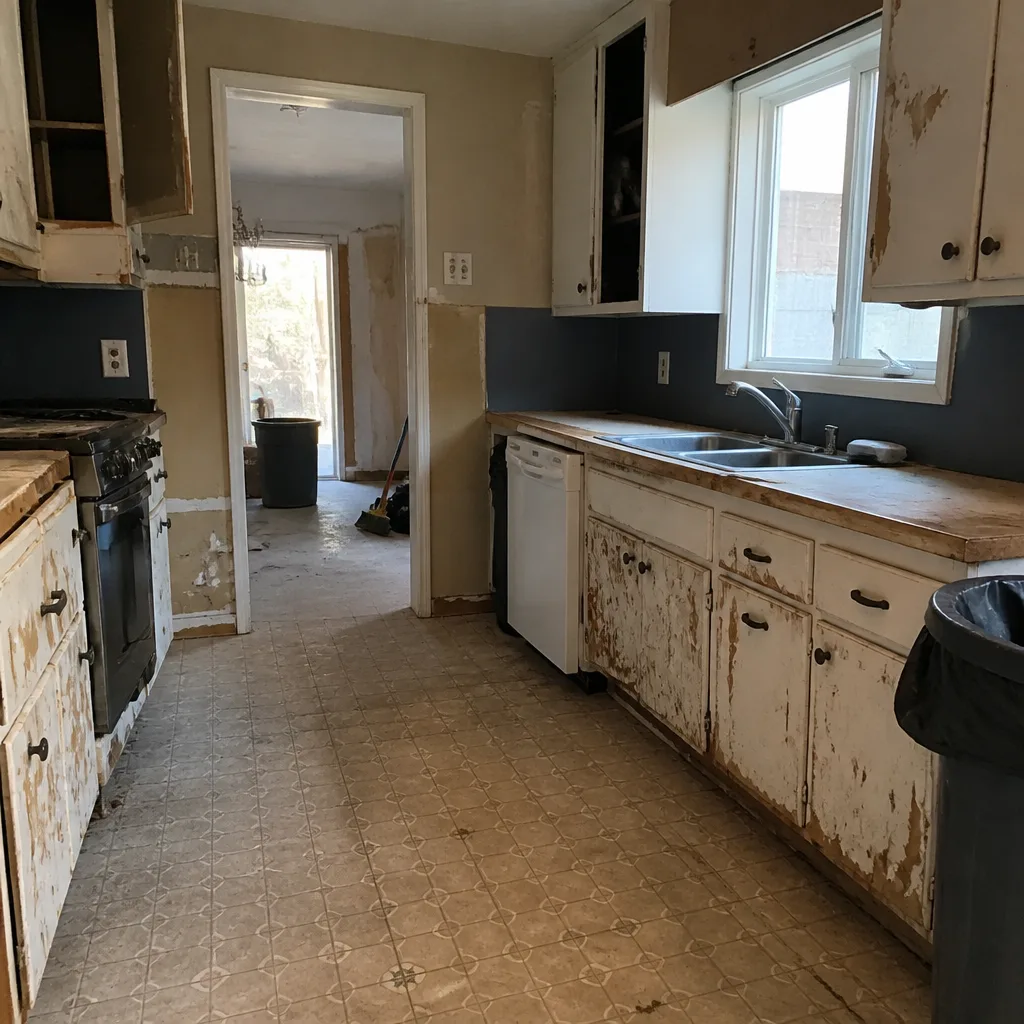 Before
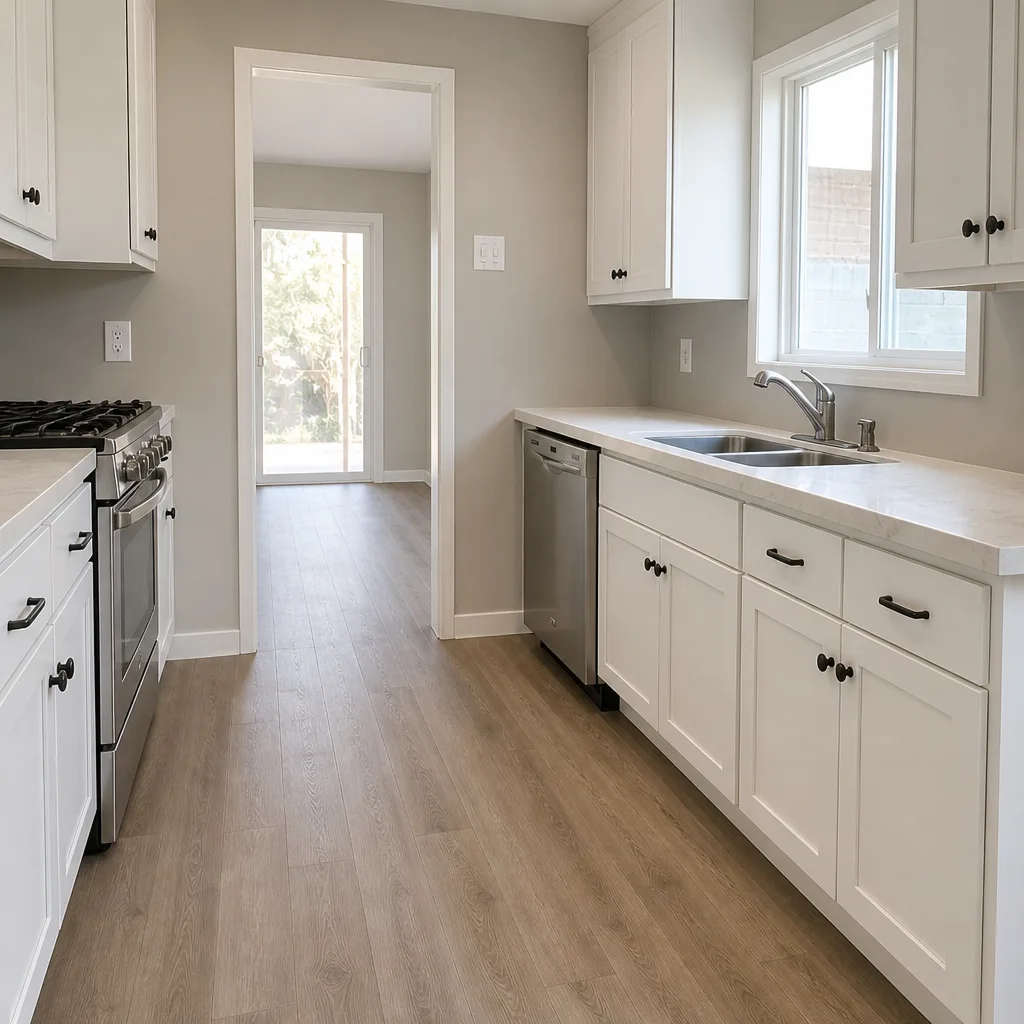 After
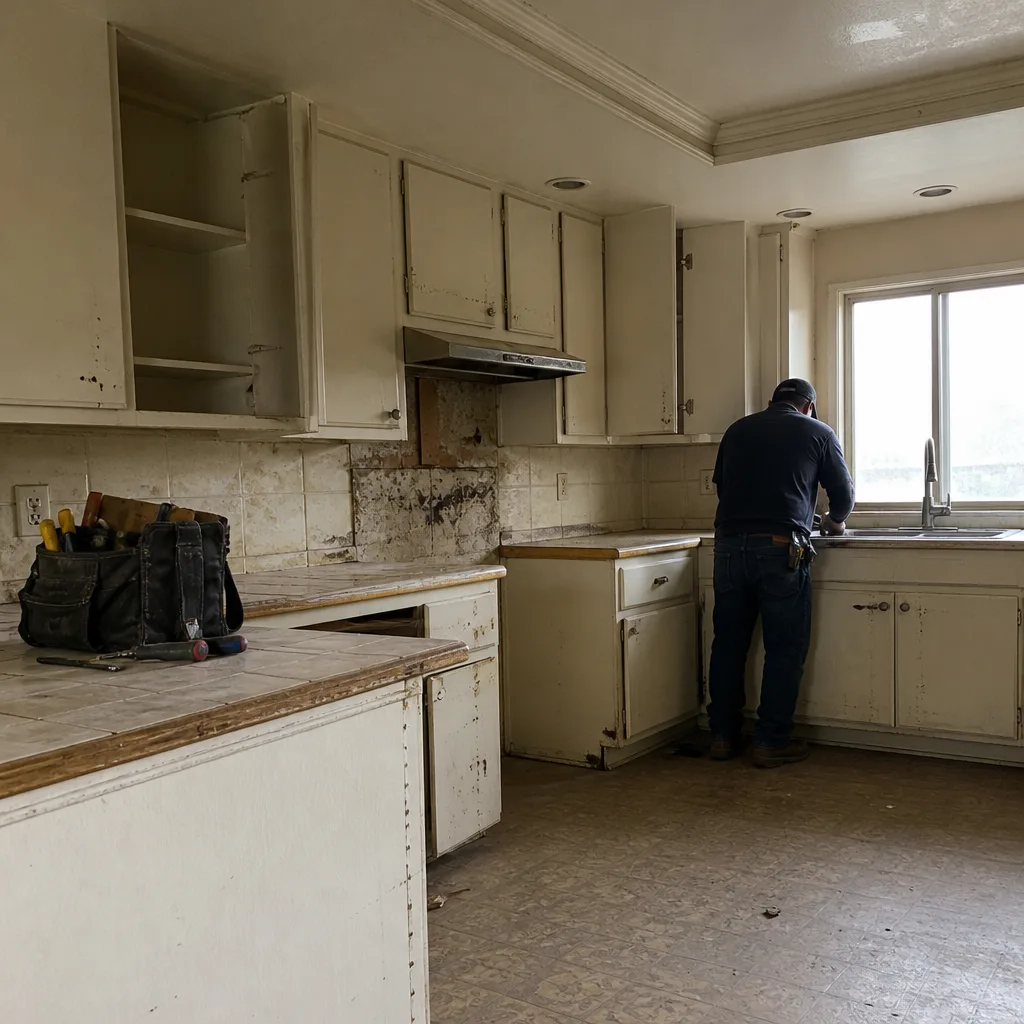 Before
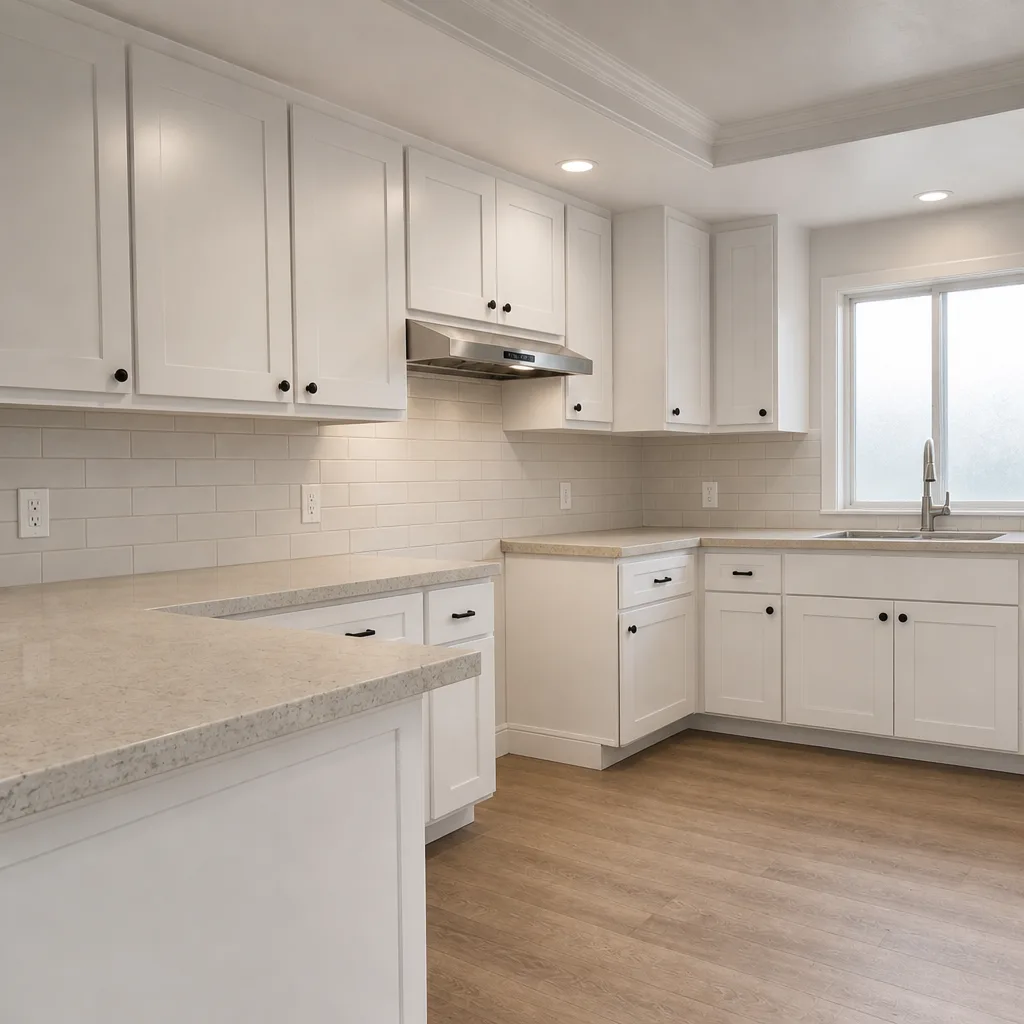 After
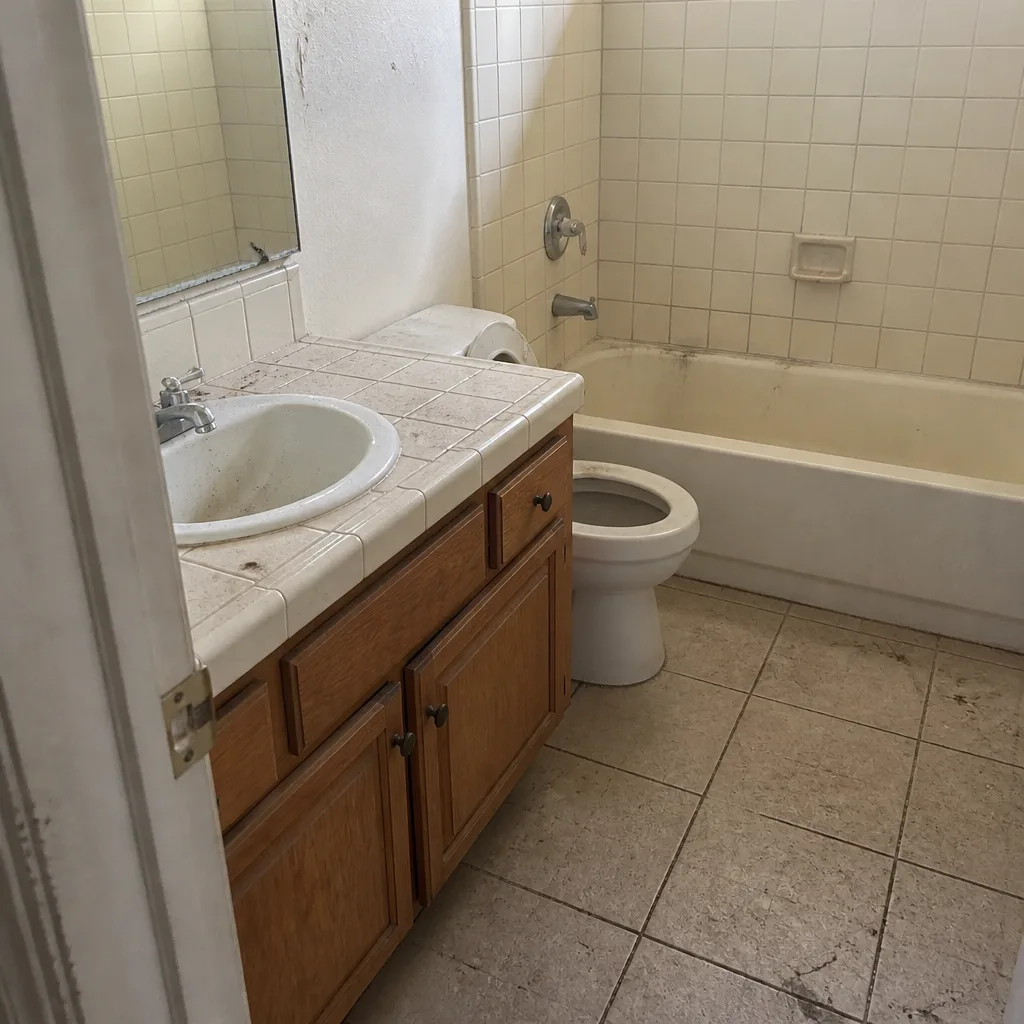 Before
 After
When to Call a Professional
If any of these situations is familiar, it’s worth getting a second opinion before you write another check. You’ve been asked for a deposit above 10% or $1,000. Your contractor can’t produce an inspection card for a phase that’s already been covered. You’ve found a sub on site who isn’t licensed, or you can’t verify their insurance. A wall opening was met with “we’ll sort out the price later.” Requests for warranty coverage have gone unanswered. A kitchen remodel that’s stalled mid-project with cabinets in the garage and no crew in sight. Call a licensed general contractor to review what’s been done and what it will take to finish.
Penhallow Remodeling Irvine offers free estimates in Irvine with a written itemized price and a written guarantee before any work starts. Call (888) 704-4104 to schedule your free estimate.
Frequently Asked Questions

The biggest red flag is a deposit request above 10% or $1,000, whichever is less. California law caps the down payment on home improvement contracts at that amount, so a contractor asking for 30% or 50% up front is violating the rule and signaling that they may abandon the job mid-project. Call (888) 704-4104 for an exact quote on your project, and estimates are free.
Go to CSLB.ca.gov and search the contractor’s license number. Check that the license is active and current, that the classification covers the work (a general building contractor holds a B license), and that there are no disciplinary actions on file. A legitimate contractor will hand you the number without hesitation. Call (888) 704-4104 to schedule a free estimate with a contractor whose license you can verify.
Only with a written change order that you sign before the additional work begins. “We found something in the wall” is not a valid reason to change a price verbally; it’s a reason to issue a written change order with the new cost documented. A well-planned project has a contingency allowance built in so unexpected conditions are covered in advance. Call (888) 704-4104 to see how a written price on day one stays the price on the invoice.
A typical kitchen remodel in Irvine takes six to ten weeks from demolition to final inspection, depending on the scope. Projects that move walls or relocate plumbing run closer to the ten-week end; a straightforward cabinet and counter swap can run closer to six. The single biggest driver of delays is inspections and permitting, which is another reason a contractor who skips them is a serious problem. Call (888) 704-4104 to talk through the timeline for your kitchen.
A written guarantee should state the coverage term (typically 365 days on labor and installation), the specific failures it covers, and exactly what the contractor will do if something fails inside that period. It should also include a free return visit if an initial repair fails. Manufacturer warranties on cabinets and countertops are separate; a real guarantee covers the labor behind them. Call (888) 704-4104 about our 365-Day Done Right Promise on every project.
You can file a complaint with the CSLB, which has a recovery fund for homeowners harmed by licensed contractors, but recovering money can take time. The best protection is prevention: never pay more than 10% or $1,000 up front, tie progress payments to milestones, and keep a written contract. If your project has stalled in Irvine, call (888) 704-4104 for a free estimate to finish what’s been started.
The Bottom Line
Almost every kitchen remodeling disaster is visible before the first cabinet gets delivered, and the signs repeat so often they’re nearly predictable. An illegal deposit, a license you can’t verify, vague line items, verbal change orders, unlicensed subs, skipped inspections, and a guarantee that’s only a business card. Each one on its own is worth a pause; two or more together should stop the project before it starts. A written itemized price and a written guarantee are the two documents that separate a straight contractor from a bad one, and both should exist before you sign. If you’re planning a kitchen project in Irvine and want to see what that looks like in practice, call Penhallow Remodeling Irvine at (888) 704-4104 to schedule your free estimate. We put the number and the guarantee in writing before any work starts.
Written by the team at Penhallow Remodeling Irvine.