Last updated November 18, 2026






Free written scope consultation - allowances, timeline, and change-order rules on paper before a single trade is scheduled
Seasonal Construction Care for Irvine: Year-Round Homeowner’s Guide
Irvine averages only about 13 inches of rain a year, but because that rain falls in concentrated windows, drainage systems that look fine in September fail visibly in January. The fix always costs more than the inspection would have. That’s the counterintuitive part about living here: our mild climate is exactly why so many homeowners skip seasonal checks. There’s no dramatic freeze to force the issue, no snowmelt to test the gutters, no obvious cue that says look at your exterior now. Instead, the marine layer in June and July, the Santa Ana dry heat in fall, and the El Niño rain windows in winter each stress different parts of a home, quietly and in combination, until the day they don’t. This guide walks you through what to check, when to check it, and how to record it so the work holds up and any future warranty or insurance claim stays clean. It’s written for Irvine homeowners who’d rather price a fix on their own terms than discover one mid-storm.
Quick Answer
Seasonal construction care in Irvine means checking five things on a calendar, not waiting for damage: exterior caulk, glazing and stucco before the June Gloom marine layer; roof vents, attic insulation and exterior wood trim before Santa Ana season; drainage and lot grading before the winter rain windows; and decking, painted surfaces and skylights for UV wear through the summer. Each check is a two-to-three hour walkthrough, done before the season arrives. The point is to catch the small, cheap failure before the climate turns it into an expensive one.
Styles & brands we work with
- Kitchen remodeling
- Bathroom remodeling
- Home additions & ADU
- Roofing
- Windows & doors
- Driveway & pavers
- Fence
Table of Contents
- June Gloom: What the Marine Layer Does to Irvine Exteriors
- Santa Ana Season Prep for Roof Vents, Attic Insulation and Wood Trim
- The Pre-Rainy Season Drainage Audit for Irvine Lots
- Summer UV Damage on Decks, Paint and Skylights
- How to Calendar Your Checks (and Keep a Written Record)
- Exterior Repairs: What to DIY vs. What to Hand Off
- Common Mistakes to Avoid
- Frequently Asked Questions
June Gloom: What the Marine Layer Does to Irvine Exteriors
June Gloom is the local name for the low marine-layer cloud cover that settles over Irvine from late May through July, keeping mornings cool and damp and afternoons only moderately warm. Homeowners feel it as a few weeks of gray mornings. What the exterior of your house feels is something else: prolonged humidity with almost no drying sun, cycling every twelve hours, for roughly six to eight weeks.
The parts of a home that suffer most are the ones on west-facing elevations, because they catch the marine push as it moves inland off the coast. Three categories in particular:
- Exterior caulk. Standard latex-based exterior caulk softens under that kind of sustained moisture and begins to pull away from the joint. Once it’s lost its bond, it stays lost even after the air dries out.
- Window glazing. The sealant and gaskets around window frames absorb the moisture cycle. Small breaks there let water track behind the trim into the wall cavity, which doesn’t show up until the drywall bubbles months later.
- Stucco hairline cracks. Every stucco house gets them. In Irvine’s older neighborhoods and in the west-facing elevations of newer builds, the June Gloom cycle drives moisture into cracks that looked purely cosmetic in April. Freeze-thaw isn’t the mechanism here; the real culprit is constant wetting and slow drying without enough sun to bake the wall out.
When to check
Walk the exterior in the two weeks before the marine layer sets in. Look at every caulk joint at windows and doors, run a finger along the glazing, and scan the stucco for cracks wider than a hairline. Cracks that are wider than a credit card edge, or that appear above a window or door frame, are worth a professional look. Small caulk and stucco touch-ups are well within reach of a homeowner with a caulk gun and the right material. Reevaluate again in the fall, once the marine layer has broken and the sun has dried the wall out.
Santa Ana Season Prep for Roof Vents, Attic Insulation and Wood Trim
The Santa Ana winds come in the fall and early winter: hot, dry, offshore, sometimes 40 to 70 mph at ridgelines. For an Irvine house, the risk isn’t usually wind damage on the scale of a hurricane. It’s the combination of dry, hot air and high wind speed, which turns small failures into big ones fast, and does most of its damage to the roof, the attic and the exterior wood trim.
Here’s what to prepare in the four to six weeks before the winds arrive:
- Roof vents. Check ridge and soffit vents for loose fasteners, cracked housings and debris. A vent that’s rattling in a 20 mph breeze is going to lift in a 50 mph gust. You can look from the ground with binoculars; you should not get on the roof to fix one. That’s a licensed roofer or general contractor’s job.
- Attic insulation. Santa Ana winds drive hot air through the attic and, if insulation is thin or has gaps, straight into the living space. A quick check with a flashlight before the season, confirming even coverage and no compressed sections, saves energy costs all winter.
- Exterior wood trim. Look at every fascia board, window surround and door casing. Loose trim that’s still fine in calm weather can become a wind-driven projectile when a Santa Ana gust hits. Any trim that flexes when you push on it should be re-fastened or replaced before the season.
The dry air also strips moisture from exposed wood, opening up cracks and loose joints in a few weeks that would otherwise take a year. If you find yourself replacing fascia or trim, this is where we’d point you toward real material brands like James Hardie for anything that needs long-term durability. Irvine’s dry seasons and marine layer both punish cheap wood.
The Pre-Rainy Season Drainage Audit for Irvine Lots
This is the single most valuable check on the whole calendar. Irvine averages 13 inches of rain, but that rain falls in concentrated windows, mostly December through March, sometimes a whole season’s worth in five or six storms.
Two things about Irvine property make drainage uniquely tricky:
- Flat-to-mild-grade lots. Many Irvine residential lots sit on very gentle grades, which means water doesn’t leave the property quickly on its own. It pools, and it seeks the lowest point. That low point is often right at the foundation, at a sideyard gate, or at the edge of a patio slab.
- HOA-managed common-area swales. Many Irvine neighborhoods are built around swales, the shallow drainage channels that run through common HOA land between blocks of homes. When those swales back up (junk, sediment, overgrowth, sometimes a failed HOA maintenance schedule), the water doesn’t stop. It redirects onto the private property behind or beside them. Homeowners often discover this on the third storm of the season, when there’s an inch of water against the back door.
The audit, step by step
- Walk the property line. Confirm where the water from your lot and the neighboring lot goes. If you can’t see a clear path, neither can the water.
- Inspect every low point for debris, leaf litter, or a settled grade problem. Clear the obvious stuff.
- Check the swale behind or beside your property. If it’s on HOA common area and blocked, put a written request to the HOA in advance. Don’t wait for the first storm.
- Look at downspout terminations. Every downspout should discharge at a slope away from the house, ideally into a splash block or a buried line. A downspout that dumps at the foundation is the single most common drainage failure we see in Irvine.
- Photograph each finding, dated. This is the record that supports a future claim, and it’s also the paper trail the HOA will ask for if a swale issue turns into a dispute.
Once you’ve identified the problem, a real fix (regrading, a French drain, proper hardscape containment) is where a general contractor comes in. If you’re considering hardscape work to solve a drainage issue, we install Belgard and Unilock pavers with proper base preparation, which is where drainage performance is actually built.
Summer UV Damage on Decks, Paint and Skylights
Irvine sits in a high-irradiance solar environment. Summer here is more than warm; it’s a sustained blast of UV over five to six months, and that UV is what quietly ages the outside of a house.
The classic wear pattern is different for each surface:
- Composite decking. Composite boards don’t rot like wood, but they chalk, fade and lose color under sustained UV. The board underneath is fine; the color is what fails. Left unrenewed, even good composite decks look ten years older than they are by year eight.
- Painted surfaces. Southern and western elevations take the most sun. Paint on those faces chalks and fades roughly twice as fast as paint in shaded areas. That’s not a paint-quality problem; it’s a location problem.
- Skylights. The glazing on a skylight is directly exposed to the sun all day. Small cracks, bubbling or hazing on the glazing are early warning signs that the skylight is going to leak in the first real winter storm. Catching that in July is a reseal; catching it in February after the ceiling stains is a drywall-and-insulation repair.
How to check
Walk the deck with a brush test: run a hand across a board in direct sun and see how much pigment comes up. If it’s chalky, the surface is ready for a recoat (depending on the composite manufacturer’s recommendation). For paint, compare a shaded wall to a sun-facing wall; if the sun-facing one is visibly paler, that elevation will need repainting earlier than you might have planned. For skylights, get on the ground and look up at a shallow angle; hazing and small cracks are easy to see from below.
For a deck that needs a full rebuild (rather than a recoat), ActiveYards and similar systems are worth looking at when we spec material. What matters more than the brand is the base preparation and the drainage underneath, because even good composite fails if water sits beneath it.
How to Calendar Your Checks (and Keep a Written Record)
Here’s the honest reality: none of this works unless it happens before the season, not after the damage. So the last piece of the system is a calendar and a folder.
The four-season calendar for Irvine
- Late April / early May: pre-June Gloom check. Exterior caulk, window glazing, stucco hairline cracks. Two to three hours.
- July: mid-summer UV check. Deck, painted surfaces, skylights. Two hours.
- September: pre-Santa Ana check. Roof vents, attic insulation, exterior wood trim. Three to four hours.
- October / November: pre-rainy season drainage audit. Property line, low points, HOA swale, downspouts. Three hours.
What a written record should contain
- The date of each walkthrough.
- Dated photographs of every finding.
- Any HOA correspondence about common-area drainage.
- Receipts and manufacturer documentation for any repair or product installed.
- Any contractor report or written estimate tied to a specific fix.
The record matters for two reasons. It’s the paper trail that supports a future insurance claim (insurers ask for proof of prior maintenance). And it’s the record that supports a warranty claim, either on a product (Cambria quartz and James Hardie both carry their own manufacturer warranties) or on a contractor’s own warranty. If you’re planning a larger repair or remodel and want to talk through what’s involved, you can read more about our Kitchen Remodeling in Irvine and Bathroom Remodeling in Irvine work to see how we document each project from the start. The same discipline applies to a seasonal check.
Exterior Repairs: What to DIY vs. What to Hand Off
Some of this work is a homeowner’s job. Some genuinely belongs to a professional, and using a ladder on a two-story Irvine house is not where you want to learn that line.
Reasonable homeowner work
- Recaulking window and door joints at grade level.
- Clearing leaf litter from low points and gutter outlets.
- Taking photos and keeping the maintenance folder current.
- Painting a shaded or ground-level area with proper exterior material.
Hand off to a professional
- Any work on a roof, skylight or second-story elevation.
- Any stucco repair beyond a hairline touch-up.
- Regrading a lot, installing a French drain or re-specifying hardscape.
- Any repair that involves opening a wall cavity or a ceiling (to chase a leak, for example).
- Trim or fascia re-fastening on any elevation above the first floor.
We’ve seen Irvine homeowners save real money by handling the ground-level caulking and gutter clearing themselves. We’ve also seen the other version: a homeowner on a ladder at the roofline in Santa Ana winds, which is a genuine safety risk and never worth the savings. Work above the first story belongs to a licensed professional. For exterior trim, fascia, deck replacements or hardscape, we install materials from ActiveYards, Belgard and similar lines. For a deeper look at how a general contractor can help, see our General Contractor in Irvine page.
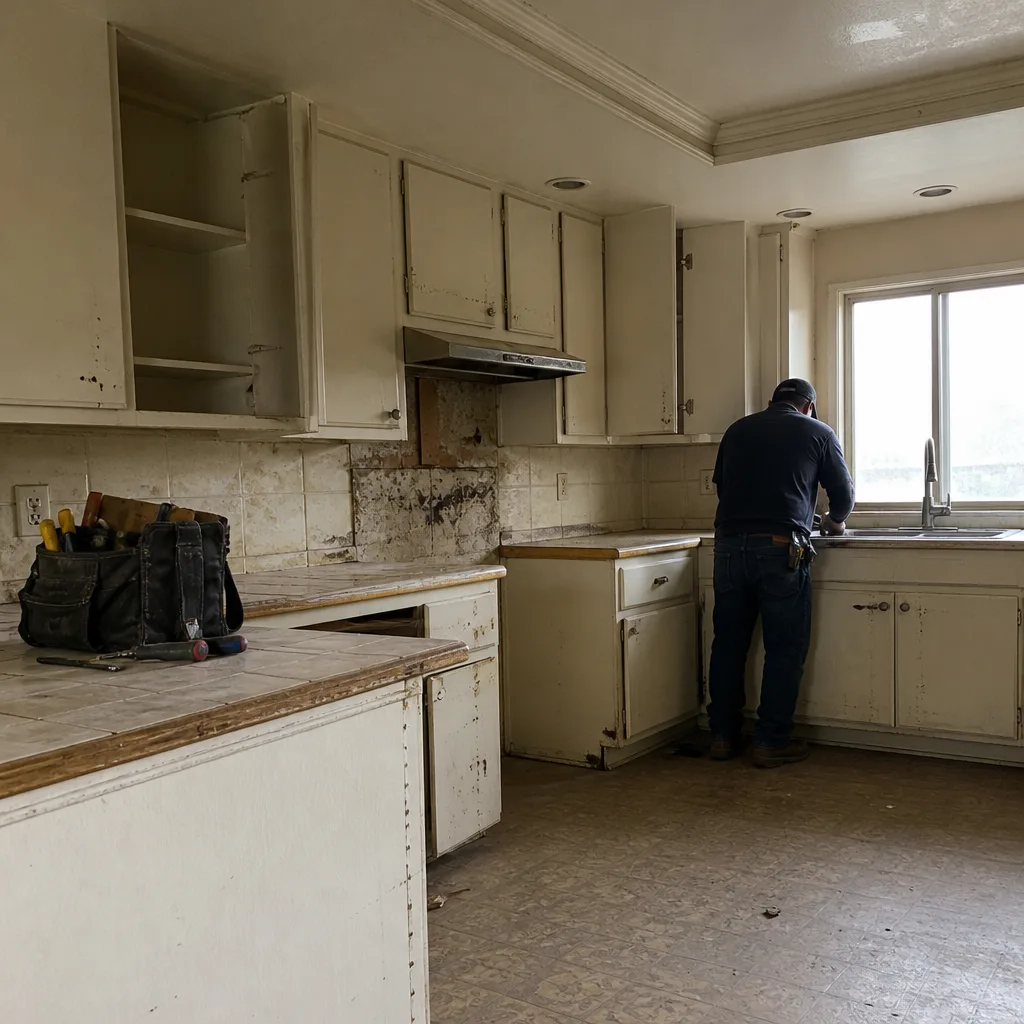
See the difference
 Before
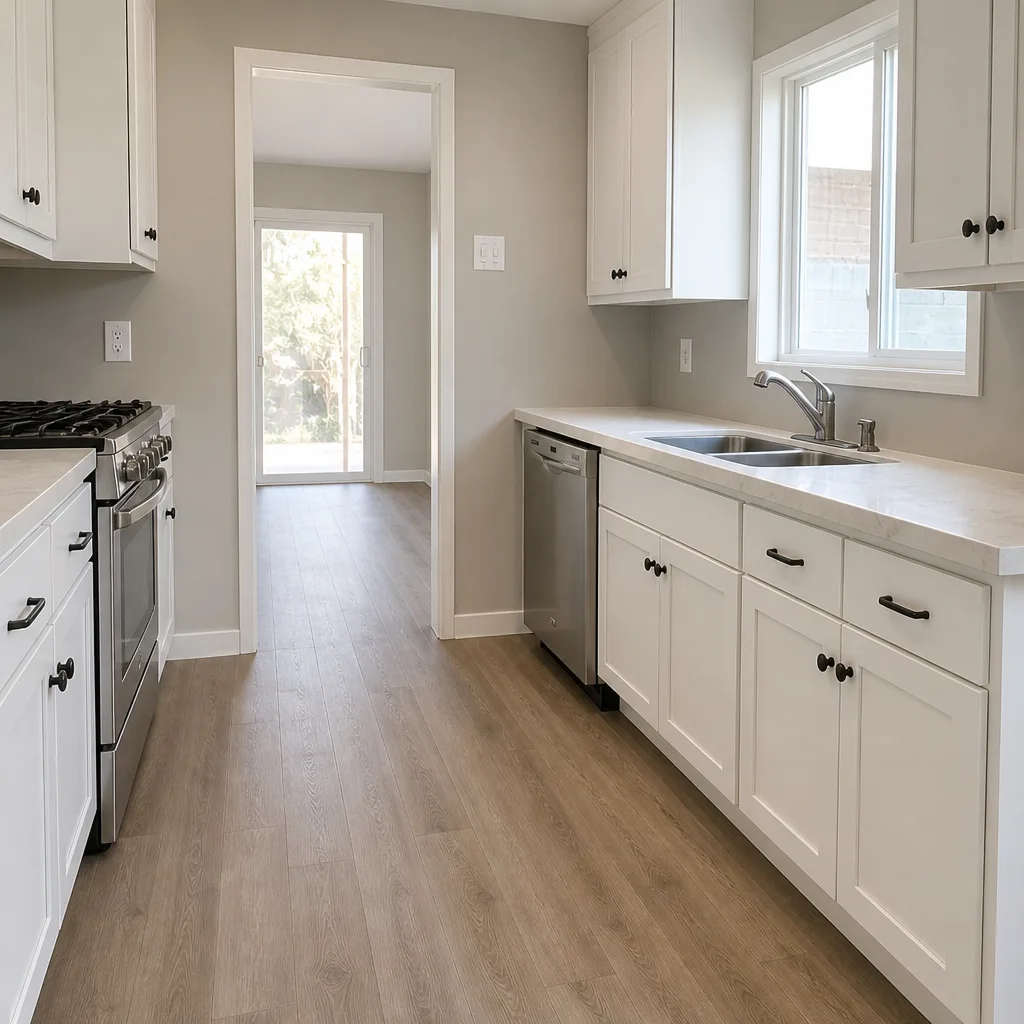 After
 Before
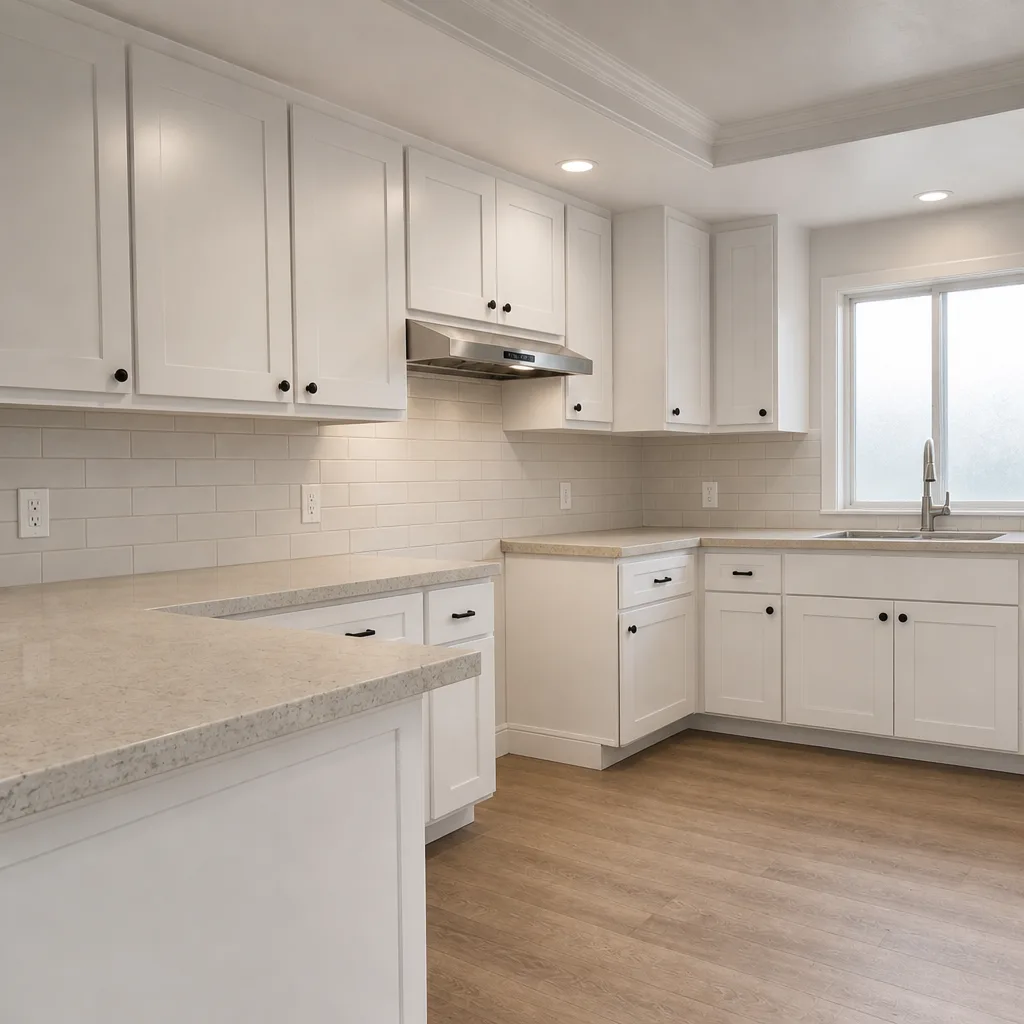 After
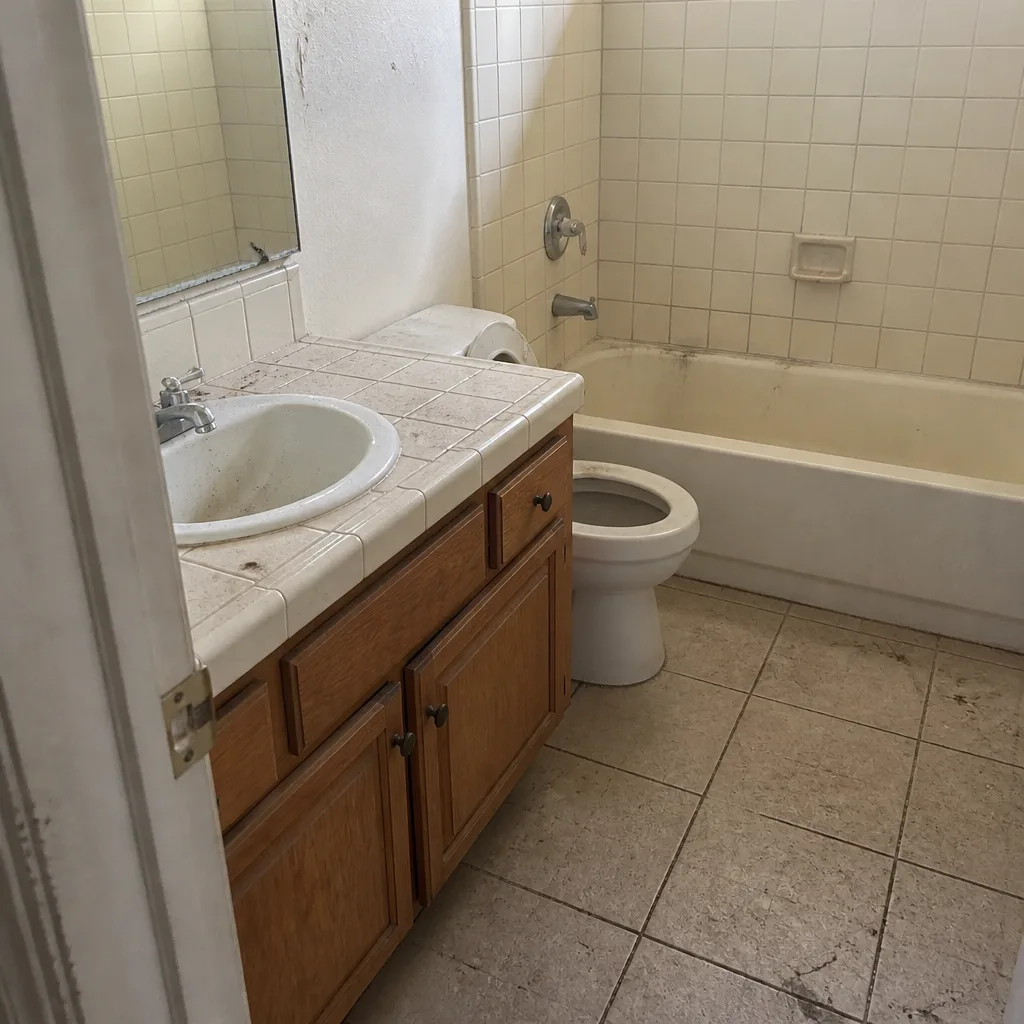 Before
 After
Common Mistakes to Avoid
- Skipping the check because the season “doesn’t matter” here. Mild climate is exactly why maintenance gets skipped. The June Gloom and Santa Ana seasons do as much damage as a freeze, just more slowly.
- Running a visual drainage check in September and calling it done. A system that looks fine dry can fail in the first real storm. Fall is the right time to test, not summer.
- Waiting until the HOA swale backs up before contacting the HOA. Put the request in writing in October. HOA common-area maintenance has its own schedule, and you want to be on it before the storms.
- Recaulking without removing the old caulk first. New caulk over failing caulk loses its bond in one season. Strip it back to clean joint.
- Assuming the composite deck is maintenance-free. Composite doesn’t rot, but UV chalk is real, and a faded deck is a liability on resale.
- Skipping the photo record because the check “went fine.” The record is the whole point. When a warranty or insurance claim comes up, the maintenance photo file is what proves the care.
- Getting on the roof in Santa Ana winds. A 50 mph gust plus a 2-story drop is not a small risk. Use binoculars to inspect; call a professional to fix.
When to Call a Professional
Call when the work is above the first story, involves opening a wall cavity or ceiling, needs a roof or skylight repair, or requires real drainage regrading. Call also when a stress crack in stucco is wider than a credit card edge, when window glazing shows visible separation, or when a fascia board flexes to finger pressure. These are the cases where a quick fix by an untrained hand tends to fail again in the next season. Penhallow Remodeling Irvine offers free estimates in Irvine. Every project gets a written price before any work starts, and every job is backed by our 365-Day Done Right Promise. Call (888) 704-4104 to schedule.
Frequently Asked Questions
Four times a year, once per season, with the check timed to the season that’s about to arrive rather than the one that just passed. The spring check focuses on caulk and stucco before June Gloom; the summer check on deck and paint; the fall check on roof vents and trim before Santa Ana; the winter check on drainage. Two to four hours each check is realistic for a single-family home in Irvine.
June Gloom keeps morning air damp and afternoons mild, so exterior caulk stays soft for six to eight weeks and slowly pulls away from joints. Once caulk loses its bond, it doesn’t regain it when the air dries out. The fix is to check and touch it up before the marine layer sets in, not after. Call (888) 704-4104 for a free inspection if you’re not sure what you’re looking at.
Yes, and arguably more than wetter cities, because 13 inches here falls in concentrated storms. A drainage system that looks fine in September can fail in January. The audit checks the property line, low points, HOA swales and downspout discharges before the storms arrive. Call (888) 704-4104 to schedule a free estimate for any drainage or hardscape fix.
Yes, if the roof hardware is loose or the trim is unchecked. Santa Ana winds are hot and dry, and they lift any vent, fascia board or trim that’s already compromised. A four-to-six-week pre-season check catches loose hardware before the winds do. We don’t recommend checking your own roof above the first story; call us at (888) 704-4104 for a free inspection.
Visible chalking typically appears by year six to eight in full summer sun. The structural board stays sound for far longer, so what fails first is the surface color. Recoating earlier extends the useful life of the deck. If the deck is beyond recoating, a replacement in a system like ActiveYards or similar is worth pricing. Call (888) 704-4104 for a free estimate.
Not with us. Every Penhallow project gets a written price before any work begins. That written price is what you’re held to, and what we’re held to. It’s not an estimate range or a verbal ballpark; it’s a number in writing, so the number on day one is the number on the invoice. Call (888) 704-4104 for a free written estimate.
The Bottom Line

Irvine’s mild climate is a gift, but it hides seasonal damage instead of preventing it. The June Gloom marine layer softens caulk and window glazing on west-facing elevations. Santa Ana winds turn loose roof vents and fascia into real risk. The winter rain windows expose drainage problems that were invisible in September. Summer UV quietly ages composite decks, painted surfaces and skylights. The fix for all of it is the same: four calendar checks a year, a dated photo record, and a professional on the line for anything above the first story or inside a wall. Do that, and you’ll catch the cheap problems before they become expensive ones. Talk to us about our Penhallow Remodeling Irvine home page, or better, call (888) 704-4104 for a free estimate.
Written by the team at Penhallow Remodeling Irvine.