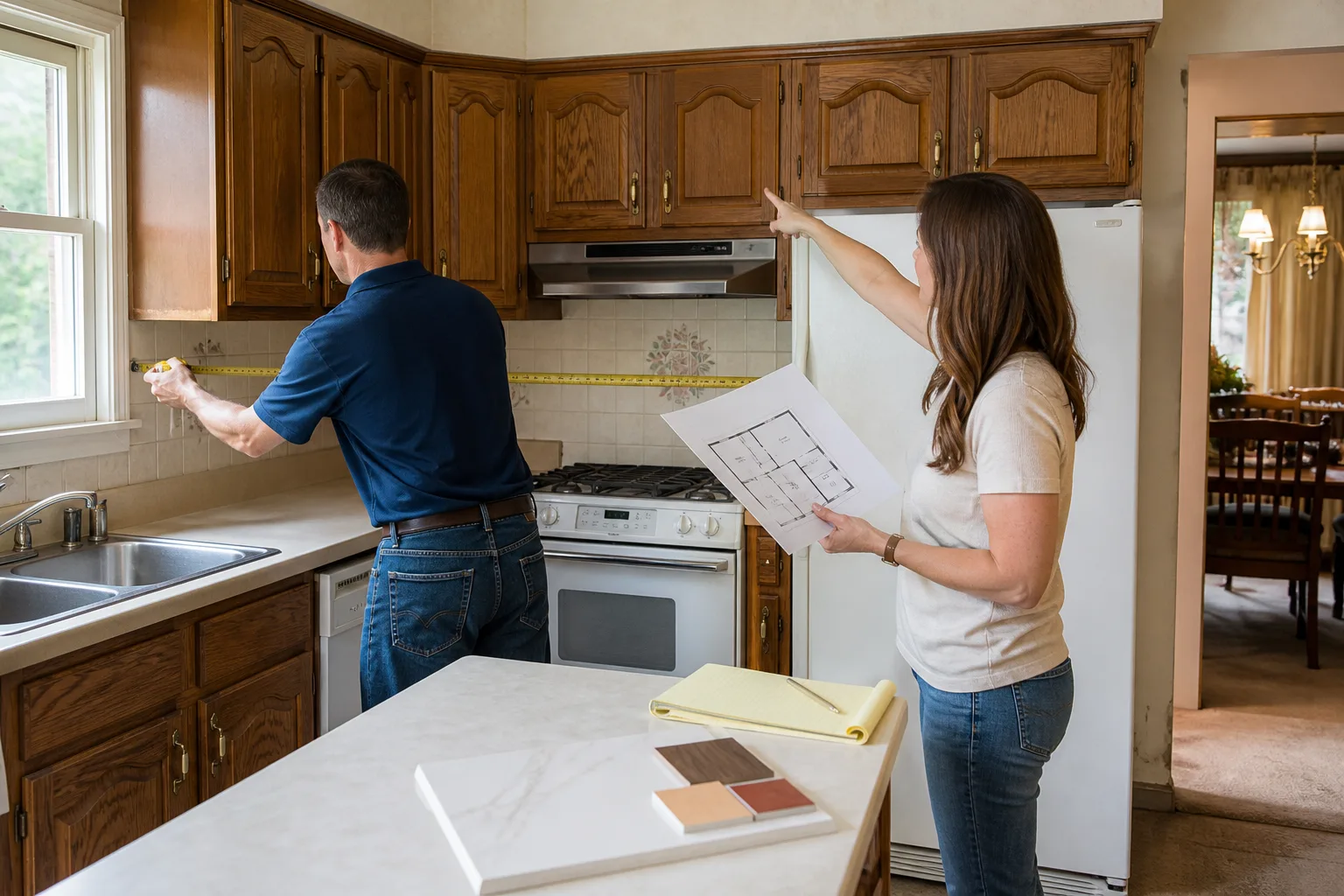
Last updated November 18, 2026








Free written scope consultation - allowances, timeline, and change-order rules on paper before a single trade is scheduled
DIY vs Professional Kitchen Remodeling: What’s Safe to Do Yourself
Painting your new cabinet doors yourself will save you money and risk almost nothing. Moving a gas line two feet to fit your new range position, even if you’re fairly sure you know how, can void your homeowner’s insurance if something goes wrong. The line between those two tasks is clearer than most DIY guides admit, and it isn’t drawn by skill level. It’s drawn by permits, warranty coverage, and the hidden structural risk that costs three times as much to fix after the fact. This guide names exactly which tasks a capable Irvine homeowner can own and which ones carry consequences that outlast the project.
Styles & brands we work with
- Kitchen remodeling
- Bathroom remodeling
- Home additions & ADU
- Roofing
- Windows & doors
- Driveway & pavers
- Fence
Quick Answer
Safe DIY kitchen tasks are cosmetic and reversible: painting walls and ceilings, swapping cabinet hardware, installing plug-in appliances, and demo of non-load-bearing elements. Tasks that touch gas lines, electrical circuits, plumbing supply or drain lines, or the structural envelope require licensed trade work and permits in California. Anything on a permitted scope must pass inspection even if you did it yourself, so DIY in the wrong spot can stall your whole remodel.
Table of Contents
- The Real Line Isn’t Skill, It’s Consequence
- Tasks That Are Genuinely DIY-Safe
- Tasks That Require Licensed Trade Work in California
- The Permit Consequence Most Homeowners Miss
- How DIY Scope Affects a Contractor’s Written Guarantee
- The Honest Cost Math: Does DIY Actually Save Money?
- Demo Day: What Looks Easy and Isn’t
- Common Mistakes to Avoid
- When to Call a Professional
- Frequently Asked Questions
- The Bottom Line
The Real Line Isn’t Skill, It’s Consequence
Most DIY-versus-hire advice frames the decision as a skill question. Do you trust yourself with a saw? Can you follow a tutorial? That framing is why so many remodels in Irvine go sideways. The better question is: if this task fails, what does the failure cost? A botched paint job costs a weekend and a gallon of paint. A botched gas connection can cost your insurance coverage. Those two failures live in completely different categories, and the skill required to attempt each one tells you nothing about which category it belongs in.
We’ve walked into Irvine kitchens after a homeowner’s partial remodel and seen the same pattern repeat: someone capable and careful did work they were entirely able to do, then lost weeks and thousands of dollars because the work sat inside a permit scope and failed inspection. The task wasn’t beyond them. The consequence was.
So the way to think about your own kitchen is to sort every task on your list by what happens if it goes wrong:
- Reversible and cosmetic: wrong here costs a redo of hours and a small amount of material.
- Reversible but inspected: wrong here costs a failed inspection and a schedule delay.
- Irreversible and life-safety: wrong here threatens the home, the insurance policy, or the people in it.
Categories one and two are where DIY lives. Category three is where a licensed professional earns their rate, and no amount of confidence changes that.
Tasks That Are Genuinely DIY-Safe
These are the jobs we routinely tell Irvine homeowners to keep for themselves when they want to save money. They’re honest savings with no permit exposure and no warranty conflict.
- Painting walls and ceilings before install. Do this after demo and before cabinets go in. Painting behind a cabinet you’ll never see again is wasted effort, but the visible wall above and beside the new run should be finished before the boxes are hung. It’s easier, cheaper, and cleaner than painting around installed cabinetry.
- Demo of non-load-bearing elements. Pulling old upper cabinets, removing a tired backsplash, tearing out a dated peninsula, and stripping hardware are all fair game, with the caveats in the demo section below.
- Hardware swaps. New pulls, knobs, and hinges on existing boxes are a genuine DIY win. Measure your drill spacing twice; a misplaced hole in a finished door is the one error that isn’t fully reversible.
- Appliance installation for plug-in units. A standard plug-in range, a countertop microwave, or a dishwasher on an existing dedicated circuit and existing water hookup can be set in place by a careful homeowner. Anything that requires a new connection is a different story.
- Punch-list cosmetics. Caulking, touch-up paint, grout sealing, and adjusting door alignment on installed cabinets.
Notice what these have in common: none of them require opening a wall, cutting a line, or touching the electrical panel. That’s the boundary. When our team quotes a kitchen remodel, we’re happy to carve these tasks out of the scope and price accordingly. You keep the savings; we keep the work that carries the guarantees.
Tasks That Require Licensed Trade Work in California
This is the list that matters, and it’s where a surprising number of homeowners get into trouble. In California, the following kitchen tasks require licensed trade work, and in most cases a permit pulled by the responsible party:
- Any gas line relocation or connection. Moving your range two feet, swapping a gas cooktop for a different model, or converting from electric to gas all involve the gas system. This is the single most consequential task on a kitchen list and the one we most often see homeowners consider doing themselves. Don’t. A gas leak isn’t a repair problem, it’s a life-safety event, and unpermitted gas work can affect your homeowner’s insurance if there’s a claim.
- Electrical panel work and any new circuit run. Adding a dedicated circuit for a new range, installing under-cabinet lighting that requires new wiring, or upgrading the panel to handle a modern kitchen all require a licensed electrician. There is real shock and fire risk here, and the panel is not a place for learning.
- Moving supply or drain lines. Relocating a sink, adding a pot filler, or moving the dishwasher position means re-plumbing supply and drain. A small leak behind a finished wall is the kind of failure that shows up as mold six months later.
- Structural changes. Removing a wall, widening a doorway, or opening a pass-through to a dining room, unless you’ve confirmed with an engineer that it isn’t load-bearing and have the permit to prove it.
- Anything requiring a permit you can’t pull as a homeowner. Some scopes require the licensed trade to pull the permit themselves.
If your project is on the larger side and you’re weighing a full professional scope, our overview of general contractor services in Irvine is a useful starting point for understanding what a licensed scope covers. For the kitchen specifically, our kitchen remodeling services in Irvine page walks through the full range of what a professional project includes.
The Permit Consequence Most Homeowners Miss
Here’s the part that catches people: if your project is permitted, everything on the permit scope must pass inspection, including the parts you did yourself. You can’t pull a permit for the gas line and the new electrical, do the tile and the cabinetry yourself without a permit, and expect the inspector to wave the DIY portions through. When an inspector looks at a permitted kitchen, they look at the whole scope. If your own work in the permitted area doesn’t meet code, the inspection fails, and the failure holds up everything downstream.
What a failed inspection actually costs, in order:
- The inspector flags the deficiency and the project stalls at that stage.
- The licensed trades already scheduled behind that stage get pushed, and re-booking them can add days or weeks in a busy Irvine market.
- You either correct your own work to code or hire a licensed trade to redo it, and that redo happens under time pressure at a premium.
- In some cases a contractor whose work was adjacent to the failure has to return for a callback to demonstrate the surrounding work is sound, and that callback isn’t free.
The mistake isn’t doing the work. It’s doing the work without asking, before the project starts, which parts sit inside the permit scope. In our experience it’s the second-most-expensive mistake on a kitchen remodel, right behind moving a gas line to save money. If you want to understand the full permit picture before you commit to a plan, read our guide to planning a kitchen remodel in Irvine and ask the question up front.
How DIY Scope Affects a Contractor’s Written Guarantee
This is the conversation almost no one has before the work starts, and it’s the one that decides years later whether your guarantee actually covers you. When a contractor guarantees workmanship, they guarantee the work they did. The moment a homeowner completes part of the job, the boundary of that guarantee gets complicated, and if it isn’t written down, it gets very complicated.
Here’s how it works in practice. Say you install your own cabinet doors, then the hinges you chose fail or the door sags. The contractor who hung the boxes will tell you the box was sound and the door was your installation. You’ll argue the box was out of square. Nobody has a written record of where their work ended and yours began, and the guarantee turns into a negotiation.
The fix is simple: before any work starts, ask the contractor to put the split in writing. Which tasks are you completing, which tasks are they completing, and what happens to the workmanship guarantee around the boundary? A written price and a written guarantee should both spell this out. That’s the standard we operate to, and it’s worth requiring of any contractor you hire, whether that’s us or someone else.
This boundary question shows up across every room, not just the kitchen. It’s the same reason a bathroom remodeling project in Irvine needs a written scope when a homeowner plans to do part of the finish work themselves. The guarantee has to be able to draw a clean line, or it isn’t worth much.
The Honest Cost Math: Does DIY Actually Save Money?
This is where the math gets interesting, because the savings on paper usually aren’t the savings in reality. Here’s a worked example using realistic Irvine numbers.
Say a homeowner wants to demo the old kitchen and install the new cabinet boxes themselves to save on labor. The quoted labor for that scope is around $3,500. Now account for the real costs:
- Tools and rentals: a decent demo saw, pry bars, dust containment, a truck or dumpster run for debris, and a drill and driver set you may not own. Budget $300 – $600.
- Material waste: a first-time installer wastes perhaps 5 – 10% on cabinet trim, filler, and toe-kick. On a $9,000 cabinet order that’s $450 – $900.
- Your time: demo on a 10×12 kitchen is two full days for a capable homeowner, and cabinet box install another three. If your hourly value is even $40, that’s $200 in opportunity cost before you factor in the fatigue.
- The risk premium: if the install doesn’t pass inspection or the boxes aren’t level, a professional redo on cabinet install runs $1,200 – $2,500, plus the schedule delay and whatever the cabinet brand requires to honor its own warranty.
On a good day, the homeowner saves about $1,500. On a bad day they save nothing and lose two weeks. The math only works in DIY’s favor when the task is small, reversible, and doesn’t require a tool you’ll use once. For tasks like painting or hardware swaps that’s most of the time. For installation of cabinets, appliances, and anything on a permit, the expected value runs the other way. Our kitchen remodeling cost guide for Irvine breaks down the professional side of the same numbers so you can compare honestly.
Demo Day: What Looks Easy and Isn’t
Demo looks like the safest task on the list. Swing a hammer, pull some cabinets, done. In Irvine homes it’s usually more complicated than that, and the surprises are all behind the drywall.
Three things we routinely find on demo day that a homeowner can’t safely handle alone:
- Surprises behind old cabinets. Water damage, old knob-and-tube wiring, a hidden gas stub, or asbestos in pre-1980 backer materials. Any of these turns a demo day into a stop-and-call situation, and you need a licensed trade to assess before you continue.
- Load-bearing risk. A wall that looks interior may be carrying floor or roof load. Removing it without checking is how small remodels become structural repairs.
- Utility shutoffs. Before demo begins, gas, water, and electrical need to be shut off at the source. If you’re unsure where or how to shut any of these off safely, stop and get it done by a professional. That’s a five-minute task that prevents a very expensive one.
Our honest counsel: demo of non-load-bearing elements, with a licensed pro confirming the wall is non-load-bearing first, is fair game. Anything structural or utility is not. When you’re ready to hand off the parts that carry the risk, our Penhallow Remodeling Irvine home page explains how a full-scope project is scoped and priced in writing before demo starts.
Common Mistakes to Avoid
- Moving a gas line to save money. The most common, most expensive mistake. A licensed plumber handles this in an afternoon and the permit covers it. The insurance and inspection exposure from doing it yourself isn’t worth the few hundred dollars saved.
- Starting demo before confirming a wall isn’t load-bearing. In Irvine’s older neighborhoods we’ve seen homeowners open a wall to find a beam carrying the floor above. The correction is a structural repair, not a demo-day fix.
- Pulling a permit and doing part of the permitted scope with unlicensed labor. Your permit requires the whole scope to pass inspection. The parts you did yourself are still on the hook.
- Assuming the contractor’s guarantee covers your DIY work. It doesn’t. Get the split in writing before work starts, so you know exactly what’s guaranteed and what isn’t.
- Buying cabinets before the design is locked. Cabinet dimensions drive the layout, the electrical positions, and the appliance sizes. Buying early to “save” on a sale often means filler pieces and wasted material.
- Not asking about material brand support. Cabinet and countertop brands carry their own warranties. A homeowner installation outside brand guidelines can void them. Our team installs brands like KraftMaid and James Hardie, and we’ll tell you upfront which warranty layers survive a DIY install and which don’t.
- Underestimating the schedule. DIY work happens on nights and weekends. A task you estimate at three hours on paper takes three weekends in practice, and that pushes everything scheduled behind it.
When to Call a Professional
Call a professional before you commit to a plan if any of the following is true: your project touches a gas line or the electrical panel; you’re moving supply or drain lines; a wall may or may not be load-bearing; your project requires a permit and you intend to do part of the work yourself; or you’ve already started demo and found something behind the drywall that worried you. Each of these is a moment where a conversation with a licensed contractor costs you nothing and saves you potentially thousands. We’ve worked in Irvine long enough to know which surprises are routine and which are expensive, and we’ll tell you which yours is. Penhallow Remodeling Irvine offers free estimates in Irvine – written before any work starts, with the scope and the guarantee spelled out. Call (888) 704-4104.
Frequently Asked Questions
Yes, if the elements are non-load-bearing and you’ve confirmed gas, water, and electrical are shut off safely. Demo of old cabinets, a non-structural peninsula, and outdated backsplash is genuinely DIY-safe. Removing any wall or touching a utility isn’t. Before you swing a hammer, have a licensed contractor confirm nothing structural is in play.
No. Gas line relocation and connection require a licensed plumber and a permit in California. This is the task we most often see homeowners attempt to save money, and it’s the one with the highest consequences: life-safety risk plus potential insurance exposure if there’s a claim. Call a licensed pro. Call (888) 704-4104 if you’d like a written estimate for the full scope.
It can, if the boundary between the contractor’s workmanship and your work isn’t documented. The workmanship guarantee covers the work the contractor performed. When you complete part of the job, ask the contractor to put in writing which tasks you’re doing, which they’re doing, and how the guarantee applies around the boundary. A written guarantee is only as good as its written scope.
The project stalls at that stage, trades scheduled behind it get pushed, and you either correct the work to code or hire a licensed trade to redo it at a premium under time pressure. The failure holds up the whole permitted scope, not just your portion. The prevention is asking, before the project starts, which of your planned tasks sit inside the permit scope.
For a full kitchen remodel, hiring a professional is almost always cheaper once you account for tool rentals, material waste of 5 – 10%, schedule delays, and the cost of a professional redo if your work fails inspection. DIY is genuinely cheaper on cosmetic tasks, hardware swaps, painting, and non-structural demo. The break-even point is somewhere around tasks that take more than a weekend and require a tool you’ll use once.
A full-scope kitchen remodel in Irvine typically runs $18,000 – $55,000 depending on layout, cabinet line, and countertop material. Carving out genuine DIY tasks like painting, hardware, and non-structural demo can save $1,500 – $4,000 on a mid-range project. Call (888) 704-4104 for a written estimate on the professional portion of your scope, which is free and comes with a written guarantee.
The Bottom Line
The DIY-versus-hire decision in a kitchen remodel comes down to consequence, not confidence. Painting, hardware swaps, non-structural demo, and plug-in appliance installation are genuine savings with little risk. Gas lines, electrical circuits, plumbing relocation, structural changes, and anything on a permit scope carry consequences that outlast the project. Before you commit, get the split in writing from whoever you hire, because a workmanship guarantee is only as good as its written boundary. Call (888) 704-4104 for a free written estimate on the professional portion of your Irvine kitchen project. The number on day one is the number on the invoice.
Written by the team at Penhallow Remodeling Irvine.
See the difference
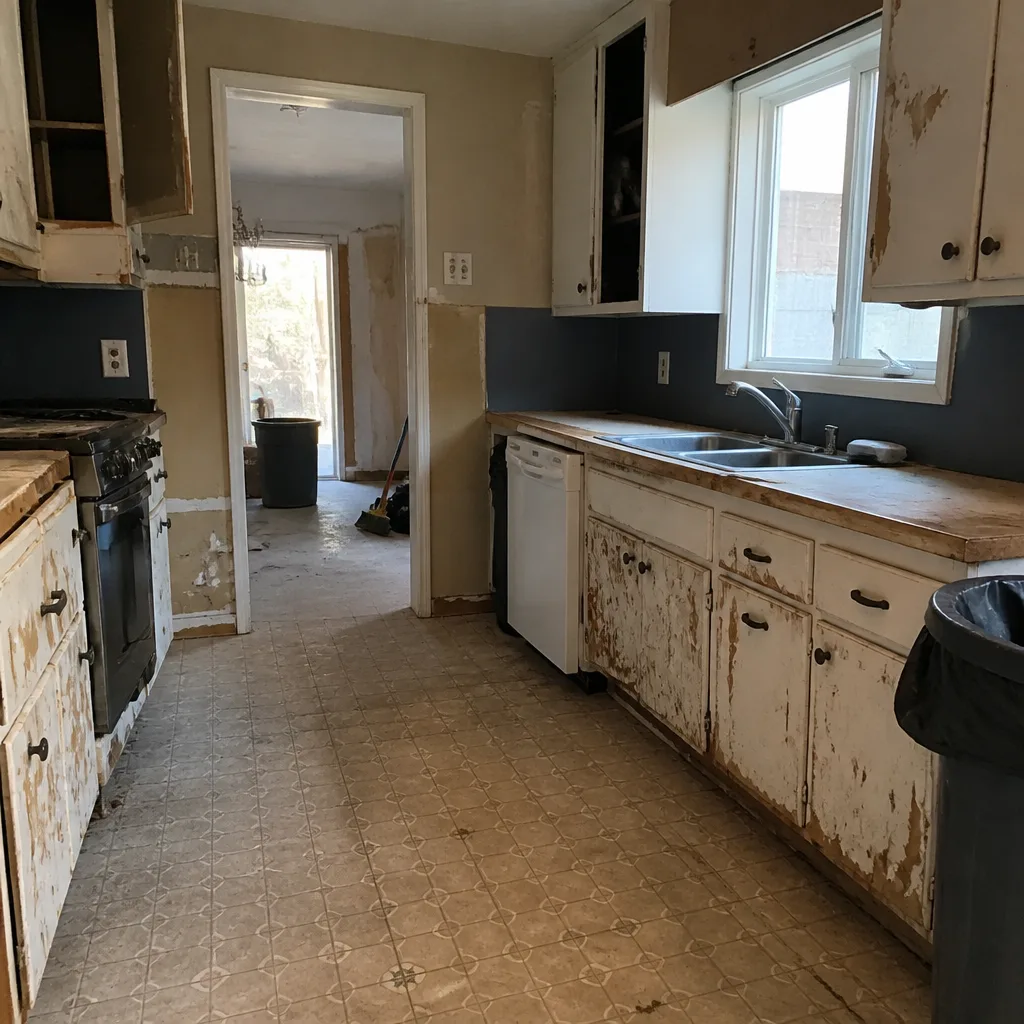 Before
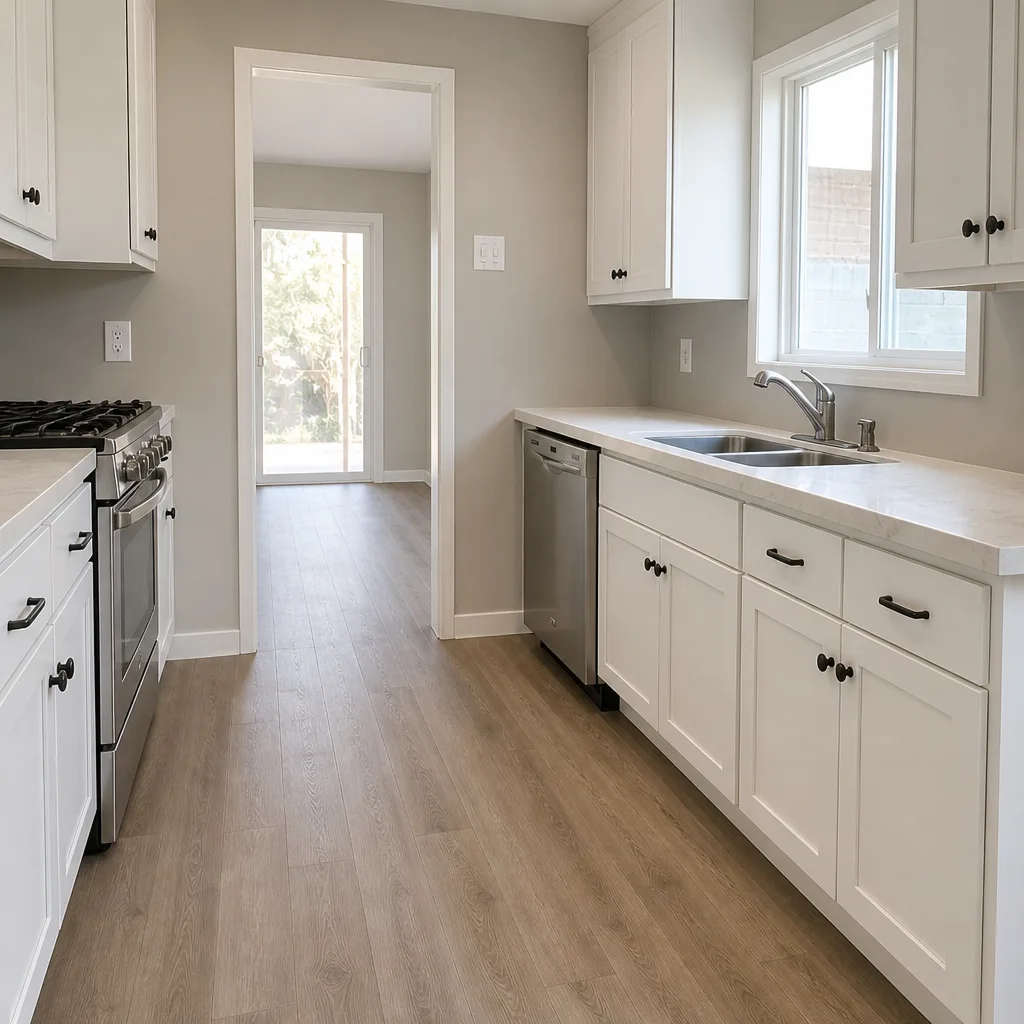 After
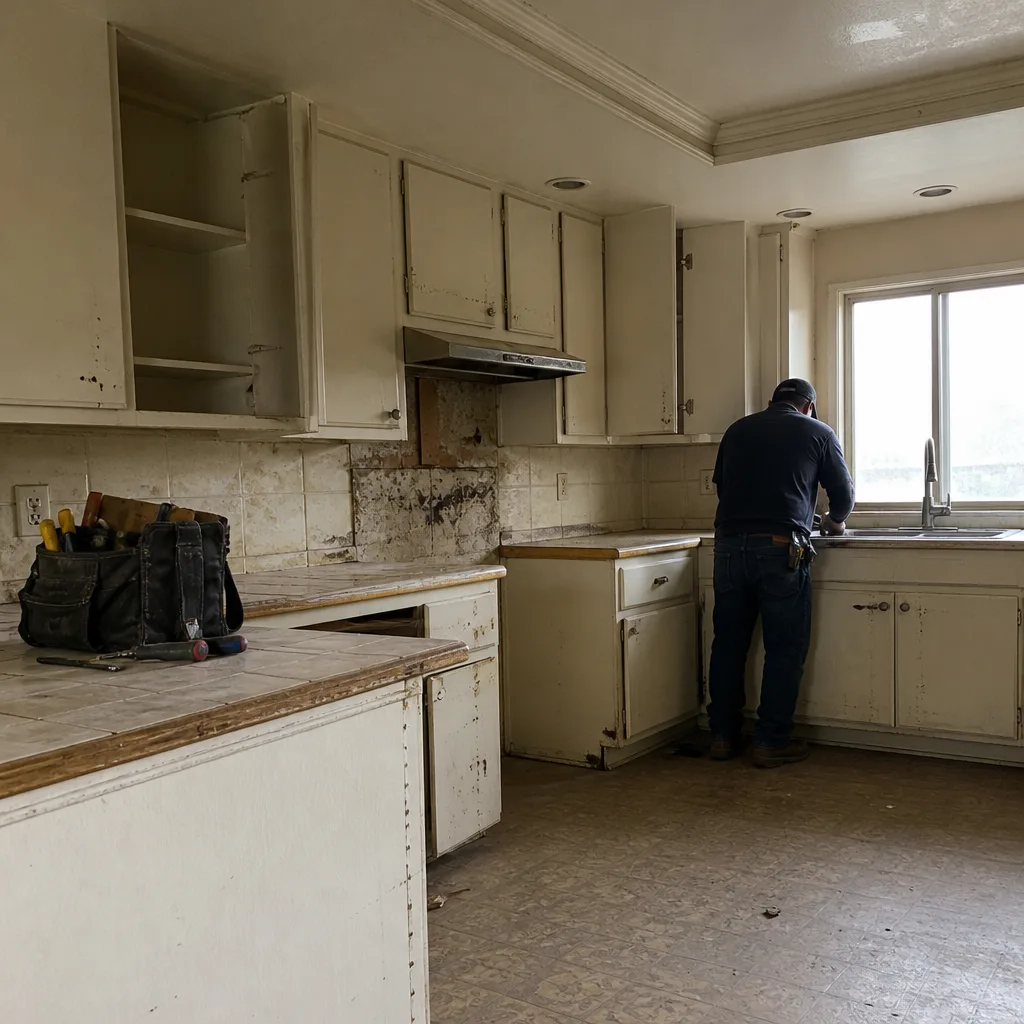 Before
 After
 Before
 After