Last updated November 18, 2026








Free written scope consultation - allowances, timeline, and change-order rules on paper before a single trade is scheduled
General Contractor Maintenance Checklist for Irvine Homeowners
Two houses on the same Irvine street can fail in completely different ways. A Woodbridge home built in the 1970s is dealing with original galvanized plumbing, tired wood-framed windows, and stucco that’s cycled through five decades of marine-layer mornings and dry Santa Ana afternoons. A Portola Springs house from the 2010s has newer systems but its own issues: tight building envelopes that trap moisture, elastomeric coatings applied in the boom years that are now reading at the end of their service life, and hillside grading that moves. Treating both with the same generic checklist is how a $400 repair turns into a $14,000 surprise. This guide walks you through what actually wears out first in Irvine, by era and by neighborhood, plus how to log it all so you have documentation when it matters.
Quick Answer
A smart maintenance routine for an Irvine home starts with era: check drainage, plumbing and window seals first in 1970s – 1990s village-era homes, and check stucco coatings, caulking at penetrations, grading and HOA boundaries first in post-2000 New Urbanist builds. Inspect stucco and elastomeric coatings twice a year given Irvine’s UV load and marine-layer moisture cycling, confirm in writing which items belong to you versus your HOA, and keep a dated maintenance log with photos so you have documentation for warranty claims or contractor disputes. Most of the expensive failures we see in Irvine trace back to a small item that was ignored for two or three seasons.
Styles & brands we work with
- Kitchen remodeling
- Bathroom remodeling
- Home additions & ADU
- Roofing
- Windows & doors
- Driveway & pavers
- Fence
Table of Contents
- Why Era Matters More Than Anything Else in Irvine
- Stucco and Elastomeric Coating Inspection
- HOA Boundary Clarity: Who Owns Which Maintenance
- Concrete Flatwork and Slope Drainage
- Interior Systems and the Rooms That Get Remodeled First
- A Seasonal Maintenance Calendar for Irvine
- How to Keep a Maintenance Log That Actually Protects You
- When It’s a General Contractor Job, Not a Handyman Job
Why Era Matters More Than Anything Else in Irvine
Irvine was built in waves, and each wave left behind a different set of future problems. The Woodbridge, University Park and Turtle Rock homes of the 1970s and 1980s came with materials that were excellent for their day and are now at or past their expected lifespan. The Northwood and Westpark builds of the late 1980s and 1990s split the difference. Then came the post-2000 villages: Northpark, Woodbury, Stonegate, Cypress Village and Portola Springs, built fast and tight under newer codes with different failure patterns.
Here’s how we think about the two big buckets:
- 1970s – 1990s village-era homes: original galvanized or early copper supply lines, single-pane aluminum windows, original roof underlayment, and stucco that has been patched, repainted and re-patched. Watch for slow leaks under sinks and behind washing machines, window seal failures, and roof flashings that were never replaced alongside the shingles.
- Post-2000 New Urbanist builds: tighter envelopes, elastomeric coatings now wearing through, caulk joints at window and vent penetrations that fail faster than the stucco itself, and grading on hillside lots that settles differently than flat-lot construction.
If you’ve been handed a checklist written for a Midwest ranch house, it’s telling you to check the basement sump pump and the furnace humidifier. Neither applies here. What applies is stucco, drainage, coatings and grading – and knowing which era you’re in tells you which of those to check first.
Stucco and Elastomeric Coating Inspection
Stucco is Irvine’s default exterior, and it fails in a specific way here. The marine layer pushes moisture into the wall assembly every morning from May through September, then the afternoon sun bakes it dry. Over years, that wet-dry cycling opens hairline cracks at the corners of windows, at downspout attachments, and along the line where the stucco meets the foundation. Once water gets behind the stucco, it has nowhere to go, and the damage shows up inside as a stain or a soft spot long after the wall cavity is wet.
Elastomeric coatings are the flexible paint layer over the stucco that’s supposed to bridge those hairline cracks. In Irvine’s UV load, a good elastomeric coating reads as serviceable for roughly 8 to 12 years before it starts to chalk and lose elasticity. If your house was coated during the building boom and hasn’t been recoated, it’s worth a look.
What to check, twice a year, in spring and fall:
- Walk the whole exterior at eye level and look for cracks wider than a credit card edge, especially at window and door corners.
- Press on the stucco around every penetration – hose bibs, dryer vents, light fixtures, AC line sets. If it feels soft or sounds hollow, that’s a moisture problem.
- Check the caulk joints at windows and doors. Caulk fails before stucco does, and re-caulking a $60 tube of sealant is the cheapest repair on this list.
- Look at the bottom 12 inches of stucco where it meets soil. If soil is piled against it, that’s trapping moisture and inviting termites.
- Look for efflorescence – the white chalky staining that means moisture is migrating through the wall.
If you find soft stucco or a stain inside that corresponds to an exterior crack, that’s a general contractor conversation, not a paint touch-up. The wall cavity needs to be opened and dried before it’s closed again. For broader exterior and structural work, our General Contractor in Irvine page covers how we scope repairs like this.
HOA Boundary Clarity: Who Owns Which Maintenance
Most of Irvine is HOA-governed, and the single most expensive misunderstanding we see is a homeowner assuming the association handles something it doesn’t – or paying for something the association was already obligated to fix. The line between “owner-maintained” and “association-maintained” is defined in your CC&Rs (Covenants, Conditions and Restrictions) and in the maintenance responsibility matrix that most Irvine associations keep on file.
Get it in writing. Not a phone call with the property manager. A written confirmation – email is fine – that names the specific item and says who pays for it.
Items that are commonly owner responsibility in Irvine communities:
- Stucco and paint on the home’s exterior walls (often the association paints on a scheduled cycle, but repairs are often the owner’s).
- Roof repairs and replacement (in most Irvine single-family associations, the roof is the owner’s, even though the association approves the color and material).
- Windows and doors, including seals and glass.
- Private driveways, patios and rear-yard hardscape.
- Landscaping inside the property line.
Items that are commonly association responsibility:
- Common-area slopes, retaining walls and drainage channels.
- Community fences and the front-yard landscape maintained by the association.
- Shared plumbing lines and shared roof sections in attached products.
- Street trees and common-area irrigation.
Those lists are common patterns, not rules. Your CC&Rs control. When a repair crosses the boundary – a roof leak near a shared wall, a drainage issue that runs from a common slope onto your lot – ask the association in writing to confirm responsibility before you hire anyone. If they say it’s yours, get that in writing too, because it becomes the documentation if the issue recurs.
Concrete Flatwork and Slope Drainage
Irvine’s hillside lots in Turtle Rock, Shady Canyon and parts of Portola Springs are graded to move water off the lot and into swales and storm drains. That grading works well when it’s intact and fails quietly when it isn’t. The concrete flatwork – driveways, walkways, patios – cracks and settles, and once it does, water ponds against the foundation instead of running away from it.
A few things to check every year, ideally after the first rain of the season:
- Ponding: after a rain, walk the perimeter. Any spot where water sits for more than a few hours is a drainage problem, not a cosmetic one.
- Slab cracks: hairline cracks in a driveway are normal. Cracks wider than a quarter inch, or any crack where one side has dropped below the other, means the subgrade has moved.
- Soil separation: look for a visible gap between the soil and the foundation. Irvine’s clay soils shrink and swell through the dry season and the wet season, and that cycling can open up the soil-to-foundation joint.
- Downspouts and splash blocks: confirm every downspout discharges at least 4 feet from the foundation, onto a splash block or into a buried line.
- Retaining walls: look for tilting, bulging, or weep holes that are clogged. A retaining wall that’s moving is an engineering issue, not a repair.
Interior floor cracks, sticking doors and windows that suddenly don’t latch are the interior signs that the foundation and grading are doing something. If you see those alongside exterior drainage problems, get a general contractor out to look at the whole picture rather than patching one crack at a time.
Interior Systems and the Rooms That Get Remodeled First
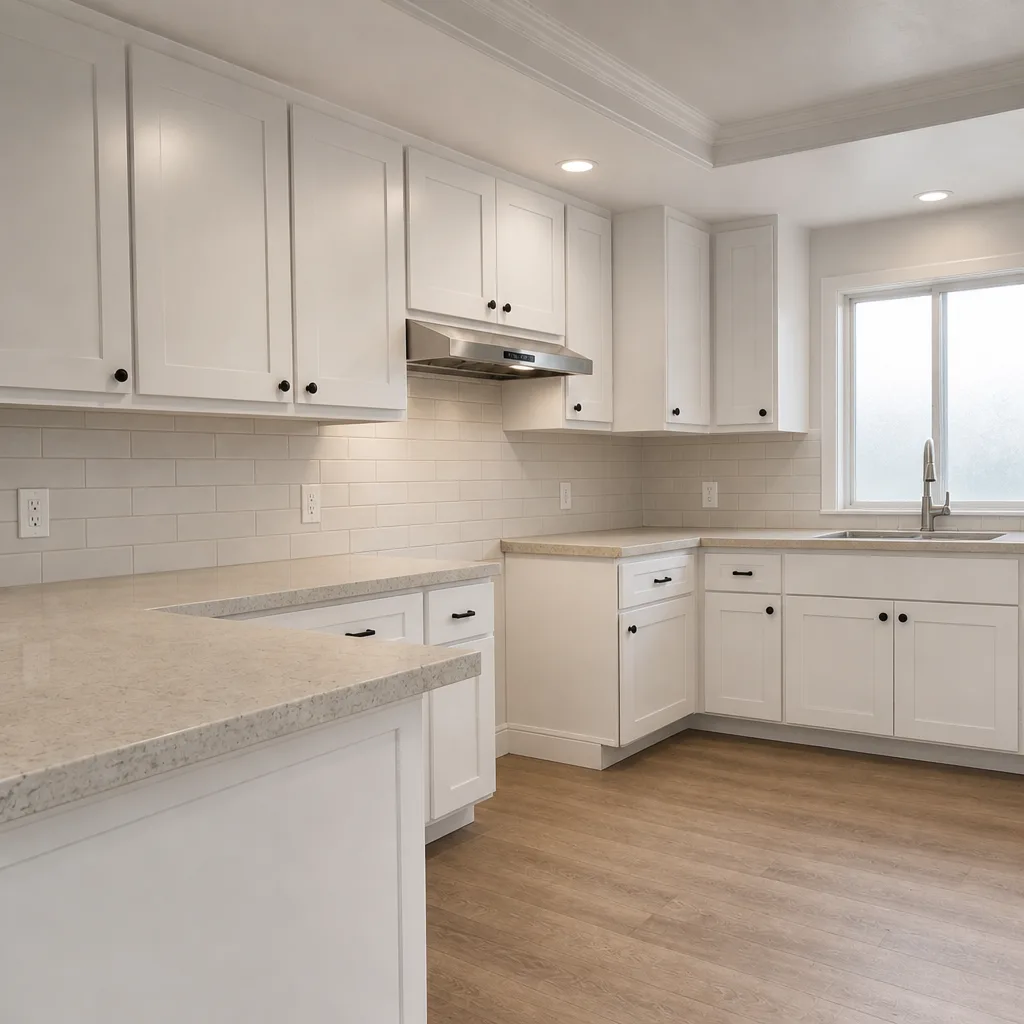
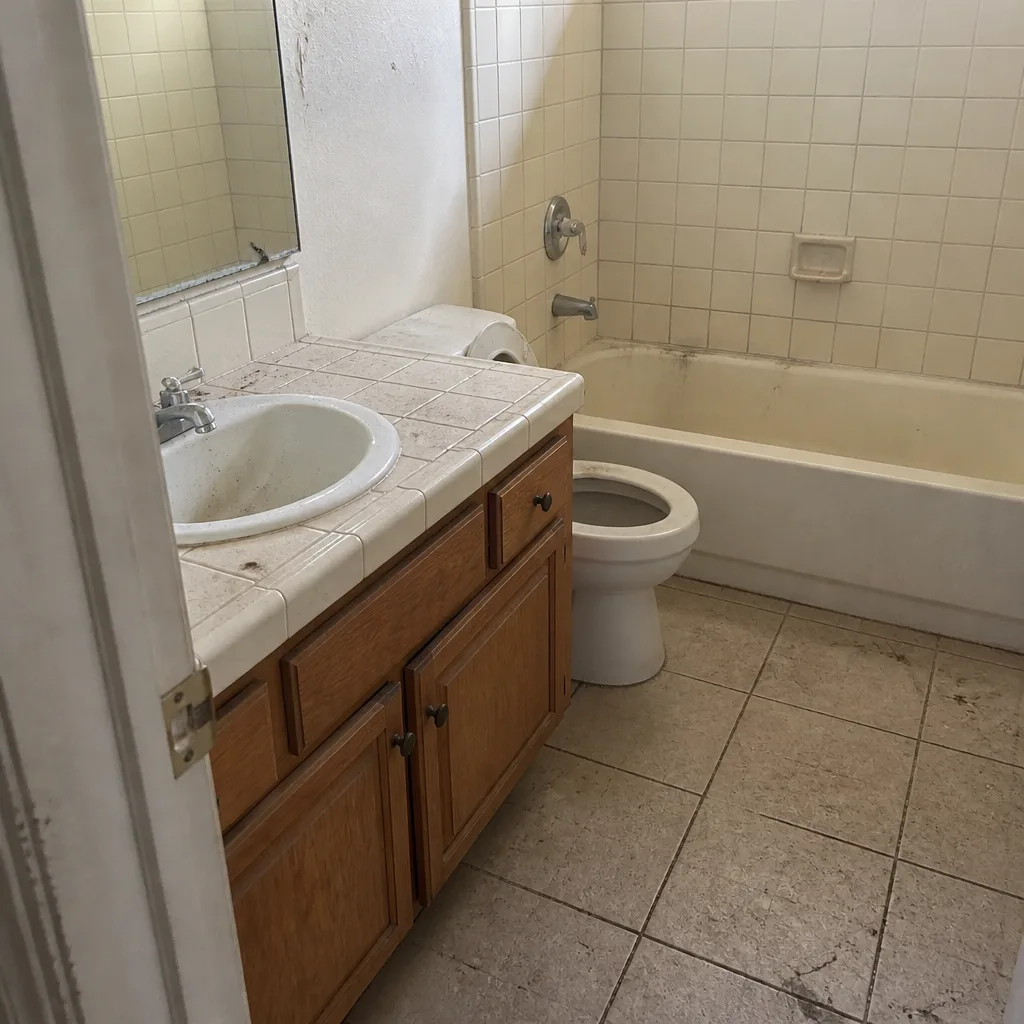
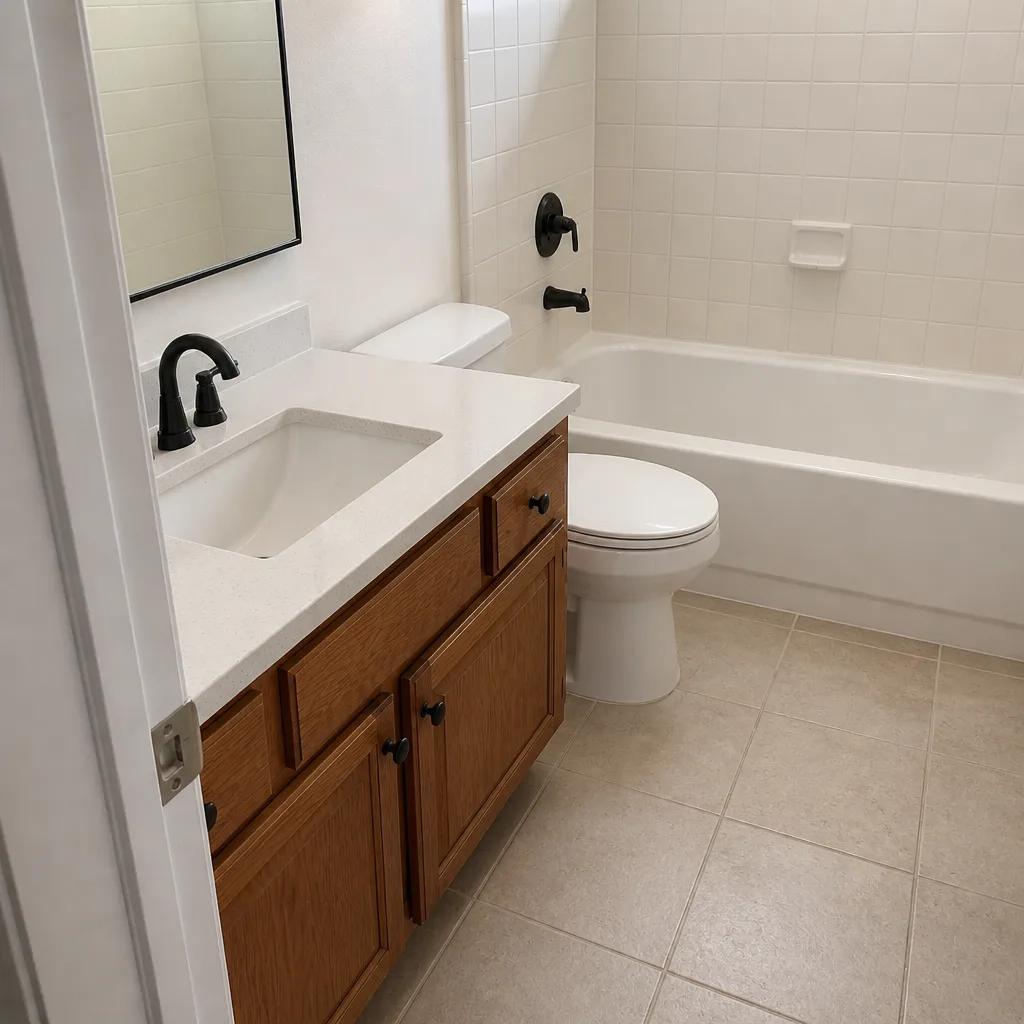
In our experience, the two rooms that generate the most “we should have checked that sooner” calls in Irvine are the kitchen and the bathroom. Both have water in them, both get heavy daily use, and both hide their failures behind cabinetry and tile.
Kitchen items to check yearly:
- The supply lines under the sink, behind the dishwasher, and at the refrigerator. Braided stainless lines fail at the crimp; replace them every 5 to 7 years.
- The dishwasher drain hose and the disposal connection. Slow leaks here rot the cabinet floor before you notice.
- Caulking at the sink-to-counter joint and the backsplash. Failed caulk lets water into the counter substrate.
- Exhaust hood performance. A hood that moves less than 150 CFM in an Irvine kitchen isn’t clearing moisture or cooking effluent effectively, and the moisture ends up in the walls.
Bathroom items to check yearly:
- Caulk and grout at the tub and shower surrounds. Any crack is a path for water into the wall.
- The toilet flange and the base of the toilet. A soft floor at the base of the toilet means a failed wax ring, and it’s been leaking.
- The exhaust fan. Run a tissue test: hold a tissue to the grille – if it doesn’t stick, the fan needs cleaning or replacement.
- Shutoff valves under the sinks. If they don’t turn freely by hand, they need replacement before you need them.
When those rooms need more than maintenance – new cabinetry, new tile, new fixtures – we install KraftMaid and Wellborn cabinetry alongside Cambria, Silestone and Caesarstone countertops and Kohler and Moen fixtures, so the materials behind the work carry their own manufacturer warranties alongside ours. You can read more about how we scope these on our Kitchen Remodeling in Irvine and Bathroom Remodeling in Irvine pages.
A Seasonal Maintenance Calendar for Irvine
Irvine’s seasons are mild enough that the calendar is more about rain and sun than about freeze and thaw. This is the rhythm we recommend.
- Early spring (March – April): walk the exterior for stucco cracks and failed caulk; clean gutters and downspouts; check the roof flashings and, if the roof is more than 15 years old, have a roofer look at the shingles. GAF, CertainTeed and Owens Corning all publish expected service lives for their shingle lines, and a roofer can tell you where yours sits.
- Late spring (May – June): test the AC before the first heat wave; check the attic for signs of roof leaks; confirm the irrigation system is covering every zone evenly and not spraying the stucco.
- Late summer (August – September): re-check caulk at windows and doors before the fall rains; check the water heater’s anode rod and pan; test all the GFCI outlets; clean the dryer vent.
- Fall (October – November): this is the big one. Clean gutters after the first leaf drop; walk the lot for ponding after the first real rain; check the soil-to-foundation joint; test the sump pump if you have one; confirm the drainage swales on hillside lots are clear.
- Winter (December – February): check the interior for stains that appeared during the rains; test smoke and carbon monoxide detectors; check the water shutoff valves; inspect under every sink.
How to Keep a Maintenance Log That Actually Protects You
The log is the most underrated item on this list. When a warranty claim or a contractor dispute happens, the homeowner with dated photos and receipts has a completely different conversation than the homeowner relying on memory.
Keep it simple. A shared digital folder, one subfolder per year, works fine for most homeowners. Every entry needs four things:
- Date and what you did or observed. “March 14 – noticed hairline crack at master bath window corner, about 1/8 inch.” Not “checked stucco.”
- Photos. Wide shot, then close-up, same angle each time so you can compare year over year.
- Who did the work and what they charged. Names of companies, the written quote, the invoice, and the warranty terms. If a contractor won’t put the price and warranty in writing, that’s your answer about whether to hire them.
- Follow-up notes. If a repair was done, note when it was done, and put a reminder in your calendar for the next inspection.
This log is also how you establish a maintenance history if you ever sell the house. In Irvine’s market, a documented maintenance history is a genuine selling point, especially on a village-era home where buyers are worried about deferred maintenance. Keep the log in the cloud, share it with your spouse or partner, and add to it even when the entry is “nothing found.”
When It’s a General Contractor Job, Not a Handyman Job
We get asked where the line is between “call a handyman” and “call a general contractor.” Here’s how we draw it.
Call a general contractor when the work involves opening a wall, moving or replacing plumbing or electrical, replacing a roof, re-grading a lot, repairing structural framing, or any repair where the failure is causing ongoing water intrusion. Those jobs need permits (Irvine requires permits for most structural, plumbing and electrical work), licensed trades, and an inspection. A handyman can hang a door or replace a faucet; a handyman cannot legally open your wall and re-frame a window header, and if they do, the permit and the inspection won’t exist when you sell.
Also call a professional when the same repair has failed twice. A crack that keeps reopening, a leak that comes back every season, a bathroom floor that gets soft again after a patch – those are symptoms of a problem that needs to be diagnosed at the source, not patched at the surface.
Penhallow Remodeling Irvine offers free estimates in Irvine – call (888) 704-4104 and we’ll walk the house with you, put what we find in plain language, and hand you a written price before any work starts. Our technicians have up to 22 years of experience, are background-checked and arrive in uniform, and every project carries our 365-Day Done Right Promise in writing. If something we fixed fails inside that year, we come back and fix it at no charge – and there’s no service call or re-inspection fee on that return visit.
Common Mistakes to Avoid
- Treating every Irvine neighborhood the same. A checklist built for a 2015 Stonegate build will miss the original plumbing in a 1975 Woodbridge home entirely, and vice versa. Match the checklist to the era.
- Assuming the HOA covers it. Assuming the association handles a roof or stucco repair without confirming it in writing is how a $9,000 repair lands on the homeowner after the fact. Get the responsibility matrix and confirm the specific item in email.
- Ignoring the caulk because the stucco looks fine. Caulk fails years before stucco does, and it’s the cheapest item on the list. Re-caulking every window and door on an Irvine home runs a few hundred dollars; the wall repair behind a failed caulk joint runs into the thousands.
- Skipping the fall walk after the first rain. Irvine gets most of its rain in a handful of storms. The first one shows you every ponding spot, every gutter overflow and every roof leak – if you’re outside looking.
- Not writing anything down. A verbal “we checked the roof last year” is worth nothing in a warranty dispute. A dated photo and the contractor’s written invoice is worth everything.
- Letting a small soft spot become a remodel. A soft spot at the base of a toilet or under a sink is a $300 repair when you catch it and a $6,000 bathroom remodel when you don’t. Check the water lines and shutoffs every year.
- Hiring on the verbal estimate. A range on a phone call is not a price. The written number should be the number on the invoice – if the quote can change after demo day, that’s the thing to ask about before you sign, not after.
See the difference
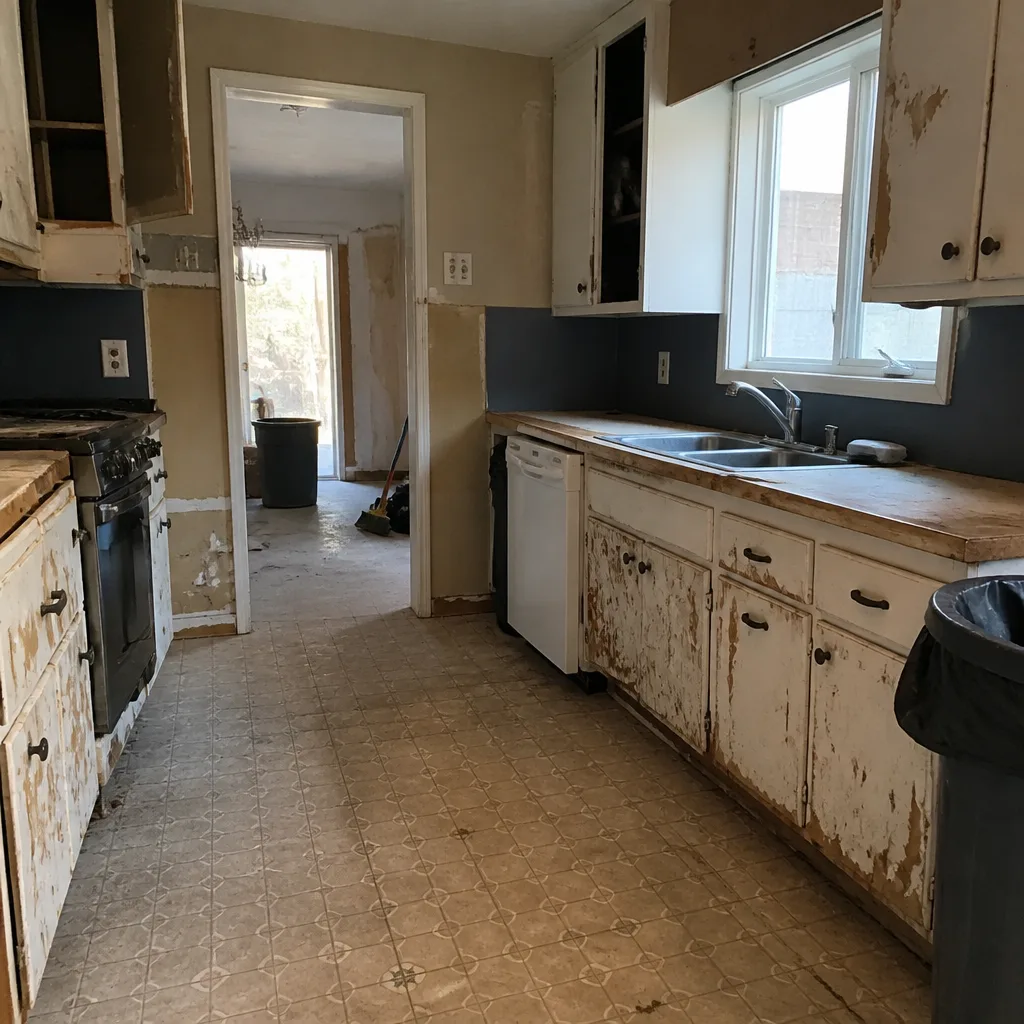 Before
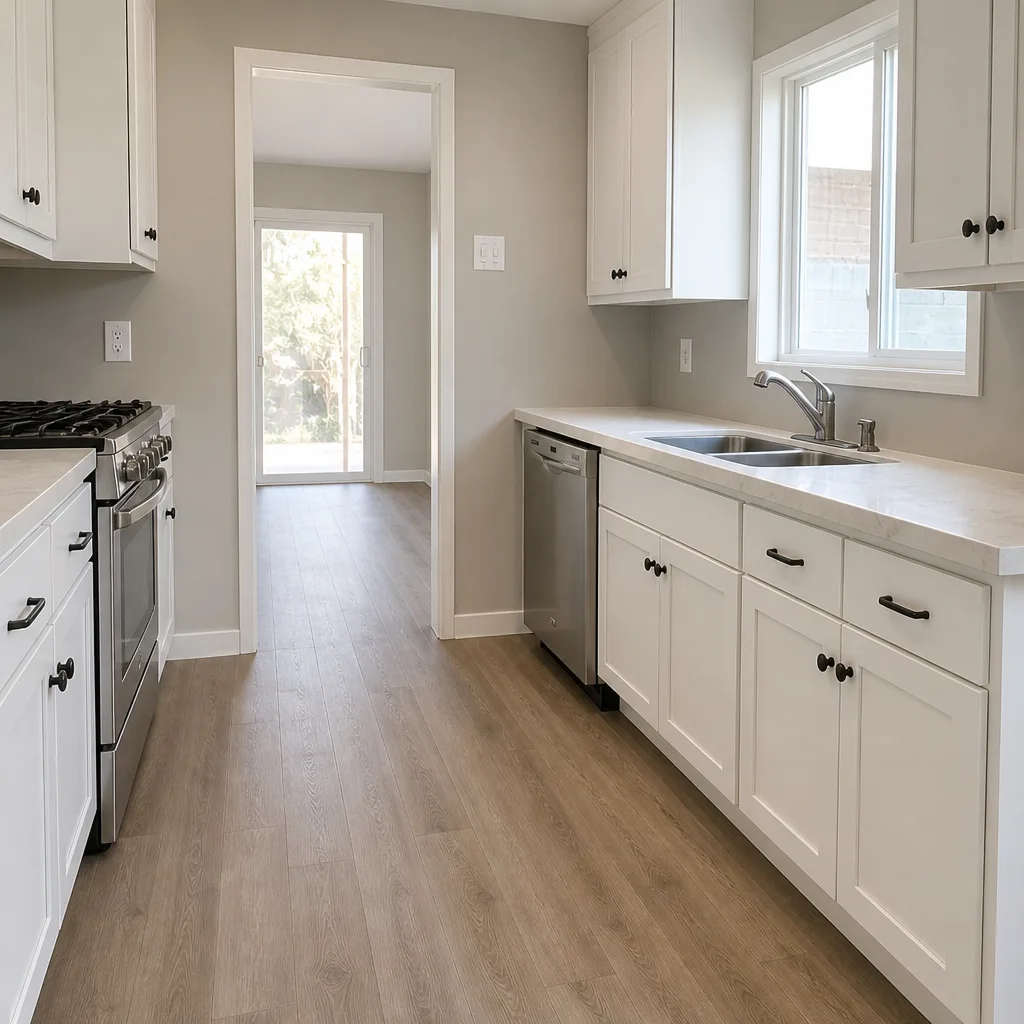 After
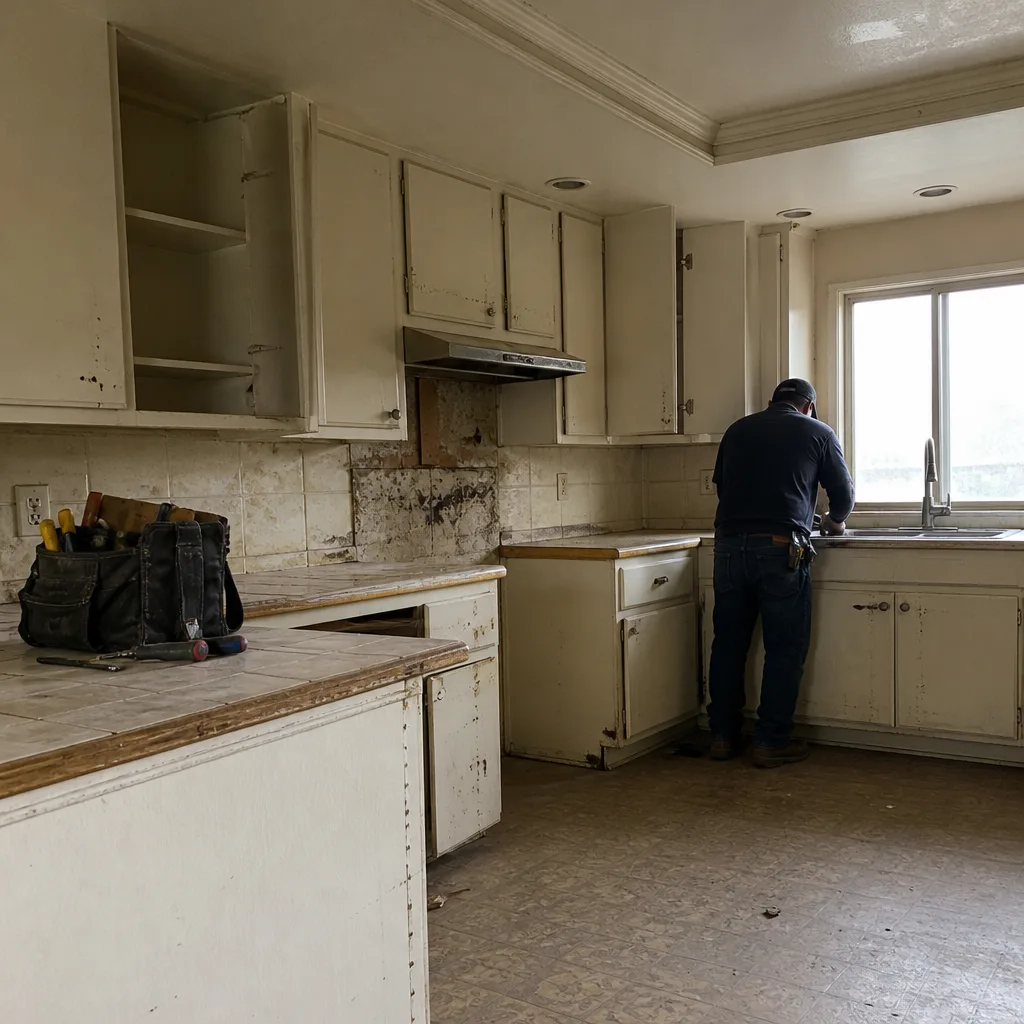 Before
 After
 Before
 After
When to Call a Professional
Call a professional when you find soft stucco, a roof leak, a stain inside a wall or ceiling that corresponds to an exterior crack, a slab crack with displacement, a retaining wall that’s tilting, or a repair that’s failed twice in the same spot. Call when the work involves opening a wall, moving plumbing or electrical, or re-grading a lot. Call when the HOA has confirmed in writing that an item is yours and the scope is bigger than a patch. And call when you want a written price before any work starts, because that’s the conversation that protects you. Penhallow Remodeling Irvine offers free estimates in Irvine – call (888) 704-4104 to schedule one.
Frequently Asked Questions

Twice a year, in spring and fall, with a closer look after the first significant rain of the season. Irvine’s marine layer and UV load cycle moisture in and out of the wall assembly daily, and hairline cracks open and close with it. Catching a crack at 1/8 inch and caulking it costs a fraction of what it costs once water has reached the wall cavity. Call (888) 704-4104 for a free estimate if you find soft stucco or a stain inside.
In most Irvine single-family associations, the roof is the owner’s responsibility while the association controls the color and material. That’s a common pattern, not a rule. Your CC&Rs and the association’s maintenance responsibility matrix control, and you should get the specific item confirmed in writing by email before you hire anyone. If the association says it’s yours, keep that email – it becomes documentation later.
Most single-item maintenance repairs run $250 to $1,800 depending on the scope. Re-caulking all windows and doors typically runs $400 to $900. Replacing plumbing supply lines under a kitchen sink with braided stainless runs $150 to $350. A stucco patch with proper moisture remediation on a small area typically runs $800 to $2,500. Any repair that involves opening a wall or replacing a roof section is a general contractor job and should come with a written price before work starts. Call (888) 704-4104 for an exact quote – estimates are free.
A handyman can handle cosmetic and surface repairs that don’t require a permit. A general contractor is required when the work involves opening a wall, moving or replacing plumbing or electrical, replacing a roof, re-grading a lot, or repairing structural framing – all of which require permits and inspections in Irvine. Hiring a handyman for permitted work means the permit and inspection won’t exist when you sell, which can complicate a sale.
A small crack repair and re-caulk typically takes one day. A repair that requires opening the wall, drying the cavity, and re-stuccoing takes 3 to 7 days depending on the size of the area and the drying time. The drying is the part that can’t be rushed; closing a wall before the cavity is dry means the repair fails again. Call (888) 704-4104 for a free estimate and a written schedule before any work starts.
Yes – most bathroom remodels in Irvine require a permit, especially anything involving plumbing relocation, electrical changes, or structural work. Irvine’s building department reviews and inspects the work, and the permit record follows the house. The written price should state exactly which permits will be pulled; if a bid doesn’t mention permits, ask. Call (888) 704-4104 for a free estimate on your bathroom project.
The Bottom Line
Irvine homes fail by era, not by zip code. A 1970s Woodbridge home needs its plumbing, windows and roof checked first; a 2010s Portola Springs home needs its stucco coatings, caulk joints and hillside grading checked first. Match the checklist to the house, walk the exterior twice a year with the first rain in mind, confirm HOA boundaries in writing before you hire, and keep a dated log with photos so your documentation exists when a warranty claim or dispute happens. Most of the expensive failures we see trace back to a $300 item that went unaddressed for two seasons. The cheap maintenance is the one that catches them.
If you’re ready to have someone walk the house with you and put what they find in writing, start with our Penhallow Remodeling Irvine home page or call us directly. We answer the phone 24/7 with a real person, and every estimate is free.
Call (888) 704-4104 for your free estimate. We’ll walk the house, put what we find in plain language, and hand you a written price before any work starts – the number on day one is the number on the invoice, backed by our 365-Day Done Right Promise in writing.
Written by the team at Penhallow Remodeling Irvine.