
Last updated November 18, 2026








Free written scope consultation - allowances, timeline, and change-order rules on paper before a single trade is scheduled
Construction Warning Signs: An Irvine Homeowner’s Reference Guide
The contractor who sounds most confident in the room is sometimes the one least willing to put that confidence in writing. In Irvine’s remodel market, polished presentation has become a reliable substitute for a written guarantee. We’ve watched homeowners get swept up by a smooth walkthrough, a slick proposal deck, a contractor who knows every brand name and every Irvine Village by heart, only to discover after demo day that the “estimate” was never a number, just a mood. This guide is about the subtle warnings: the technically-phrased behaviors that experienced-sounding contractors use to move price risk and responsibility off their books and onto yours, long before you’ve signed anything. You’ll learn the contract clauses to distrust, how lowball bids are engineered, and what a real warranty looks like.
Quick Answer
The most dangerous construction warning signs in Irvine aren’t the obvious fraud tells (no license, no address, cash only). They’re the technically fluent ones: an allowance that isn’t itemized, a time-and-materials clause with no cap, change orders that only need a verbal yes, pressure to skip the HOA architectural review, and a warranty that starts at contract signing rather than project completion. These are the clauses that quietly transfer cost and liability to you, and they appear almost exclusively on paper, where they’re easy to miss and expensive to undo.
Styles & brands we work with
- Kitchen remodeling
- Bathroom remodeling
- Home additions & ADU
- Roofing
- Windows & doors
- Driveway & pavers
- Fence
Table of Contents
- 1. Contract Language That Hides Price Risk
- 2. Allowances: Why “We’ll Pick It Out Later” Costs You Thousands
- 3. Time and Materials Clauses Without a Cap
- 4. Verbal Change Orders and What They Really Mean
- 5. Skipping the HOA Architectural Review: Who Carries the Liability
- 6. How Lowball Bids Are Engineered to Expand Later
- 7. “Fully Insured” vs. a Certificate With Your Address On It
- 8. Warning Signs Inside a Written Warranty
Contract Language That Hides Price Risk
By the time a contract lands on your kitchen table in Irvine, the sales conversation is over and the fine print takes the wheel. We’ve read plenty of contracts homeowners brought us after the fact, and the pattern is consistent: the price-protecting language is missing, the price-flexing language is everywhere. A contract should pin the cost down. If it’s built to let the cost float, you need to know that before you sign.
Three phrases deserve a slow read every time:
- “Allowance” without a unit price and a quantity. An allowance is a placeholder dollar figure for something not yet chosen (tile, fixtures, cabinets). If the contract lists “$6,000 tile allowance” but doesn’t say the per-square-foot rate and the coverage area, that number can dissolve fast, and the increase lands on your invoice, not the contractor’s.
- “Time and materials” without an hourly ceiling or a not-to-exceed total. T&M means you pay for hours worked plus materials, with no fixed price. It’s a legitimate billing method in some situations, but it needs a cap or it’s an open checkbook.
- Change orders requiring only “verbal approval” or “approval via text.” Any change to scope or price should require a signed, dated change order with the dollar amount spelled out. A verbal sign-off is unenforceable and unprovable, which is exactly why some contracts ask for it.
In Irvine, where homes range from older Woodbridge properties to newer builds in Orchard Hills and Great Park, the remodel scope varies wildly, which makes fuzzy contract language even easier to exploit. A written price before work starts is the baseline, not a courtesy. That’s the standard we operate under, and it should be the standard you demand. If you want to see how a transparent written estimate reads, our general contractor page for Irvine walks through exactly what’s itemized and why.
Allowances: Why “We’ll Pick It Out Later” Costs You Thousands
Allowances aren’t dishonest by nature. They’re practical when you genuinely haven’t chosen a faucet or a backsplash. The problem is an itemized allowance versus a lump-sum allowance. An honest allowance says: “$8.50 per square foot for tile, 140 square feet, $1,190 total.” A dishonest allowance says: “$5,000 for materials.” One is a budget. The other is a floor that’s designed to be exceeded.
Here’s how the math works against you. Say a contract carries a $4,000 allowance for kitchen cabinets but never names the cabinet line, finish, or square footage. You visit our showroom, fall for a KraftMaid line with soft-close doors, and suddenly the real cost is $9,500. The contractor’s response: “That’s above your allowance, so the difference is yours.” No surprise there if the allowance was honest. But if the allowance was set deliberately low to make the total bid look smaller than the competition, you’ve been played, and the increase was baked in from the start.
The fix is simple: before signing, ask for every allowance to be itemized by quantity and unit price, and ask what happens if the actual cost lands above or below. Some contractors will refund the difference. Others pocket it. The contract should state which. For countertop and cabinet allowances specifically, named brands carry transparent pricing (Cambria, Silestone, Caesarstone, KraftMaid, Wellborn), so there’s no mystery to hide behind. If the contractor can’t name the brand and the rate, they’re not quoting a material, they’re quoting a hope.
Time and Materials Clauses Without a Cap
Time and materials (T&M) is the billing method where you pay for actual labor hours plus the cost of materials. It’s not inherently bad. In a bathroom remodel where hidden rot or old plumbing turns up behind the wall, T&M can be the fairest way to handle unknown work. But an uncapped T&M clause is a warning sign, because it puts the contractor’s profit in tension with finishing fast.
A capped T&M agreement spells out the hourly rate, the crew size, and a not-to-exceed total, so the risk of overruns has a ceiling. Drill down on these details before you sign:
- What’s the hourly rate, and is it per person or per crew? A “$95 per hour” line that means two people at $95 each is very different.
- Is there a not-to-exceed number? Without one, the invoice can climb indefinitely, and you’re obligated to pay.
- Who approves material purchases? In a capped T&M job, you should see material receipts or a markup schedule, not a single line that reads “materials: $12,000.”
- How is overtime billed? Weekend and evening hours often carry a premium rate. Ask now, not after.
In Irvine’s competitive market, some bids are quoted as T&M to keep the printed number low, because the total isn’t shown at all. That’s not a cheaper proposal, it’s an unpriced one. A fixed-price contract with a clear scope beats an open-ended T&M bid every single time, unless the project genuinely has unknown conditions and the cap protects you.
Verbal Change Orders and What They Really Mean
A change order is the document that adjusts scope, price, or timeline after the contract is signed. Done right, it’s a written record both sides sign. Done wrong, it’s a phone call, a “sure, no problem,” and a mystery line on the final invoice you never agreed to. When a contractor’s contract says changes can be approved verbally, they’re reserving the right to charge you for something they can’t prove you confirmed.
We’ve seen homeowners in Irvine get billed for “extra framing” or “upgraded insulation” they never asked for and can’t dispute, because someone said “go ahead” on a job site without a paper trail. Protect yourself with a simple rule: no signed change order, no change. A legitimate change order states the description of the work, the cost delta, the schedule impact, and requires both signatures. If the contractor pushes back on that (“we don’t have time for paperwork”), that resistance tells you how they plan to bill you.
Text and email approvals are better than nothing, but a signed, dated change order is the standard. If a contractor can’t produce one, ask why. For a larger project where scope creep is common, like the whole-home remodels and additions we guide on our bathroom remodeling page for Irvine and kitchen projects, the change-order discipline matters more than anywhere else, because one unapproved add-on can drift a five-figure job by thousands.
Skipping the HOA Architectural Review: Who Carries the Liability
This one catches more Irvine homeowners than any other. Irvine’s planned communities, from Northwood to Turtle Rock, almost all sit under an HOA with a formal architectural review committee (ARC). Exterior changes like a patio cover, a shed, a fence, new windows, or a paver driveway generally require ARC approval, and the HOA can demand you tear down unapproved work at your own cost. When a contractor suggests “we’ll just handle it” or “don’t worry about the HOA, everyone does this,” that’s a liability transfer hiding as a favor.
The contractor who skips the HOA review gets paid and leaves. You’re left with the compliance file, the fines, and the removal bill. Worse, an unapproved structure can cloud your title, complicate a future sale, or trigger an HOA fine schedule you didn’t know existed. It’s a contract liability that never appears on the estimate.
The right question to ask is direct: “Will you pull and manage the ARC approval as part of this job, and is it in the contract?” A contractor who handles it properly will obtain the submittal requirements, prepare the plans, submit them, and wait for sign-off before starting. That’s slower, and it’s the correct pace. Any bid that prices the job assuming approval “will work out” is a bid that leaves you holding the risk if it doesn’t. On Irvine projects, always read your community’s CC&Rs before signing, not after.
How Lowball Bids Are Engineered to Expand Later
A lowball bid isn’t always a lie, but it’s always missing something. The number is low because specific line items have been quietly deleted or minimized, so the bid looks competitive against honest proposals that include them. Then the work starts, the missing scope surfaces, and the “extras” begin. We’ve been called in to fix the aftermath of dozens of these in Irvine, and the missing line items repeat like a pattern:
- Permits and inspections. An honest bid includes the permit cost (typically a few hundred to a couple thousand dollars depending on the scope in Irvine). A low bid omits it, then bills it as an extra later.
- Demo and haul-away. Tear-out, dumpster rental, and disposal fees are real costs. A low bid often “forgets” them.
- Prep and substrate. Cement board substrate (the moisture-resistant layer behind your tile) and proper waterproofing are labor-intensive. Cheap bids skip them, and cracked tile appears six months later.
- Electrical and plumbing rough-in. In an older Irvine home, moving a fixture or adding an outlet means real rough-in work. If the bid doesn’t list it, it’s coming as a change order.
- Coverage for damaged drywall, paint, and trim. The finish work is where the hidden hours live.
- Subfloor repair and moisture mitigation. Especially relevant in Irvine’s climate, where seasonal moisture and slab-on-grade construction can create hidden conditions.
The test is to compare bids line by line, not total to total. A real bid names the brands (Kohler fixtures, Moen faucets, James Hardie siding, Owens Corning shingles) and counts the quantities. If two bids for “the same bathroom” differ by $10,000, that difference lives in the line items one of them left out. Our kitchen remodeling page for Irvine breaks down what a fully itemized bid includes.
“Fully Insured” vs. a Certificate With Your Address On It
“We’re fully insured” is a sentence, not proof. Any contractor can say it. What matters is whether they can hand you a current certificate of insurance from their carrier, naming your project address and showing general liability coverage and workers’ compensation. If they can’t produce it within a day, take it as a serious signal that the coverage is thin, lapsed, or simply isn’t there.
Three coverages to verify specifically:
- General liability. This protects you if the crew damages your home or a neighbor’s property. It should be current, with a limit large enough for your project.
- Workers’ compensation. This covers the crew if someone gets hurt on your property. Without it, an injury can become your liability.
- Address-specific endorsement. For larger jobs, ask the carrier to list your Irvine address on the certificate, so you know coverage actually attaches to your project, not just the company in general.
A contractor who is genuinely insured will send the certificate without complaint the same day you ask. One who hesitates, offers a self-made “insurance letter,” or says “I’ll get it to you at the end” is telling you where the coverage stands. Verify it before work begins, not after. That’s a core piece of how we run our Penhallow Remodeling Irvine home service, and it’s the standard you should expect from any Irvine contractor.
Warning Signs Inside a Written Warranty
A written warranty should be the anchor that lets you sleep after the crew leaves. Instead, many warranties are written to look generous while being structured to vanish when you need them. Here’s what to read carefully, sentence by sentence:
- Exclusions that swallow the coverage. “Warranty void if the homeowner uses the wrong cleaning product” or “shall not apply to any damage caused by normal wear” can neutralize the whole document. Look for language that limits the scope to tiny, hard-to-prove failures.
- Warranty periods that start at contract signing, not project completion. A “two-year warranty” that starts the day you sign gives you a warranty that expires before the grout even cures. The clock should start the day the project is complete and signed off.
- No defined remedy process. A real warranty tells you exactly what happens if something fails: who you call, how fast they respond, whether there’s a charge, and what the remedy is. “We stand behind our work” is not a warranty; it’s a slogan.
- No written commitment. If the warranty is verbal, it doesn’t exist. You want it in writing, included with the final packet.
The standard we hold ourselves to is the 365-Day Done Right Promise, plus a free return visit if a repair fails, in writing, with no service charge. Every Penhallow project comes with a written guarantee that states the term, the coverage, and the process. A contractor offering a warranty should be able to show you the actual document before you sign, not after.
Common Mistakes to Avoid
- Comparing total bids instead of line items. The cheapest total is usually the one with the most missing scope. Compare what’s included, brand by brand and quantity by quantity.
- Accepting a verbal estimate as a price. “About $40,000” is not a number. Get the written figure before work starts, so day-one pricing matches the invoice.
- Skipping the HOA architectural review. In Irvine’s HOA-governed communities, unapproved exterior work can mean fines and tear-down orders. Confirm the review is handled and in the contract.
- Assuming “fully insured” means covered. Ask for a current certificate of insurance naming your address, with general liability and workers’ comp shown.
- Signing a warranty you haven’t read. Look for exclusions, the start date, and the remedy process. If any of those are missing, ask for them in writing.
- Approving changes on a phone call. Any scope or price change needs a signed change order. No paperwork, no change.
- Paying a deposit before seeing a written contract. Never pay ahead of the signed scope and pricing. A legitimate contractor gives you the paperwork first.
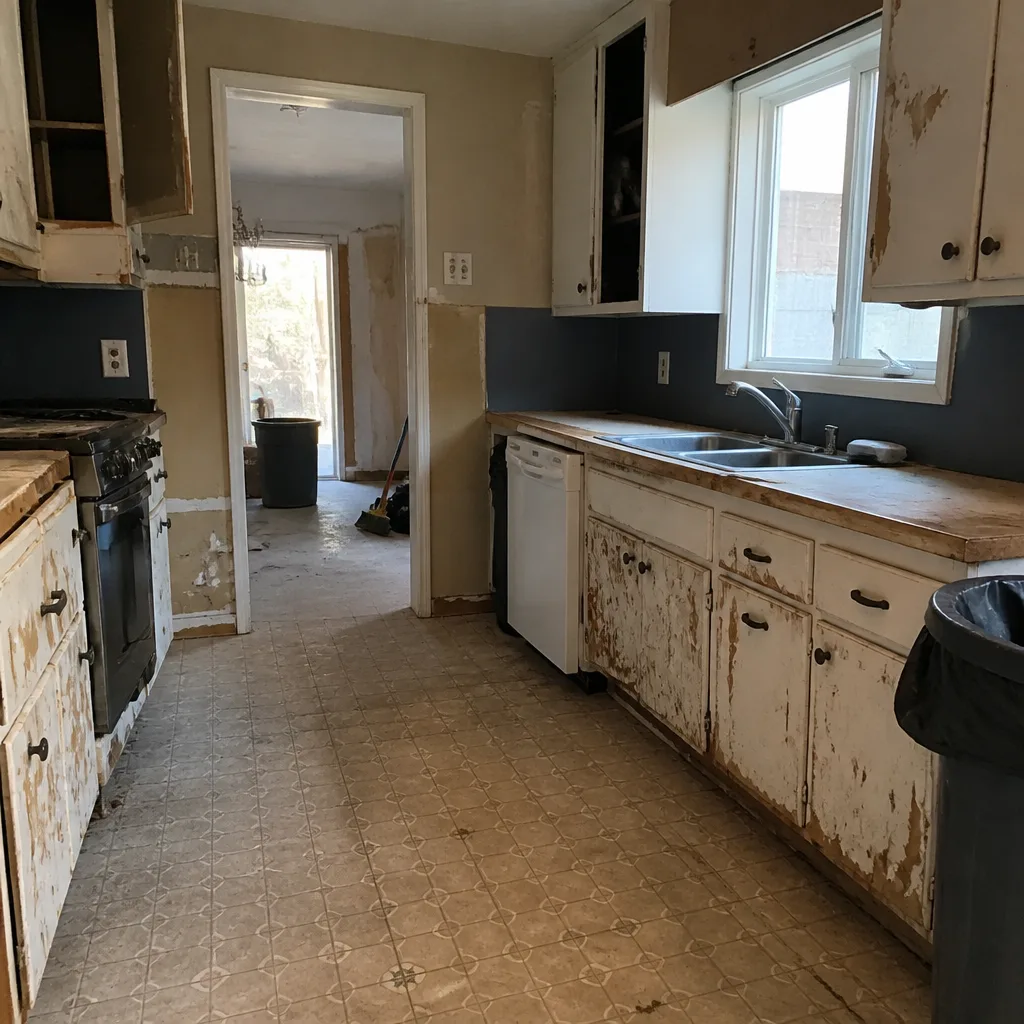
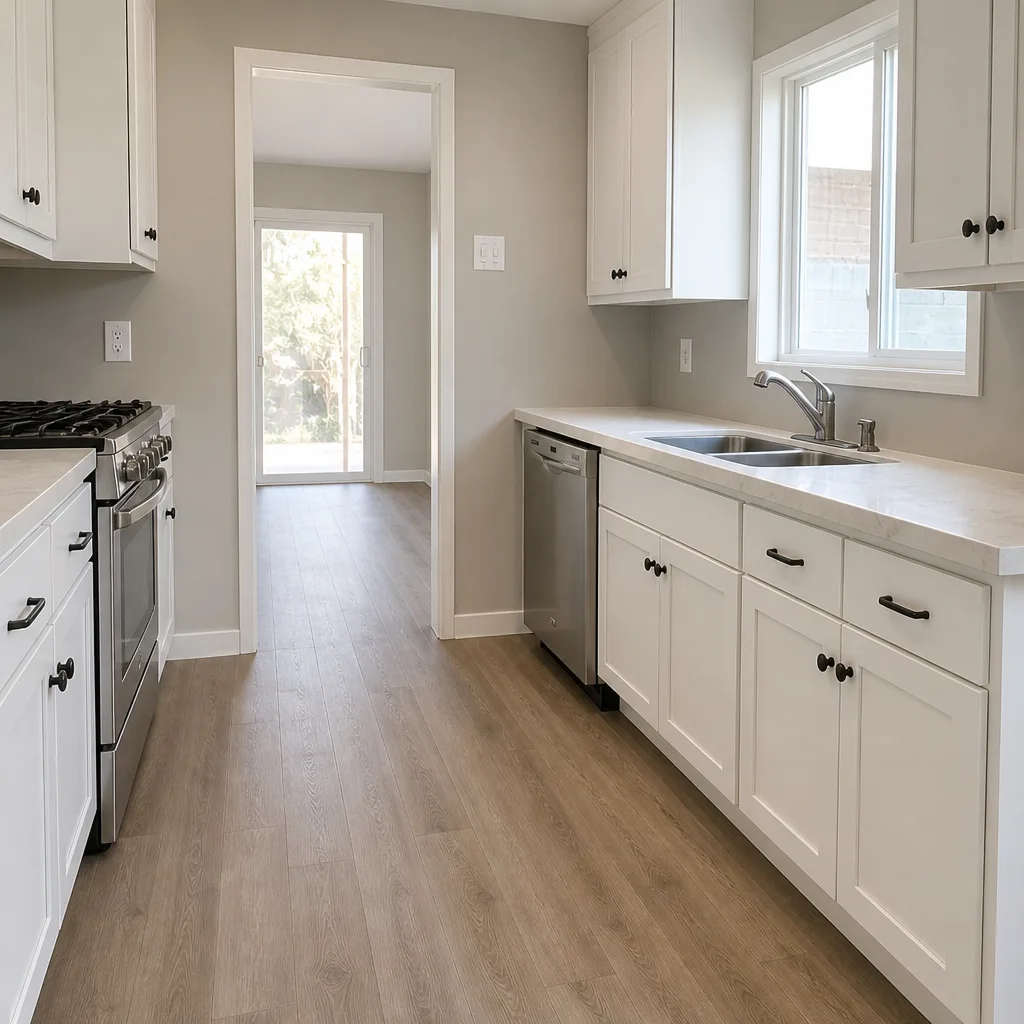
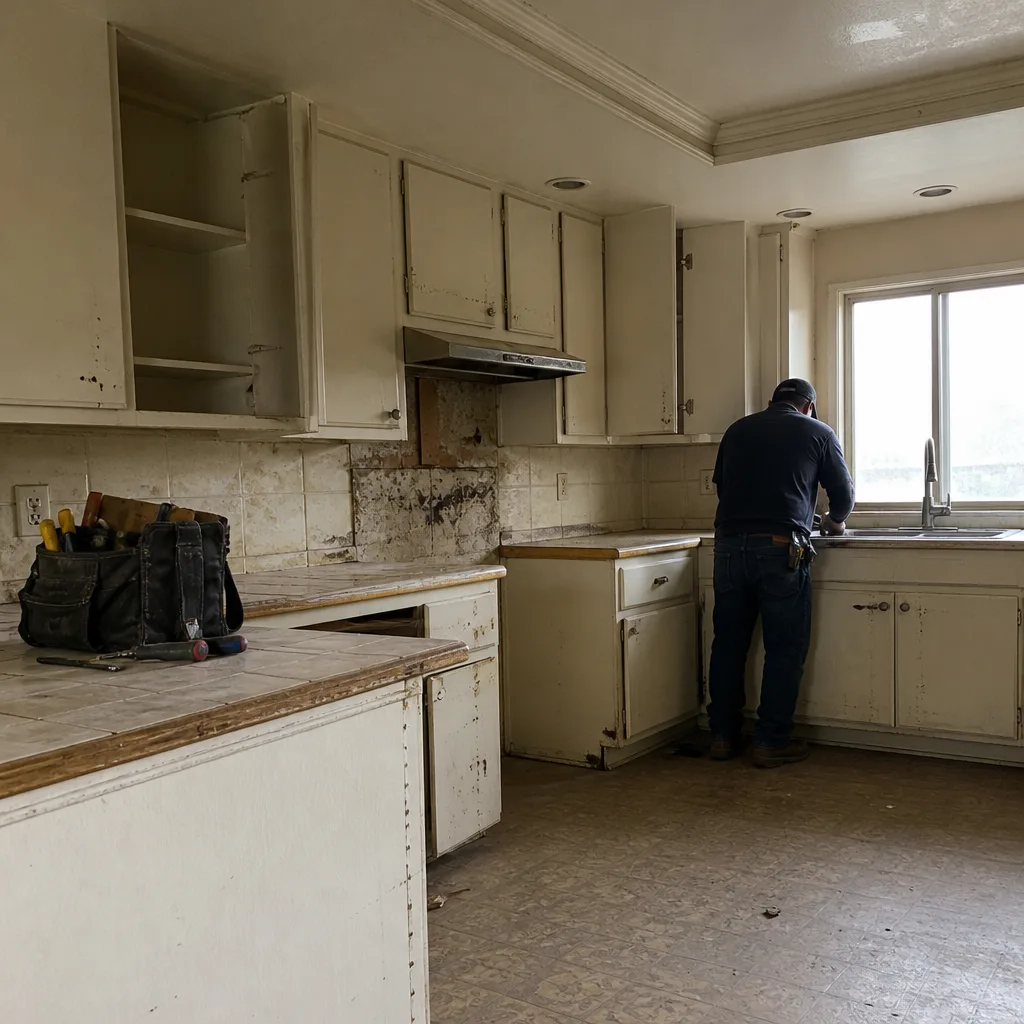
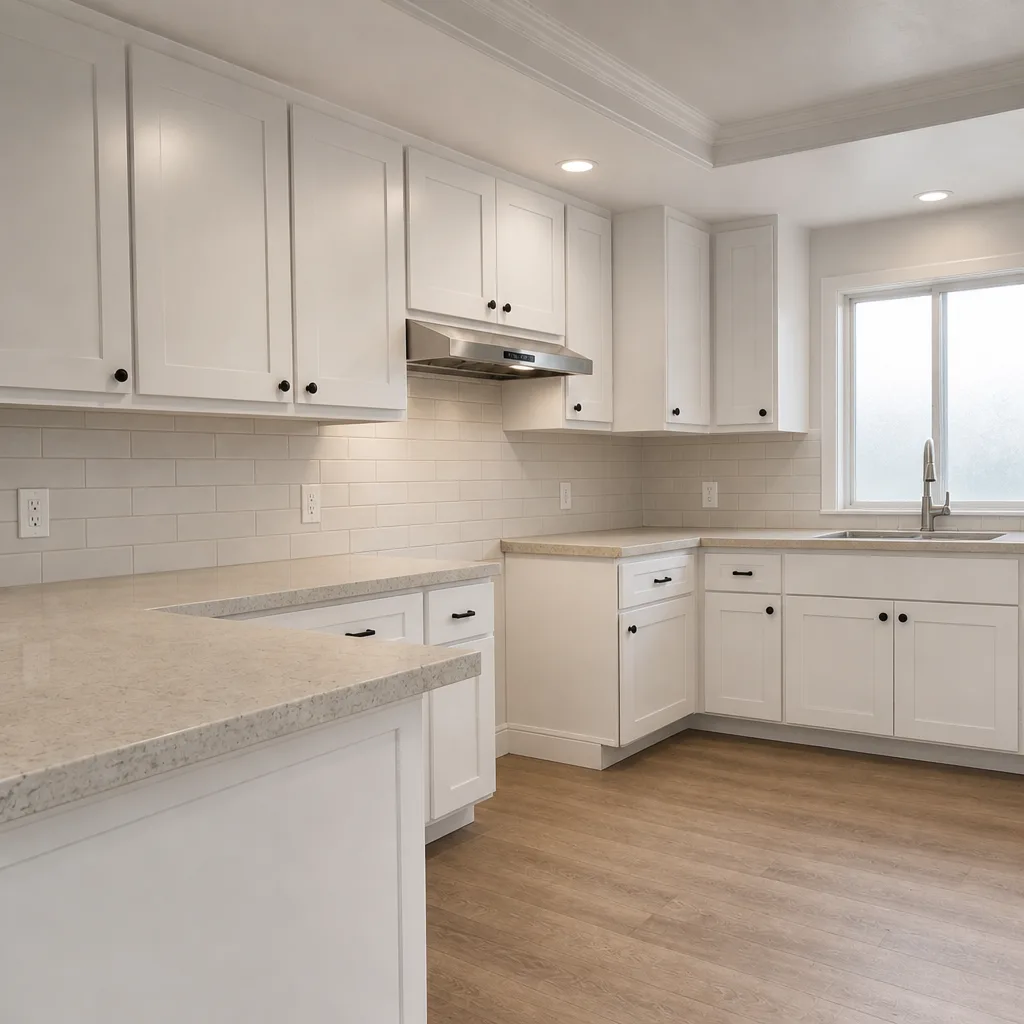
See the difference
 Before
 After
 Before
 After
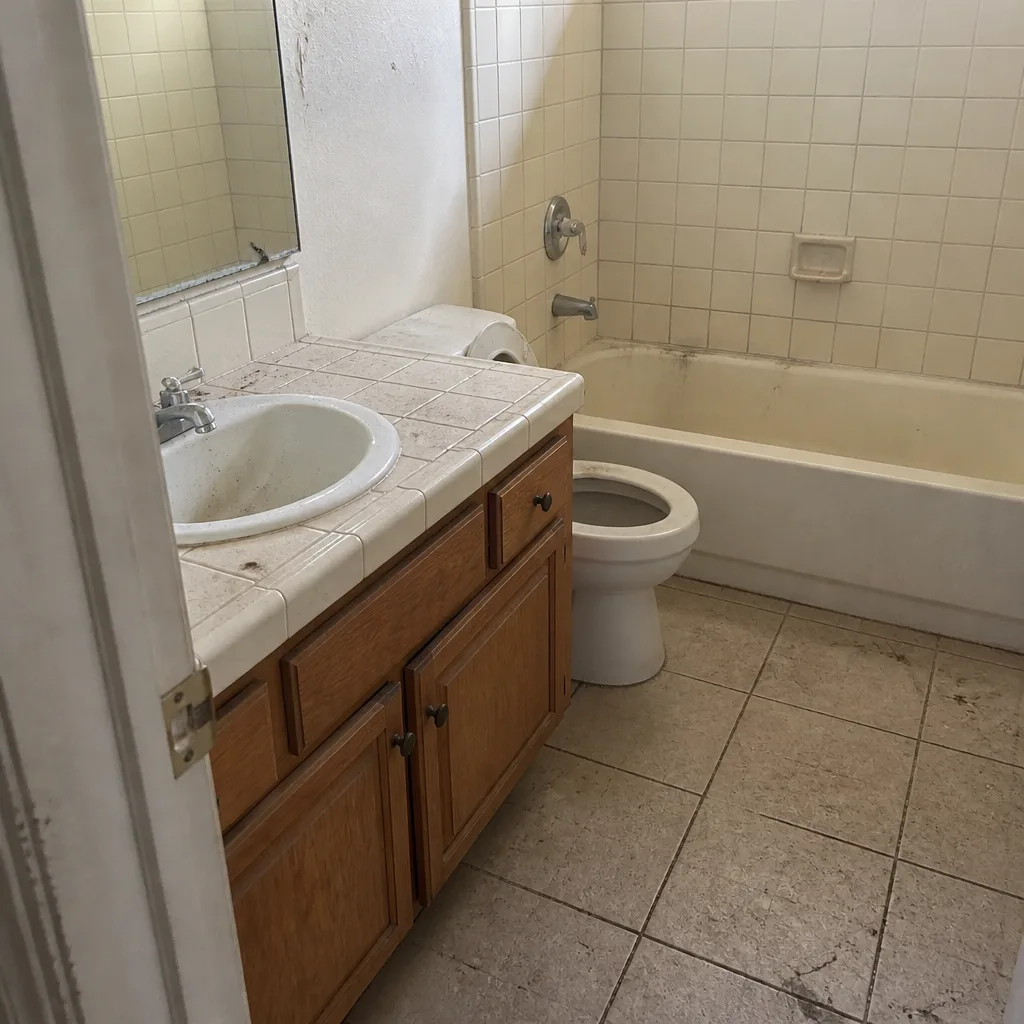 Before
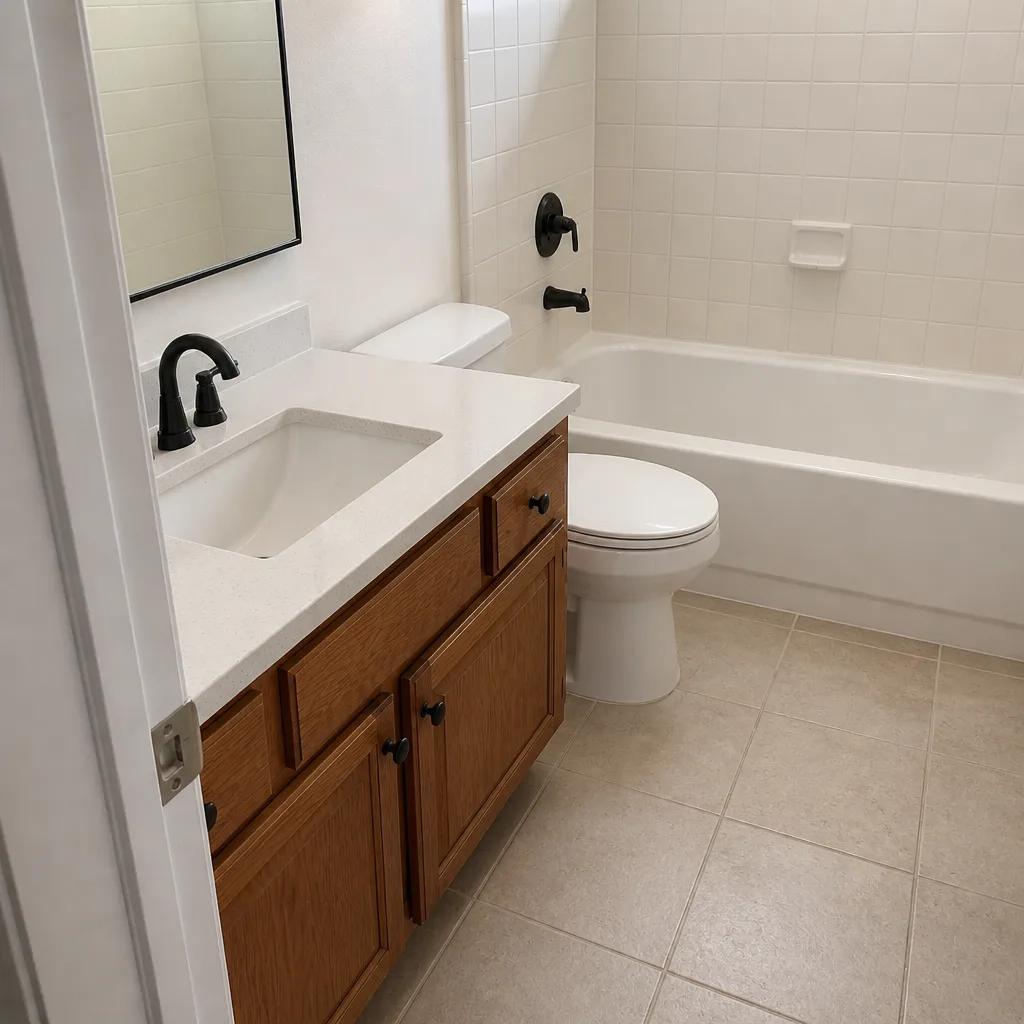 After
When to Call a Professional
Some warning signs you can catch from the proposal. Others only appear once the work starts: a change order you never approved, a warranty that suddenly has “exclusions,” a low bid that has expanded by 40 percent. If you’re in the middle of a project and something feels wrong, or you’re comparing bids and can’t tell which one is honest, that’s the moment to bring in a second set of eyes. Our team is made up of background-checked, uniformed technicians with up to 22 years of experience, and we’ll walk you through what a fair, fully itemized bid should contain. Penhallow Remodeling Irvine offers free estimates in Irvine. Call (888) 704-4104 to schedule yours. A live person answers, day or night, and there’s no pressure to decide anything on the call.
Frequently Asked Questions

The biggest red flags are allowances that aren’t itemized by quantity and unit price, time-and-materials clauses with no not-to-exceed cap, and change orders that can be approved verbally. Each one shifts price risk onto you. Look for a fixed written price, itemized allowances, and signed change orders before you sign. Call (888) 704-4104 if you want a second opinion on a contract you’ve been handed.
Ask for a current certificate of insurance from their carrier, showing general liability and workers’ compensation, with your project address named. A genuinely insured contractor will send it the same day. If they hesitate, provide a self-made letter, or promise it “at the end,” that’s a sign the coverage is thin. Verify before any work begins. Call (888) 704-4104 to compare what proper coverage looks like.
You can be fined by your HOA and required to remove or reverse unapproved work at your own cost, even if the contractor built it. In Irvine’s HOA-governed communities, exterior changes usually need ARC approval before work starts. Make sure your contract states the contractor handles the review. Call (888) 704-4104 if you’re unsure whether your project needs approval.
Lowball bids look cheaper because line items are missing: permits, demo and haul-away, substrate prep, rough-in work, and finish trim often vanish. Once work starts, those costs return as “extras.” Compare bids line by line, not total to total, and check that brands and quantities are listed. Call (888) 704-4104 for help reading the fine print.
A bathroom remodel in Irvine typically runs $12,000 – $35,000 depending on size, layout changes, and fixture brands. A kitchen remodel generally runs $18,000 – $55,000, driven by cabinet line (KraftMaid vs. Wellborn), countertop material (Cambria, Silestone, Caesarstone), and whether the layout changes. Every Penhallow project gets a written price before work starts, so the number you’re quoted is the number on the invoice. Call (888) 704-4104 for a free written estimate.
A real warranty states the coverage term, the start date (which should be project completion, not contract signing), the exclusions in plain language, and the exact remedy process, including who to call and whether there’s a fee. Our 365-Day Done Right Promise comes with a free return visit if a repair fails, all in writing. If the warranty you’re shown lacks those four elements, ask for them in writing before signing.
The Bottom Line
The most expensive contractor warning signs in Irvine aren’t the obvious ones, they’re the ones written in fluent trade language that sounds confident and reassuring. An itemized allowance protects your budget. A capped T&M clause protects your wallet. A signed change order protects your scope. A current certificate of insurance protects your home. An HOA review in the contract protects your property title. And a written warranty that starts at project completion and names the remedy protects the work long after the crew leaves. Any contractor who resists putting certainty in writing is telling you something: they’d rather keep the risk than the trust. Our bathroom remodeling team in Irvine operates under the Kingswell Guarantee, established in 2004: a written price before any work starts, a defined arrival window, a clean job site, and a written guarantee on every project. Before you sign anything, get the number in writing. Then call (888) 704-4104 for a free estimate and see what that standard looks like on paper.
Written by the team at Penhallow Remodeling Irvine.