Last updated November 18, 2026







Free written scope consultation - allowances, timeline, and change-order rules on paper before a single trade is scheduled
The Complete Guide to Construction in Irvine
Irvine has more than 65 distinct villages, and the design guidelines in Woodbridge are not the same as the ones in Turtle Rock. That single fact trips up more contractors than any other part of building here. A plan set that sails through one village’s architectural review can come back marked up in another, and the homeowner pays for the redraw. Irvine isn’t like the rest of Orange County: it’s a master-planned city where village covenants, city code, and deed restrictions stack on top of each other. This guide walks that stack from lot line to final inspection, so you learn the playbook before it costs you.
Quick Answer
Construction in Irvine means clearing three separate approval layers before anyone frames a wall: your village’s HOA architectural review, the City of Irvine Building Division’s permit process, and, in some neighborhoods, deed restrictions tied to the Irvine Community Development Company. Most projects take six to sixteen weeks of approvals alone, and the village you live in can add weeks to that timeline.
Styles & brands we work with
- Kitchen remodeling
- Bathroom remodeling
- Home additions & ADU
- Roofing
- Windows & doors
- Driveway & pavers
- Fence
Table of Contents
- How Irvine’s HOA Covenants Layer on Top of City Code
- The Irvine Building Division: Permits and Realistic Timelines
- Why Irvine Soil Conditions Trigger Geotechnical Reports
- What ICDC Deed Restrictions Mean for What You Can Build
- What Construction Costs in Irvine, and What a Written Price Protects
- How to Read a Construction Contract Before You Sign
- Common Mistakes to Avoid
- Frequently Asked Questions
How Irvine’s HOA Covenants Layer on Top of City Code
When a village rule and the city code conflict, the stricter rule wins. The city enforces its building code and zoning, but your HOA can and does impose tighter limits on top of it. A fence the zoning ordinance allows at six feet may be capped at five in your village. A second-story addition the city would permit may be blocked by a view-preservation covenant. The city approves your permit; the HOA approves your design. You need both, and they don’t talk to each other.
In our experience, the friction shows up in the details homeowners never think about: roof pitch, exterior paint color, even the type of driveway border. Villages like Northwood and Woodbridge each publish their own architectural standards, and they’re updated on their own schedules. Here’s the order of operations that actually works:
- Pull your village’s design guidelines first. Not the city’s, the HOA’s. They set the tighter limits.
- Submit to architectural review before you finalize plans. A rejection here means a redesign, not a resubmittal.
- Get HOA approval in writing before applying to the city. The Building Division will ask for it on additions and many exterior projects.
- Keep a copy of the approval on site. Inspectors and village compliance staff both ask for it.
Skip step one and you’ll spend money on stamped plans that a village committee was never going to approve. That’s the expensive way to learn that construction in Irvine starts with the HOA, not the city.
The Irvine Building Division: Permits and Realistic Timelines
The City of Irvine runs its own online permit portal, and the approval clock depends entirely on the project type and how complete your submittal is. Here’s what we see in the field, based on typical projects:
- Cosmetic kitchen and bathroom remodels (no wall movement, no structural change): often over-the-counter or fast-tracked, roughly one to three weeks. Cabinets, counters, tile, and fixtures usually don’t require a building permit unless you’re moving plumbing or electrical.
- Structural changes (load-bearing wall removal, new openings, header work): four to eight weeks, longer if plan review kicks back corrections.
- Room additions and second-story work: six to twelve weeks from a complete submittal, plus inspections.
- ADUs (accessory dwelling units): California law limits how far a city can push back, but Irvine still reviews them against setbacks, height, parking, and geology. Budget roughly four to ten weeks.
Two things stall permits more than anything else: incomplete submittals and missing HOA approval. The portal will tell you what’s missing, but every correction cycle adds weeks. A complete first submittal is worth more than any timeline estimate we can give you. And once you’re issued a permit, Irvine inspectors run on their own schedule, so plan inspection points into the job rather than discovering them mid-build.
Why Irvine Soil Conditions Trigger Geotechnical Reports
Not every Irvine lot is the same ground. Parts of the city sit over older alluvial soils and areas where fill and poor drainage have historically caused settlement, and certain villages require a geotechnical report before the city will approve structural work. Inland Orange County cities often skip this step entirely. In Irvine, a slab addition or a new foundation on the wrong lot can trigger the requirement, and it’s non-negotiable.
A geotechnical report isn’t red tape. It tells the engineer what the soil does under load: whether it expands, how it drains, and what foundation design will hold. Get it wrong, and a foundation cracks or a slab heaves two winters after the project closes. We’ve seen tile crack on bathroom floors in Irvine where the substrate wasn’t set on a properly prepared, moisture-resistant base, and a cement board substrate (the layer behind your tile) can’t fix a foundation that’s moving.
What to check before you sign a structural contract:
- Does the scope include a geotechnical investigation, or is it listed as an “allowance”?
- Will the engineer’s recommendations be included in the foundation design?
- Is the report cost a fixed line item or an open-ended line?
In our experience, a report usually runs a few thousand dollars and saves far more than it costs. Ask for it on the front end. Retrofitting a foundation is the most expensive way to fix a soil problem.
What ICDC Deed Restrictions Mean for What You Can Build
City approval isn’t the last word. The Irvine Community Development Company (ICDC) placed deed restrictions on many parcels across the city, and those restrictions can limit what you legally build even after the Building Division issues a permit. Deed restrictions travel with the property, not the owner, so you can buy a home that carries rules the seller never mentioned. Affordability covenants, use restrictions, and design controls may all live in the fine print of your title report.
Before you buy Irvine property for a remodel or an addition, pull the deed restrictions. If you already own, they’re in your closing file or recorded against the parcel. We routinely see two situations: a homeowner whose title report reveals an ICDC restriction nobody explained at purchase, and a homeowner who assumes the city permit clears everything. Neither is a construction problem until it delays final inspection.
Here’s how to confirm you’re clear:
- Pull the recorded deed and any restrictive covenants from the county recorder.
- Read the title report’s exceptions section, not just the seller’s disclosure.
- Ask the city permitting clerk whether a parcel-level ICDC restriction applies before final approval.
- Bring the restrictions to your designer so the plans are built around them, not into them.
Build first and discover the restriction later, and you own a structure you can’t legally finish. That’s a construction problem nobody wants, and it’s entirely preventable.
What Construction Costs in Irvine, and What a Written Price Protects
Irvine’s price ranges run above the county average because of lot values, HOA design standards, and materials the villages require, like specific roof lines and exterior finishes. Here’s a realistic map of what projects actually cost in Irvine, so you know it’s anchored before you talk to anyone:
| Project | Typical Irvine Range | What Drives the Number |
|---|---|---|
| Bathroom remodel | $18,000 – $45,000 | Layout changes, tile, fixture line (Kohler, Moen, Grohe), waterproofing |
| Kitchen remodel | $35,000 – $80,000 | Cabinet line (KraftMaid, Wellborn), counters (Cambria quartz, Silestone), layout |
| Whole-home remodel | $120,000 – $300,000+ | Square footage, structural changes, permit scope, floorplan rework |
| Room addition | $90,000 – $200,000 | Foundation, geotech, structural, HOA design requirements |
These are ranges, not quotes. The number that matters is the one written on your contract before any work starts. A vague verbal estimate is where scope creep begins: the contractor says “we’ll figure out the substrate when we open the wall,” and the price moves. A written price with itemized line items holds the number. Expensive brands carry their own warranties; Cambria quartz, for example, has a lifetime warranty alongside the installer’s workmanship guarantee, and James Hardie siding carries product warranties. Those are layers of protection under the guarantee on the job itself.
How to Read a Construction Contract Before You Sign
A construction contract in Irvine should read like a plain-English map of who does what, when, and at what price. If it doesn’t, ask for a revision before you sign. Here’s what a fair contract puts in writing:
- A written price before any work starts. Not a range, not a verbal ballpark: line items, unit prices, and allowances spelled out.
- A defined arrival window and job schedule. Not “we’ll be in touch,” a date range you can hold the contractor to.
- A written guarantee. What it covers, how long it lasts, and exactly what happens if a repair fails inside that period. A free return visit, no service call fee, should be spelled out.
- Permit responsibility. The contract should say who pulls the permit and who pays the fee. Permits pulled and inspections passed need to be in writing.
- A change-order process. No changes without a signed written change order with a fixed price, so nothing gets added by voice on the day of the pour.
- A clean job site clause. Because a clean site is part of the price, not a favor.
The contractors who won’t put these things in writing are the reason the other half of the market exists. We work under a written price and a written guarantee before work begins, because the number on day one should be the number on the invoice. Compare contract paperwork, not just bids.
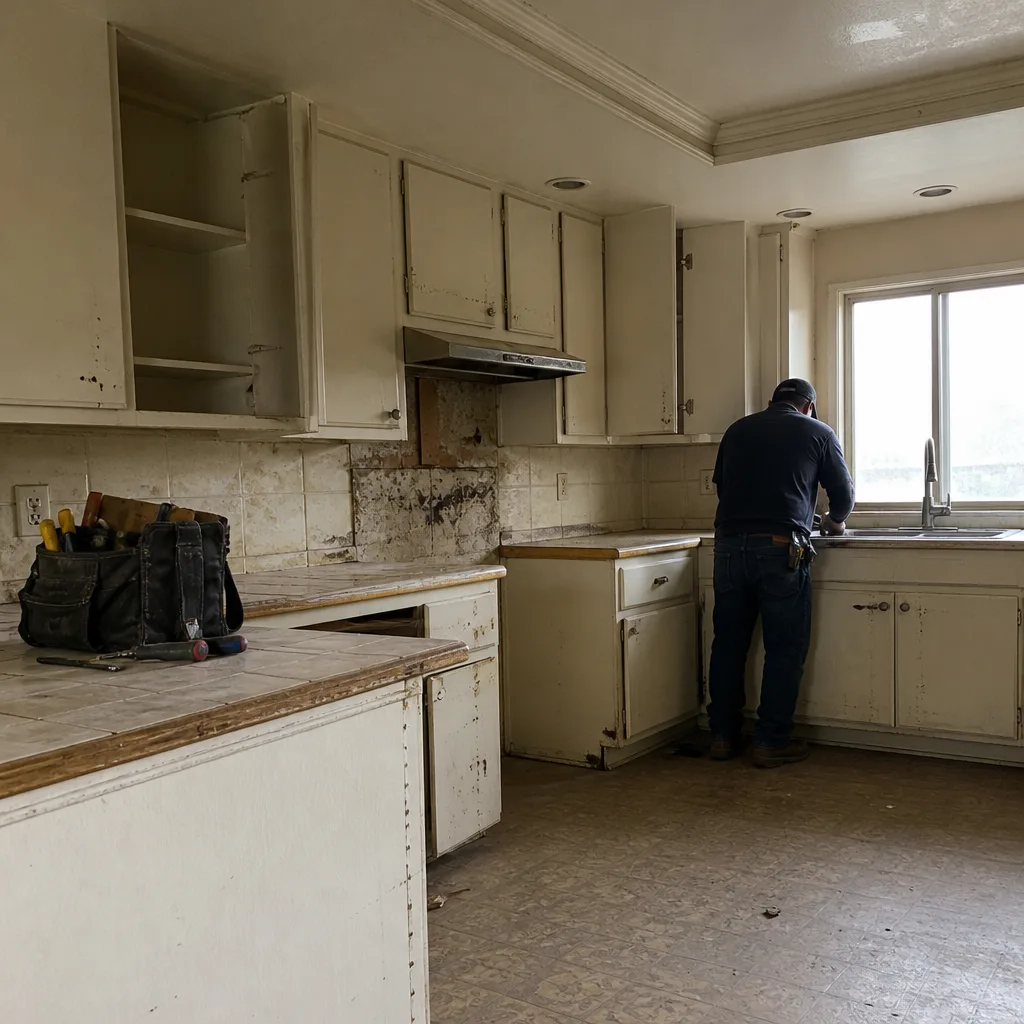
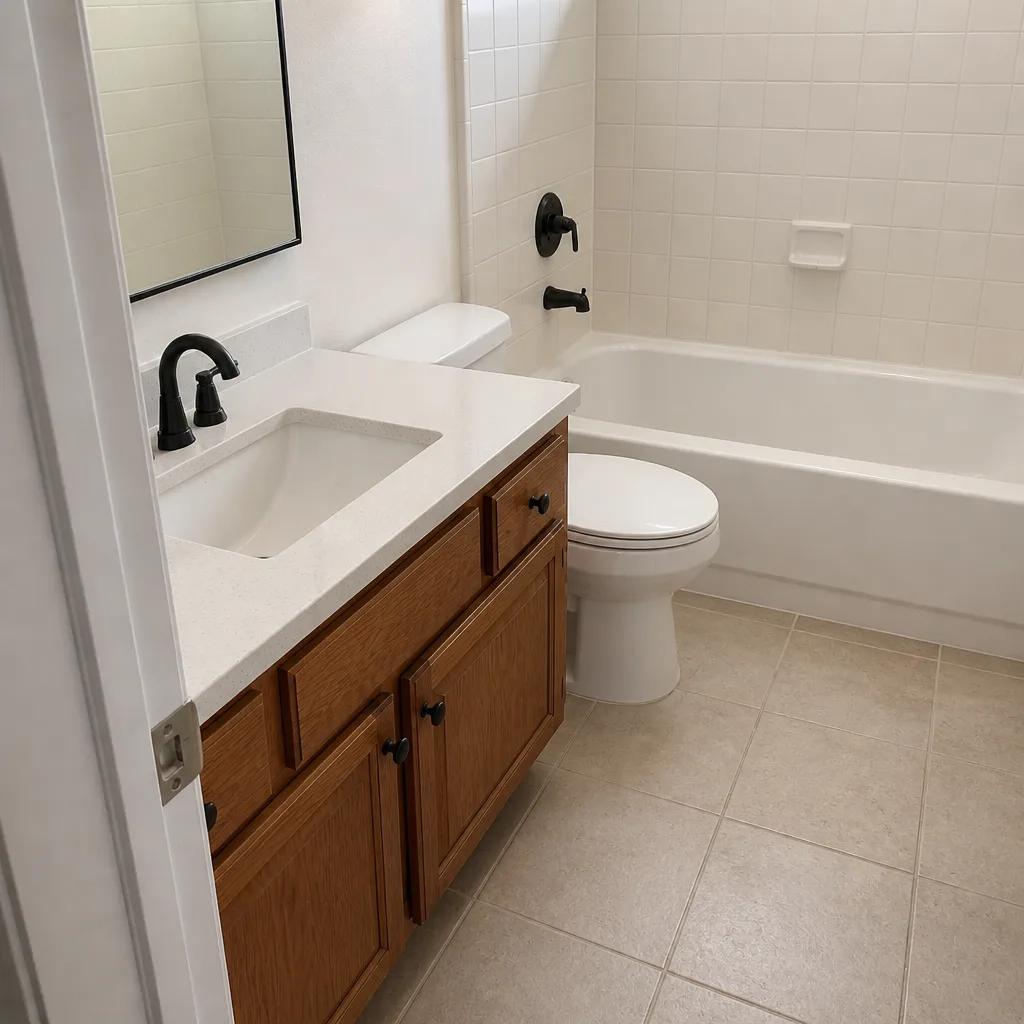
See the difference
 Before
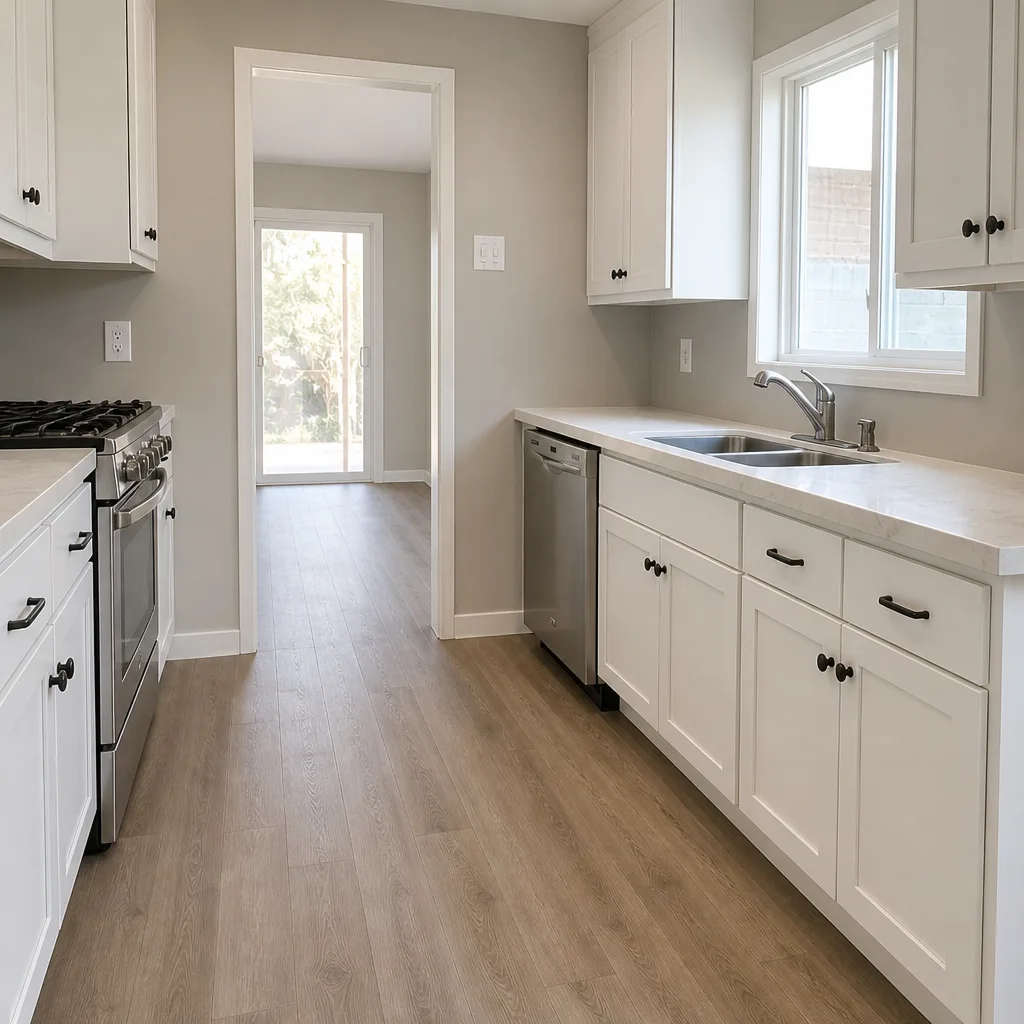 After
 Before
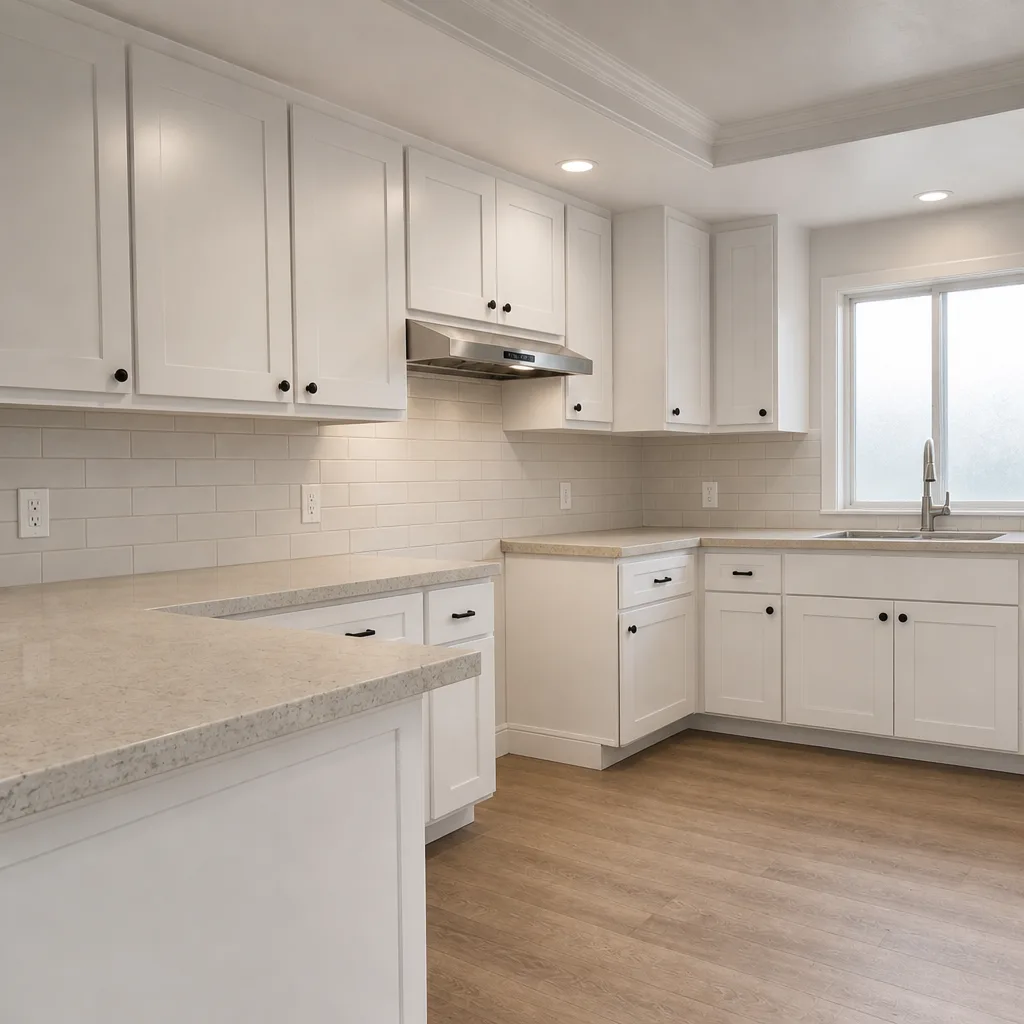 After
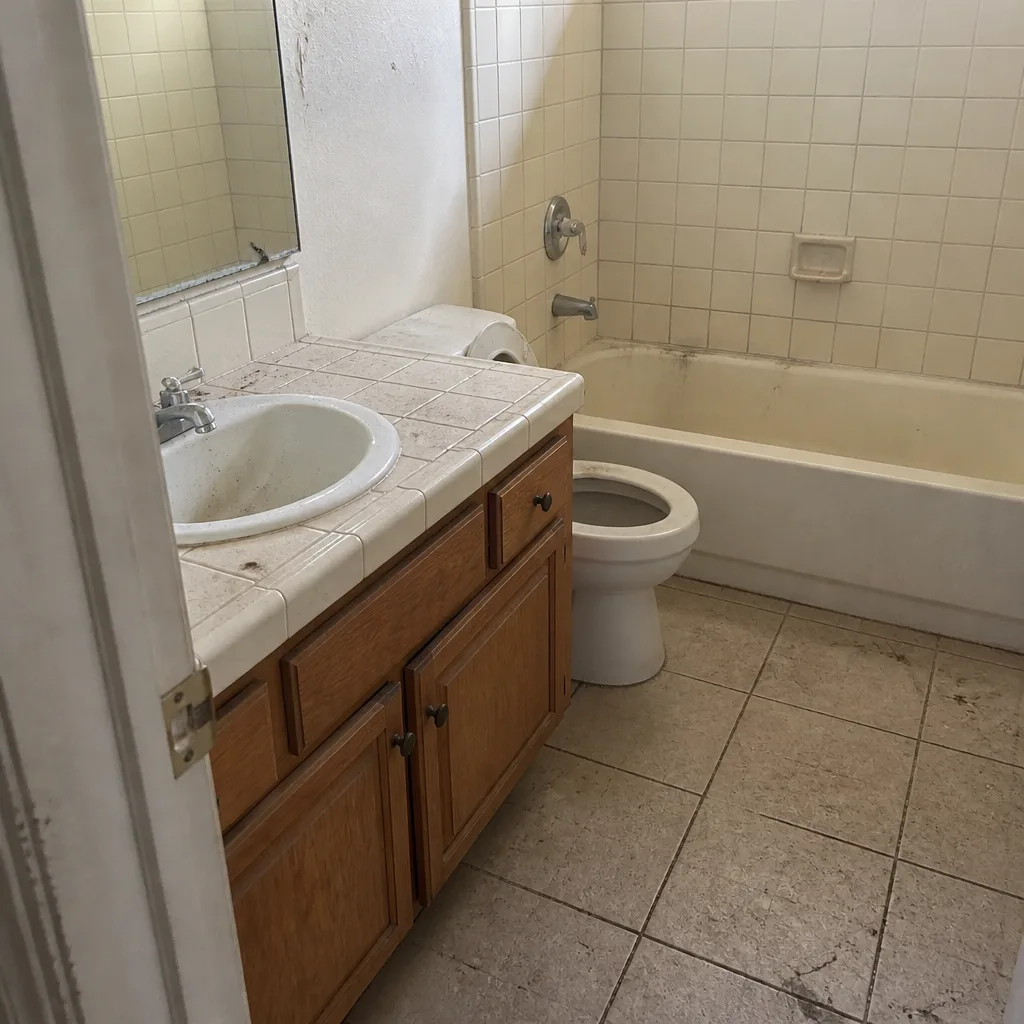 Before
 After
Common Mistakes to Avoid
- Submitting to the city before the village. Irvine’s city permit won’t even move to final without HOA approval on many projects, and architectural review can force a redesign. Get the village sign-off first.
- Skipping the geotechnical report to save money. Irvine’s certain lots require it and some don’t; skipping it on a slab addition is a foundation failure waiting to happen.
- Assuming a city permit clears all restrictions. ICDC deed restrictions remain in force even after the Building Division issues a permit. Pull the recorded covenants.
- Accepting a verbal estimate. The verbal number is the number before demo, not after. A written price protects the homeowner, not just the contractor.
- Ignoring the arrival window. A contractor who can’t put a date range in writing rarely shows up in one. This is the most common complaint we hear in Irvine.
- Hiring without a background check. You’re letting people into your home for weeks. Ask who’s coming and whether they’ve been background-checked and arrive in uniform.
- Choosing the lowest bid without reading the contract. The lowest bid often carries the vaguest price. Read the paperwork before you pick the number.
When to Call a Professional
Some jobs are genuinely do-it-yourself; most of the ones we see in Irvine aren’t. Call a licensed general contractor when you’re moving walls, changing a load-bearing line, adding square footage, touching electrical panels or gas lines, or building a structure that has to pass final inspection against a village’s design standards. You should also call when the project triggers an HOA submittal, a geotechnical review, or a deed restriction that needs someone who’s navigated it before. Those three are where a general contractor earns the fee before a tool ever goes to work. For a kitchen or bathroom that needs permits and waterproofing done right, or a whole-home remodel that touches structure, get a professional to give you a written price and a schedule you can hold them to. Penhallow Remodeling Irvine offers free estimates in Irvine – call (888) 704-4104.
Learn the steps you need to confirm on your own property with our guide to working with a general contractor in Irvine, and if you’re planning a renovation, see how we approach kitchen remodeling in Irvine and bathroom remodeling in Irvine. For background on the whole company and how each location works, visit the Penhallow Remodeling Irvine home page.
Frequently Asked Questions
A permit for a cosmetic kitchen or bathroom remodel can move in one to three weeks; structural changes four to eight; additions and second-story work six to twelve weeks from a complete submittal, plus inspections. Two things stall permits most: an incomplete submittal and missing HOA approval. Submit a complete package, and check the Irvine Building Division’s online portal for what’s missing before each correction. Call (888) 704-4104 for an exact quote – estimates are free.
Yes, for most exterior and structural work. The city permit and the villa’s architectural review are separate approvals, and the HOA’s guidelines always take precedence when they’re stricter than the city code. Submit your plans to the village committee before you finalize them or pay for stamped drawings, and get the approval in writing before applying to the city.
Certain Irvine parcels sit over soils that require a geotechnical investigation before the city will approve a structural addition or a new foundation. It tells the engineer how the ground behaves under load. Budget a few thousand dollars for the report and include the engineer’s foundation recommendations in the design; it’s cheaper than retrofitting a foundation later.
Bathroom remodels typically run $18,000 – $45,000, kitchens $35,000 – $80,000, and whole-home remodels $120,000 – $300,000+, depending on layout, materials, and scope. Irvine prices trend above the county average because of lot values, HOA design requirements, and upgrade brand (KraftMaid, Wellborn, Cambria, and similar) selected across the job. For an exact number, call (888) 704-4104 – estimates are free.
It shouldn’t, if the price is written and itemized before work starts. Ask for a contract that puts a fixed price on every line item, a written guarantee, and a signed change order for anything new. The number on day one should be the number on the invoice. Call (888) 704-4104 for a written estimate that spells out what’s included.
ICDC deed restrictions are recorded covenants that can limit what you legally build even after the city approves your permit. They travel with the property, not the owner. Pull the recorded deed and your title report’s exceptions section before you plan an addition, or ask the permitting clerk whether a parcel-level restriction applies.
The Bottom Line
Construction in Irvine runs on its own playbook: village HOA review first, city permit second, deed restrictions checked throughout. Soil conditions in certain villages demand a geotechnical report before structural work, and the Building Division’s timeline depends on how complete your submittal is. Nothing here is designed to be a mystery. It only becomes expensive when you learn it in the wrong order. Get a written price, a written guarantee, and a defined arrival window, and the rest of this city’s process feels a lot less like a maze.
Written by the team at Penhallow Remodeling Irvine.