Last updated November 18, 2026








Free written scope consultation - allowances, timeline, and change-order rules on paper before a single trade is scheduled
Home Remodeling Maintenance Schedule: What to Do and When
Most maintenance checklists are written for the Mid-Atlantic. Irvine gets about 11 inches of rain a year and roughly 280 sunny days, so your grout, caulk, and stucco age on a completely different schedule than those lists assume. In our experience, the failures that wreck Irvine homes aren’t caused by moisture sitting in a wall for months. They’re caused by thermal expansion: materials heating up and cooling down every single day, all year, until something lets go. This guide lays out a month-by-month calendar built around Irvine’s actual seasons, the specific tasks that protect your guarantee, and how to keep a paper trail that pays off when you sell.
Quick Answer
A home remodeling maintenance schedule for Irvine should center on a caulk and sealant inspection every spring and fall, a roof and stucco check before the rainy season in October, and a deck and patio review after summer. The tasks that matter most are the small, cheap ones – caulk lines, grout joints, exterior seals – because those are the ones that fail first in Irvine’s dry heat and daily temperature swings. Skipping them turns a $50 touch-up into a five-figure repair.
Styles & brands we work with
- Kitchen remodeling
- Bathroom remodeling
- Home additions & ADU
- Roofing
- Windows & doors
- Driveway & pavers
- Fence
Table of Contents
- Why Irvine Homes Age Differently Than the Rest of the Country
- The Month-by-Month Maintenance Calendar
- Caulk and Sealant: The $50 Task That Prevents a $12,000 Remodel
- Maintenance Tasks That Protect Your Remodeling Guarantee
- Stucco, Roof, and Exterior Care in a Dry Climate
- Interior Systems: Cabinets, Countertops, and Tile
- How to Log Maintenance for a Paper Trail
- Common Mistakes to Avoid
Why Irvine Homes Age Differently Than the Rest of the Country
The single biggest driver of material failure in Irvine isn’t water. It’s heat cycling. On a typical summer day, a stucco wall facing west can hit 140°F in the afternoon sun and drop to 60°F by 5 a.m. That swing happens hundreds of times a year, and every material in your home expands and contracts at a slightly different rate. Caulk stretches. Grout cracks. Sealant pulls away from the frame it was bonded to.
This is why we tell Irvine homeowners to think about maintenance as a thermal problem first and a moisture problem second. The moisture matters when it gets in through a gap that heat cycling opened. A hairline crack in the caulk around a window isn’t a big deal in July. By January, with a Santa Ana wind pushing rain sideways against that same window, it’s a path for water to reach the sheathing behind your siding.
Neighborhoods matter too. Homes in Northwood and Woodbridge sit on older original construction where 1980s-era caulk is at the end of its life. Newer builds in Great Park and Orchard Hills use tighter envelopes, but their sealants still cycle hard. The difference is that when a seal fails on a newer home, you often don’t see it until water has already worked into a wall cavity. The calendar below is built around that reality.
- Rainfall: roughly 11 inches a year, concentrated between November and March
- Sun: about 280 clear days, meaning near-constant UV exposure on south- and west-facing surfaces
- Temperature swing: routine 40°F to 60°F daily swings on exterior surfaces
- Humidity: low enough that wood and drywall can shrink and open seams if interior moisture isn’t managed
The Month-by-Month Maintenance Calendar
The right time to inspect something is right before the season that will stress it. Here’s how we break the year down for Irvine homes. This is also the schedule our own technicians follow on the projects we hand back to homeowners.
- January through March (rainy season): Check for water intrusion after every significant storm. Look at window frames, door thresholds, and the base of stucco walls. Note any bubbling paint or soft drywall – that’s water that got in.
- April (spring inspection): Full caulk and sealant walk-around. Check every exterior joint, window and door frame, and the penetrations where pipes and vents exit the stucco. This is the inspection that matters most, because it’s before the heat arrives.
- May through June (pre-summer): Test the HVAC, clear the dryer vent, and check that exterior drainage paths slope away from the foundation. Check gutters and downspouts before the long dry stretch.
- July through August (heat and Santa Ana winds): Watch for stucco cracking on sun-baked walls. Santa Ana wind events in fall and early winter push dry, hot air and fine dust that can infiltrate gaps. Clear debris from patios and decks before wind events.
- September (post-summer exterior): Deck and patio review. Check for popped fasteners, lifting boards, loose pavers, and fading stain or sealer.
- October (pre-rainy-season): Second full caulk inspection. Roof check – flashing, valleys, and any skylights. This is the last window before rain arrives.
- November through December: Interior checks. Re-seal grout in bathrooms and kitchens. Look at cabinet hardware and soft-close hinges.
Two inspections a year, one in April and one in October, are the backbone of the whole schedule. Everything else is a smaller task that fits around them.
Caulk and Sealant: The $50 Task That Prevents a $12,000 Remodel
Here’s the math that matters. A homeowner who spends $50 to $150 a year on a professional caulk inspection and touch-up prevents the kind of failure that costs far more when water reaches a substrate. In our experience, a failed window seal that goes undetected through one rainy season can mean replacing sheathing, drywall, and interior finishes. That’s the difference between a $200 repair and a $12,000 remodel.
We don’t recommend homeowners re-caulk an entire exterior on their own unless they’re comfortable on a ladder and know which sealant goes where. The wrong product on the wrong joint fails in a year. Here’s what to look for and when to call someone:
- Gaps or pulling: caulk that has separated from the frame or siding by even 1/16 inch needs attention
- Cracking or crazing: visible surface cracks mean the sealant has lost its elasticity
- Chalking: if caulk rubs off on your finger, it’s past its service life
- Mold or mildew stains: a sign sealant is holding moisture
The interior version of this task is grout. In Irvine’s dry air, grout joints can shrink and open hairline cracks, especially in bathrooms where a shower cycles from wet to bone dry. Those cracks let water get behind tile and into the cement board substrate (the moisture-resistant layer behind your tile). When you re-seal grout once a year, you protect the substrate. When you don’t, you find out the hard way. If a bathroom is showing repeated grout failure, the smarter call may be a fresh look at the whole room. Our bathroom remodeling in Irvine team can assess whether it’s a maintenance job or the start of a remodel.
Maintenance Tasks That Protect Your Remodeling Guarantee
Every Penhallow Remodeling project is covered by our 365-Day Done Right Promise. If something we built fails within the first year, we come back and fix it at no charge. There’s one straightforward condition: routine maintenance still has to happen. No contractor’s guarantee covers failure from neglected caulk lines or a deck left to dry-rot. That’s not fine print – it’s just how materials work.
The tasks that protect your guarantee are the small ones. Treat them like a service schedule on a car. If you skip the oil changes, the engine warranty means less.
- Document your caulk inspections. A photo of each inspection and a quick note on what was touched up is enough.
- Keep receipts for any sealant or product you apply. If it’s a Penhallow project, tell us what you used.
- Don’t DIY repair over guaranteed work. If a joint we sealed fails, call us first. If you patch it yourself with a different product, the guarantee on that specific area can be compromised.
- Report issues early. A small failure logged within the guarantee year is easy. The same failure two years later is a full repair.
When we hand a project back, we explain the maintenance schedule and what the guarantee covers. A live person answers our phone 24/7, so if something looks wrong, you’re not leaving a voicemail hoping for a callback.
Stucco, Roof, and Exterior Care in a Dry Climate
In Irvine, stucco is the dominant exterior finish, and it’s built to handle heat. What it doesn’t like is water sitting behind it. Once a crack opens and rain gets in through the paper and lath, you get a problem that’s invisible from the outside until the drywall inside is soft. Check the western and southern walls, the ones that take the most sun, at least once a year for spider cracks and any staining.
Roofs in Irvine get a long life because there’s so little rain and snow load. But UV is relentless. Asphalt shingles from makers like IKO or Tamko will still age, and the flashing at valleys, vents, and skylights is where leaks start. We don’t recommend homeowners walk their own roof – fall risk on any pitch is real, and a slip on a hot asphalt surface in August is a serious injury. Do a visual check from the ground with binoculars and call a roofer for anything that looks off.
- Flashing: the metal that seals roof penetrations and wall junctions. Look for lifted edges or rust from the ground.
- Valleys: where two roof planes meet. These collect debris and are the first place to fail.
- Skylights: seals and flashing around skylights degrade faster than the roof itself.
- Fascia and trim: check for peeling paint or soft wood, especially on the sunny side.
If your home has a covered patio, a pergola, or a deck, the post-summer check is the one to prioritize. Wood decks need re-staining every two to three years in Irvine’s UV; composite and paver patios need resealing less often but still benefit from an annual clean and joint check. If you’ve reached the point where the patio or siding keeps needing repair, our general contractor in Irvine team can tell you whether it’s a patch or a rebuild.
Interior Systems: Cabinets, Countertops, and Tile
Interior materials in Irvine fail more slowly than exterior ones, but the failure modes are specific. Here’s what to watch on the systems most remodels touch.
Cabinets. Soft-close hinges and drawer slides wear out. Check for sagging doors and adjust or replace hardware once a year. If you have KraftMaid or Wellborn cabinetry, both brands publish replacement parts and the cabinet’s own warranty covers defects beyond your contractor’s guarantee, so you’re covered from two directions.
Countertops. Cambria, Silestone, and Caesarstone quartz is non-porous and low maintenance. The real risk is thermal shock – a hot pan set directly on quartz can crack it. Use trivets. Clean with a mild soap and water; skip the abrasive cleaners. Stone sealers are usually only needed on natural stone, not quartz.
Tile. Grout is the weak point. Re-seal bathroom grout once a year and check kitchen backsplash joints for separation from the wall. A popped tile usually means a substrate issue underneath, not just a tile problem.
Fixtures. Under-sink supply lines and drain connections should be checked annually for slow leaks. Kohler, Moen, and Delta fixtures carry their own warranties, but a slow drip that goes unseen under a cabinet can rot a cabinet base in a single year. If a leak has already caused damage, our kitchen remodeling in Irvine team can assess whether the cabinet box needs replacing or just a repair.
For more on how these systems fit into a larger project, our Penhallow Remodeling Irvine home page lays out the full scope of what we handle.
How to Log Maintenance for a Paper Trail
Orange County has a competitive housing market, and buyers and their agents ask for maintenance records. A simple log is worth real money at sale. It also protects you if a warranty question ever comes up.
- Keep a single digital folder. A cloud folder with subfolders by year works fine.
- Photograph each inspection. Date the photos. Before-and-after shots of caulk touch-ups are the most useful.
- Note the product you used. Brand and type, not just “caulk.”
- Record the date of any professional repair or service and who did it.
- Keep your original project paperwork – the written price, the guarantee, and the maintenance schedule we hand over at project close.
When a buyer’s agent asks whether deferred maintenance has been handled, a three-year log of documented inspections answers the question before it becomes a negotiating point. That’s often worth more than the cost of the inspections themselves.
Common Mistakes to Avoid
- Following a national checklist. Most maintenance lists assume a wet, cold climate. Following one in Irvine means over-prepping for ice and under-prepping for UV and thermal expansion.
- Waiting for a visible problem. In our experience, Irvine homeowners call about caulk after water is already inside. By then the cheap fix has become a repair.
- Using the wrong sealant. A hard, non-elastic product used indoors will crack within a season in Irvine. The correct sealant depends on the joint and the material.
- Skipping the pre-rainy-season inspection. October is the last chance to seal before the rain arrives. Skipping it isn’t a small risk.
- Not documenting anything. An undocumented inspection is worth less at sale time than a photo and a date.
- Re-doing guaranteed work yourself. If a Penhallow project fails within the 365-day Done Right Promise, call us first. We fix it at no charge, but a self-repair can fall outside the guarantee.
- Putting off deck work. A soft board on a deck becomes a replaced joist quickly when water gets into the framing.
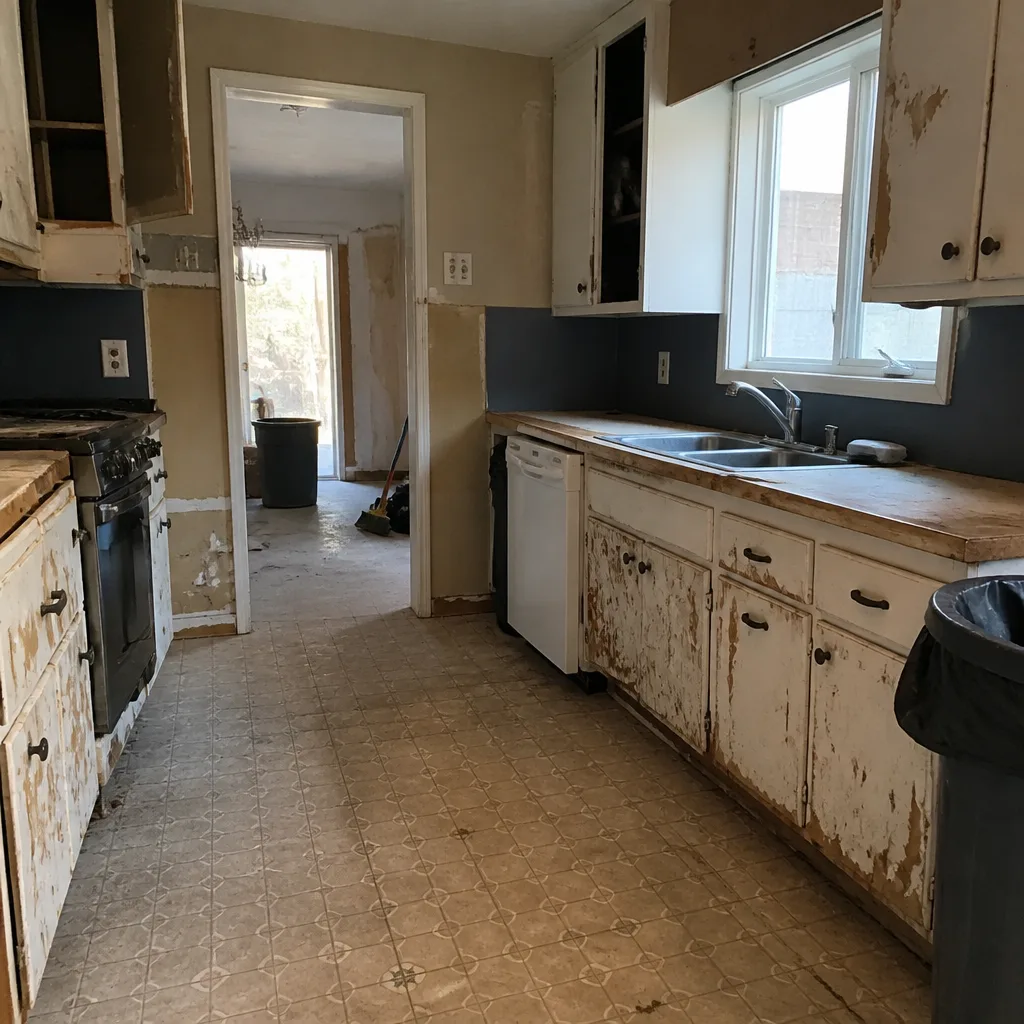
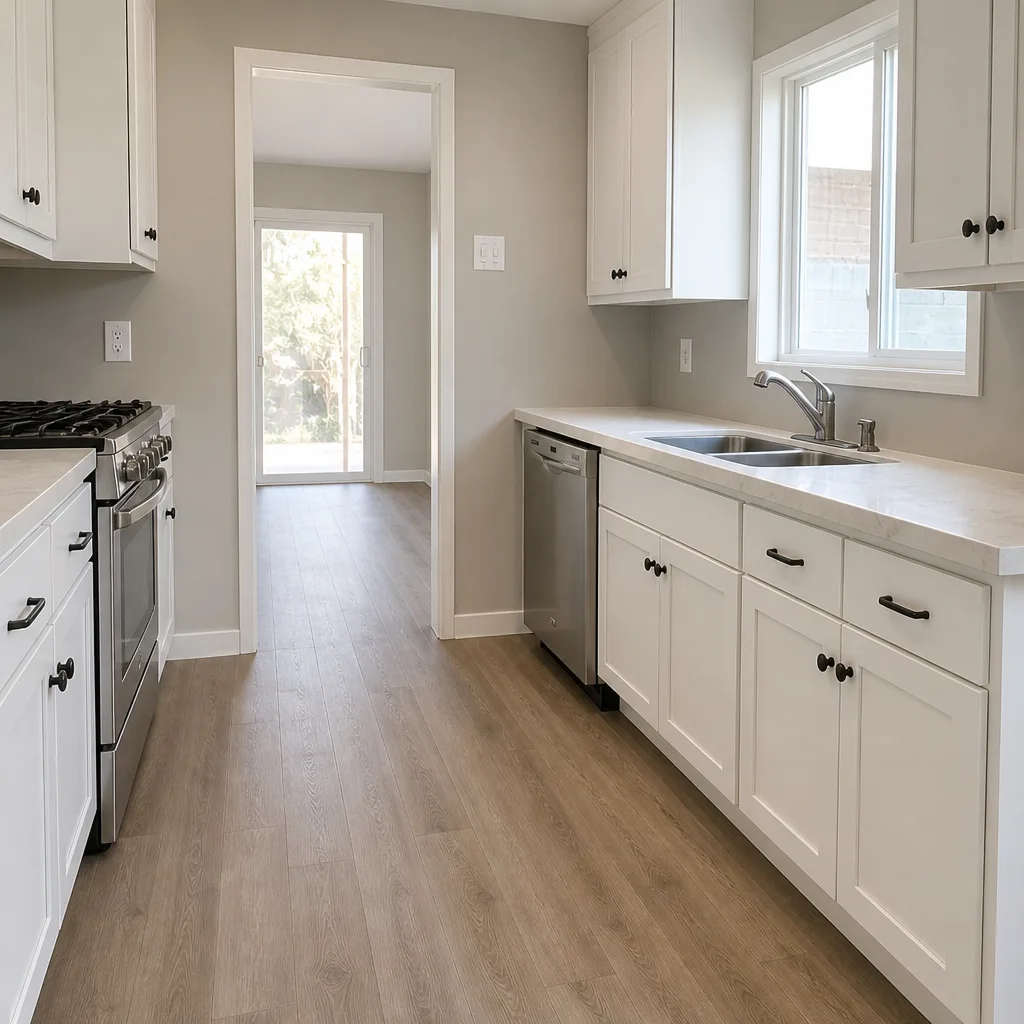
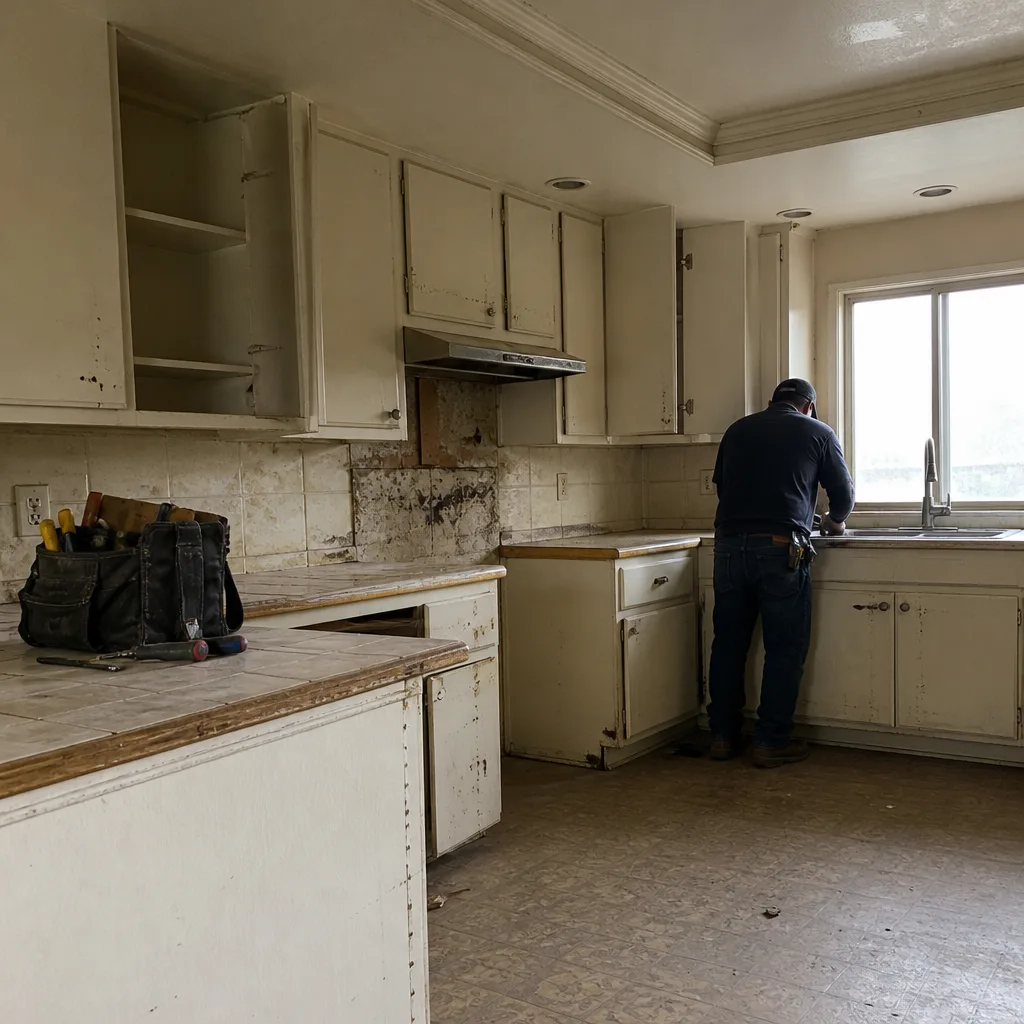
See the difference
 Before
 After
 Before
 After
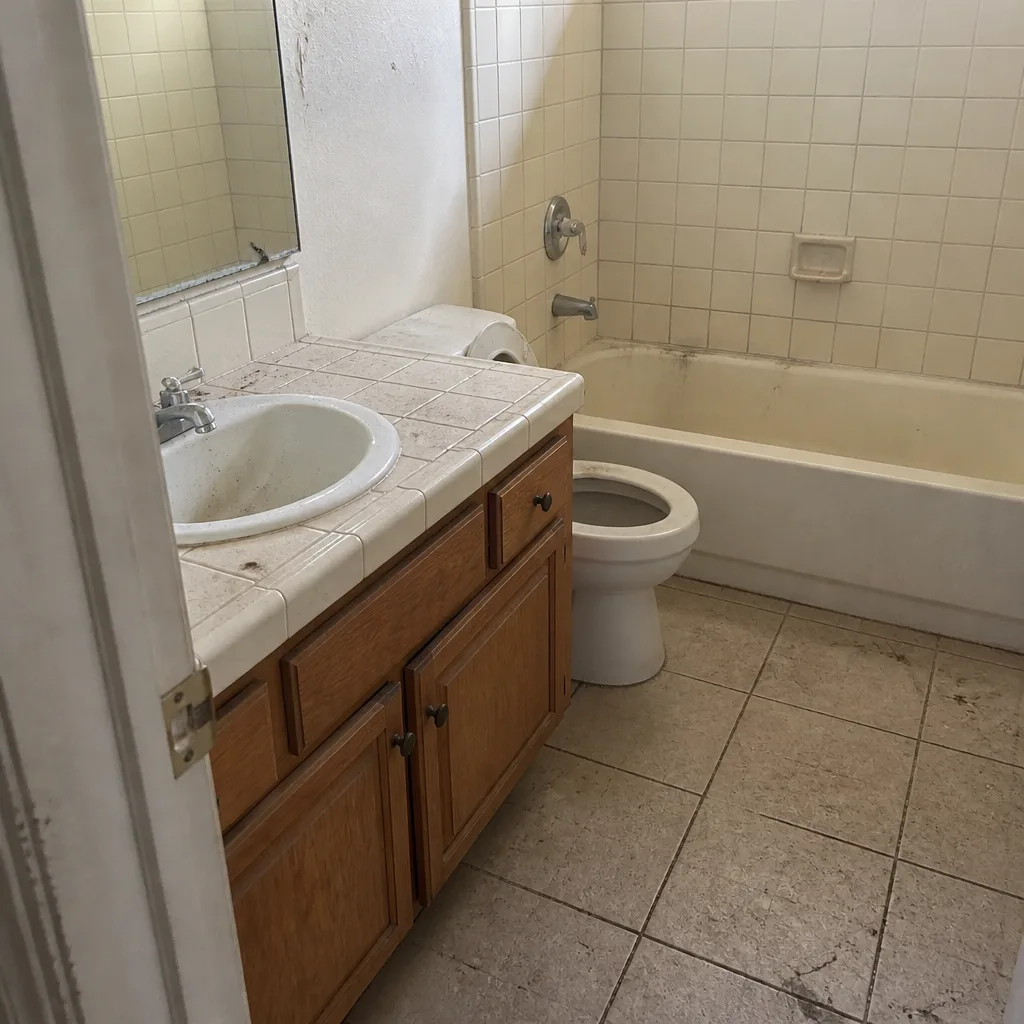 Before
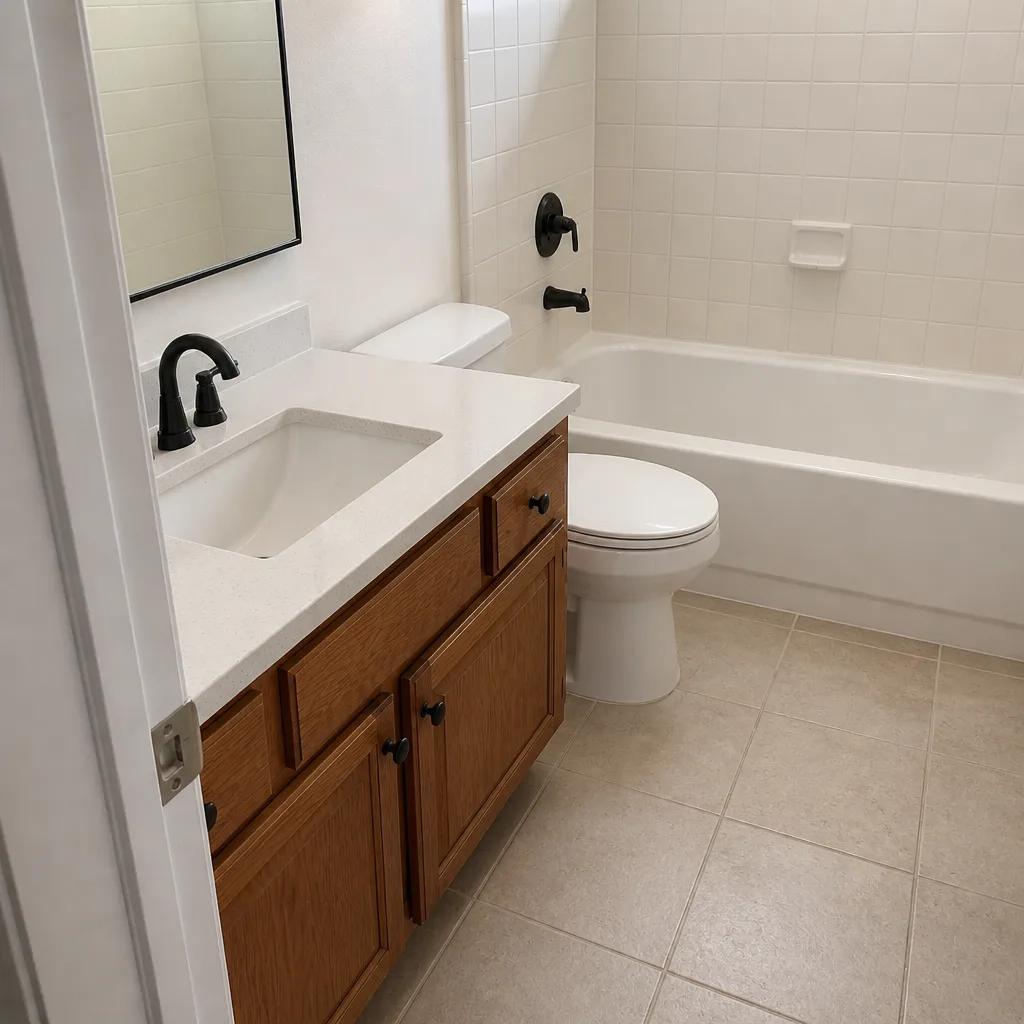 After
When to Call a Professional

Call a professional when water is already getting in – bubbling paint, soft drywall, or staining on stucco. Call if the roof flashing is lifted, a deck board feels soft underfoot, or a window frame shows a gap you can’t close. Call if grout has cracked across a whole floor or wall, or if a cabinet base has swollen from an unseen leak. These are the points where DIY repair tends to make things worse. Call if you’re not sure. Penhallow Remodeling Irvine offers free estimates in Irvine – call (888) 704-4104 and a real person will pick up. A short inspection often answers the whole question.
Frequently Asked Questions
Twice a year, once in April before the heat and once in October before the rainy season. Irvine’s thermal expansion cycles push caulk harder than most climates. Between full inspections, do a quick visual walk-around after any Santa Ana wind event. Call (888) 704-4104 for an exact quote – estimates are free.
No contractor’s guarantee covers failure from neglected routine maintenance, and that includes ours. Skipping caulk inspections or a deck’s annual check can fall outside the 365-Day Done Right Promise. If you’re unsure what your guarantee covers, call and ask – we’re clear about it before and after the job.
Different, not necessarily faster. Irvine’s dry heat and 40°F to 60°F daily temperature swings age caulk and grout faster than a wet climate, while the low rainfall means wood and roof structures age more slowly. The maintenance schedule should reflect that trade-off.
The spring and fall caulk and sealant inspection. In our experience it’s the cheapest task that prevents the most expensive failure. A $50 to $150 inspection prevents a five-figure repair when a failed window or stucco seal lets water reach the substrate.
Keep dated photos of every inspection, note the products used, and record any professional repair with the date and the company. A simple digital log answers buyer questions before they become a negotiating point. The written price and guarantee from any remodeling project should go in the same folder.
Wood decks need re-staining every two to three years because of the UV load. Composite and paver patios need less frequent resealing but should get an annual clean and joint check. A soft board is a sign to call before the frame is compromised.
The Bottom Line
A maintenance schedule isn’t about preventing every problem. It’s about catching the three or four specific failures that turn a $200 repair into a $12,000 remodel. In Irvine, those failures are driven by heat cycling, not moisture, and they show up first in caulk, grout, and exterior seals. Two inspections a year, one in spring and one before the rainy season, protect your materials and your guarantee. The other tasks are small and fit around them. When a repair looks bigger than maintenance, a written price before any work starts and a 365-Day Done Right Promise behind it are worth more than a verbal ballpark from a contractor who won’t show up.
Penhallow Remodeling Irvine handles kitchen remodeling, bathroom remodeling, and whole-home remodels for homeowners across Irvine, from Northwood to Great Park. Every project gets a written price before work starts, background-checked and uniformed technicians, and our 365-Day Done Right Promise in writing. Project materials come from brands like KraftMaid, Cambria, Kohler, Moen, and James Hardie – products that carry their own warranties alongside ours. Call (888) 704-4104 for a free estimate, and a live person will pick up.
Written by the team at Penhallow Remodeling Irvine.