Last updated November 18, 2026








Free written scope consultation - allowances, timeline, and change-order rules on paper before a single trade is scheduled
Home Remodeling Troubleshooting: Common Problems and How to Fix Them
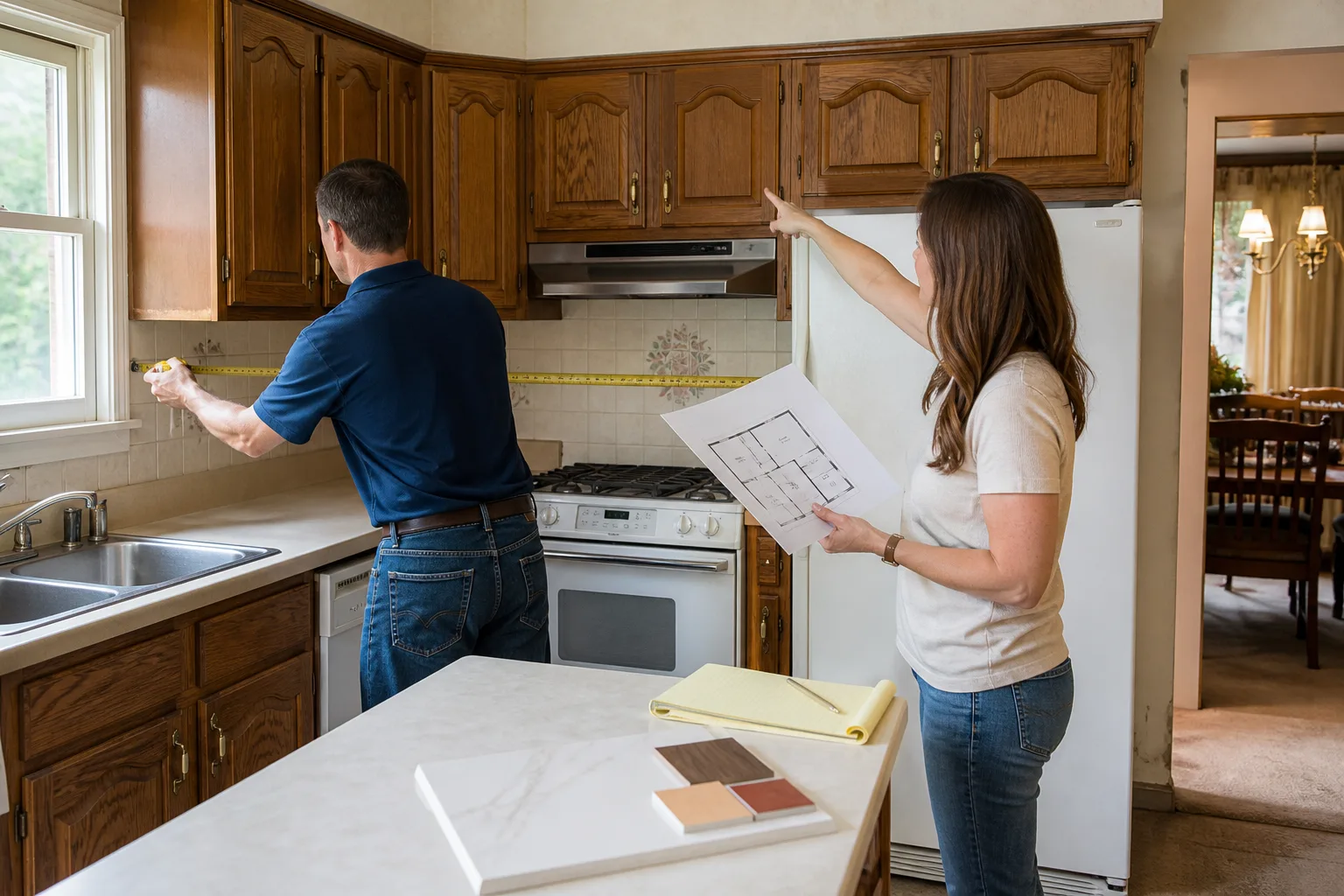
The most expensive word in home remodeling is “miscommunication.” It’s what contractors say when the tile you approved on a sample card looks nothing like what’s on your floor, and it’s the word that determines whether you get a fix or a bill. In our experience across Irvine kitchens and baths, the failure rarely starts at demo. It starts at the contract that never named who was responsible for what. This guide walks through the six problems we see most on whole-home and major remodels, pairs each one with the technical fix, and tells you the contractual conversation that has to happen alongside it so you’re not stuck in a standoff with no leverage.
Quick Answer
Most mid-project remodeling problems fall into six buckets: material substitution, structural surprises found after demo, trade coordination failures, inspection failures, end-of-project disagreements, and warranty gaps after move-in. Each has a technical fix and a paperwork fix. The technical fix restores the work; the paperwork fix (a written scope, a written contingency clause, a written punch list, a written guarantee) protects your position so you’re not negotiating from zero. If your contract doesn’t say who pays when something goes sideways, assume you do. Call (888) 704-4104 and we’ll walk through your situation before your next phase starts.
Styles & brands we work with
- Kitchen remodeling
- Bathroom remodeling
- Home additions & ADU
- Roofing
- Windows & doors
- Driveway & pavers
- Fence
Table of Contents
- Material Substitution: What to Do When Installed Materials Don’t Match the Spec
- Structural Surprises: Asbestos, Knob-and-Tube, and Subfloor Rot Found Mid-Demo
- Trade Coordination Failures and Who Actually Pays for the Redo
- Inspection Failures and Their Downstream Costs
- The Punch List and the “It’s Done” Versus “It’s Not Done” Standoff
- What a Written 365-Day Guarantee Changes After Move-In
- Common Mistakes to Avoid
- Frequently Asked Questions
Material Substitution: What to Do When Installed Materials Don’t Match the Spec
Substitution is the number-one complaint in mid-project troubleshooting, and it’s the easiest to prevent and resolve if your scope is written. It happens three ways: the contractor substitutes a cheaper product to protect their margin, the supplier is out of stock and the contractor swaps without asking, or the sample card and the delivered slab simply read differently under your lighting. Cambria and Silestone quartz show very differently under Irvine’s bright afternoon sun than they do under showroom fluorescents, and that’s a real, defensible conversation. A cheaper cabinet line swapped without your sign-off is not.
Here’s what to do, in order:
- Photograph everything before you call. The installed material, the sample card, the written spec on the scope, and the SKU on the delivery slip. Timestamp the photos.
- Re-read the spec line. A written scope names the brand, the line, and often the color or SKU. “Quartz countertop” is not a spec. “Cambria Brittanicca, 3cm, eased edge” is a spec.
- Request the substitution in writing. Ask the contractor to confirm, in writing, what was installed and why it differs from the spec.
- Invoke the scope. A licensed contractor operating under a written agreement is contractually obligated to deliver what the agreement names. If they can’t, they owe you either the specified product or a written credit.
When we write a scope for an Irvine remodel, every finish line carries a brand and a line item. When KraftMaid or Wellborn cabinetry is named, it’s named. When the countertop is Cambria, that’s what gets ordered. If a supplier can’t deliver, we call you before anything ships, in writing, with the alternative and the price difference. That’s the whole mechanism. No miscommunication, no standoff.
Structural Surprises: Asbestos, Knob-and-Tube, and Subfloor Rot Found Mid-Demo
The wall comes down and there it is: knob-and-tube wiring from a 1950s bungalow, black mastic under old vinyl tile, or a joist that’s been quietly rotting under a shower pan for a decade. What happens next depends almost entirely on whether your written contract has a contingency clause. It should.
A contingency clause is a defined dollar amount (typically 10 to 15 percent of the project cost) set aside before demo begins to cover conditions that could not be discovered until walls opened. When a surprise shows up, the clause is what tells you who pays, how much gets drawn, and how the change gets approved. If your contract has no clause, you’re in a verbal negotiation with a contractor who has your home torn open and your leverage is measured in how quickly you want your kitchen back. That’s a bad position.
On the technical side, each surprise is handled differently:
- Asbestos-containing materials are common in homes built before 1980. In Irvine and much of Orange County, older ranch homes and mid-century remodels regularly turn up asbestos in floor tile adhesive, popcorn ceilings, and duct wrap. Asbestos abatement is regulated by the county air quality district (South Coast AQMD) and must be performed by a licensed abatement contractor, with documentation. This is not a spot a remodel contractor solves personally.
- Knob-and-tube wiring is not inherently dangerous if intact, but it has no ground and is usually buried in old insulation. Most insurers and most code inspectors will require replacement before signing off a permitted remodel. Budget for a full rewire of the affected circuits.
- Subfloor rot around showers, tubs, and dishwashers is the most common hidden-corrosion find. Rot rarely stops at the subfloor; it usually reaches a joist. Repair means sistering the joist, replacing the subfloor section with a matching thickness, and re-sealing before tile goes down.
The safety note isn’t a formality: if you suspect asbestos or find live knob-and-tube with fabric insulation, stop work in that area and call a licensed professional. Disturbing either one is a real hazard, and it’s not a homeowner-DIY task.
Trade Coordination Failures and Who Actually Pays for the Redo
Trade sequencing is where a general contractor earns the fee. When the electrician roughs in before the plumber and both have to redo work, someone eats the cost of that redo. The only question is whether it’s the general contractor, the homeowner, or the two trades fighting it out on your front lawn. If your scope clearly allocates responsibility for coordination to the general contractor, it’s their cost. If your scope is silent, they’ll try to make it yours.
Here’s the sequence a competent general contractor runs in an Irvine kitchen or bath remodel, and the sequence you can check against your own project’s schedule:
- Demo and structural (wall removal, framing)
- Plumbing rough-in
- Electrical rough-in and low-voltage
- HVAC rough-in and duct relocation
- Inspection of all rough-in trades together (one inspection window, not three separate ones)
- Insulation, drywall, tape, texture
- Cabinets and countertop template
- Tile and finish carpentry
- Countertop install, plumbing and electrical trim-out
- Paint, punch list, final inspection
Reverse steps two and three and you’ve got a plumber cutting into a freshly wired wall. The plumbing rough-in has to be signed off before electrical closes it up, or you’ll pay to open the wall twice. When we schedule a bathroom remodel in Irvine, that rough-in inspection is a single appointment with all trades present. One passing inspection, one covered wall, no redo.
Inspection Failures and Their Downstream Costs
An inspection failure on framing or rough plumbing is not a crisis; it’s a schedule event. What matters is who bears the cost of correction and reinspection. In a properly written contract, corrections for work that fails to meet code are the contractor’s responsibility, including the reinspection fee and the schedule slip. In a handshake deal, that cost shifts to you, usually after the fact.
The most common inspection failures we see in Irvine remodels:
- Framing: missing or improperly installed headers where a wall was opened, incorrect nailing patterns, missing fire-blocking between floors, or a structural beam without a stamped plan from a licensed engineer.
- Rough plumbing: incorrect slope on drain lines (very common in remodels where the old drain was replaced in a hurry), missing venting, or a new shower drain installed without the required trap primer.
- Rough electrical: missing GFCI protection in wet areas, insufficient AFCI protection in bedrooms, junction boxes that didn’t get an accessible cover, or a subpanel that wasn’t permitted.
Every one of these failures has a downstream effect on the schedule, and a schedule slip on a whole-home remodel in Irvine means your temporary housing runs longer, your paint and flooring crews bump into each other, and the final punch list compresses into the last week. Protective scheduling gets you through a failed inspection without losing your sanity. A written contract protects you from paying for someone else’s mistake.
If your current contractor is pushing you to skip a permit for a structural or plumbing change, that’s the conversation to have before the walls close. Skip it and every future buyer, inspector, and insurer will find out the day they ask for the permit history.
The Punch List and the “It’s Done” Versus “It’s Not Done” Standoff
The punch list is the single most underrated document in a remodel. It’s a written, room-by-room list of every unfinished or defective item that must be corrected before final payment. Without one, “it’s done” and “it’s not done” are two competing opinions, and the contractor holds the tools. With one, both sides walk the same rooms with the same list on the same day.
Here’s the punch-list process that keeps an Irvine whole-home remodel out of standoff:
- Walk every room together. No remote, no phone call. You walk it, they walk it, notes go on the list.
- Write each item with a location and a defect. “Master bath, hall-side shower door, lower hinge pulls away from frame” beats “shower door issue.”
- Both parties sign and date the list. A signature is what makes it enforceable.
- Set a target date. Not a vague “soon” but a date. Then schedule the walkthrough to verify.
- Hold a defined retainage. A typical retainage is 5 to 10 percent of the contract, released on punch-list completion and final inspection sign-off.
The punch list is also where you document anything that may become a warranty call later. If the tile on the shower wall has a hairline crack on day one, write it on the punch list. Six months later, the same crack is a warranty question, and the punch-list photo is your evidence.
What a Written 365-Day Guarantee Changes After Move-In
Two weeks after you move back in, the grout at the base of the shower starts to craze. Six weeks after that, the cabinet door closest to the sink stops closing flush. A month later, the exhaust fan starts scraping. These are normal first-year settling issues, and they’re where a written guarantee separates a contractor who stands behind the work from one whose number stops working the day the final invoice clears.
A 365-Day Done Right Promise is a written guarantee that if the work fails inside twelve months, the contractor comes back and fixes it at no charge. Not a verbal “call us if anything comes up.” A written clause, in the contract, on every project. The difference matters because the first-year failures are exactly the ones that require the original contractor’s familiarity with the install. A different contractor can fix the same shower and will charge accordingly, especially in Irvine where the labor market is tight and a fix-it visit is a half-day minimum.
What a real guarantee should spell out in writing:
- What is covered (workmanship defects and installation failures on materials we installed)
- What is not covered (damage from misuse, water intrusion from a failing exterior component, acts of nature, normal wear)
- How to make a claim (call, written notice, or both)
- Response window for a return visit (usually within a few days for non-emergency)
- Whether a return visit has a fee (a real guarantee has none)
One more layer: product warranties sit alongside the workmanship guarantee. Cambria quartz carries its own manufacturer warranty, as does James Hardie siding and Kohler fixtures. When your contractor installs the named product correctly and the product is covered by both warranties, you’ve got two parties with an obligation to fix a failure, not just one. That’s what “backed in writing” actually means in practice.
Common Mistakes to Avoid
- Approving a substitution verbally. A phone call that says “yeah, close enough” gets you a cheaper material and no recourse. Approve any color, brand, or line change in writing and confirm the price difference at the same time.
- Skipping the contingency clause to “keep the price down.” A 10 to 15 percent contingency isn’t a markup – it’s a line item that protects you when the wall opens. Skip it and any surprise is a change order at the contractor’s number.
- Letting the general contractor disclaim trade coordination. If your scope doesn’t name the general contractor as responsible for scheduling all trades, you become the coordinator. You don’t want that job.
- Using a price as the only comparison between bids. A bid at $22,000 with no scope detail is going to land at $31,000 by final invoice. A bid at $27,000 with a written scope and a written guarantee usually ends at $27,000. Compare the whole document, not the bottom line.
- Accepting a punch-list walkthrough over the phone. A call doesn’t produce a written list. Walk the rooms, write the items, sign the paper. This is what makes the final payment defensible for both sides.
- Getting the permit after the work. Irvine and Orange County code inspectors will ask for the permit at resale, and unpermitted structural and plumbing work is a known value-killer on the appraisal. If it’s worth building, it’s worth permitting.
- Letting the first-year fix-it list slip to month thirteen. A 365-day guarantee has a deadline. Write down every settling issue as you notice it and call before the guarantee window closes.
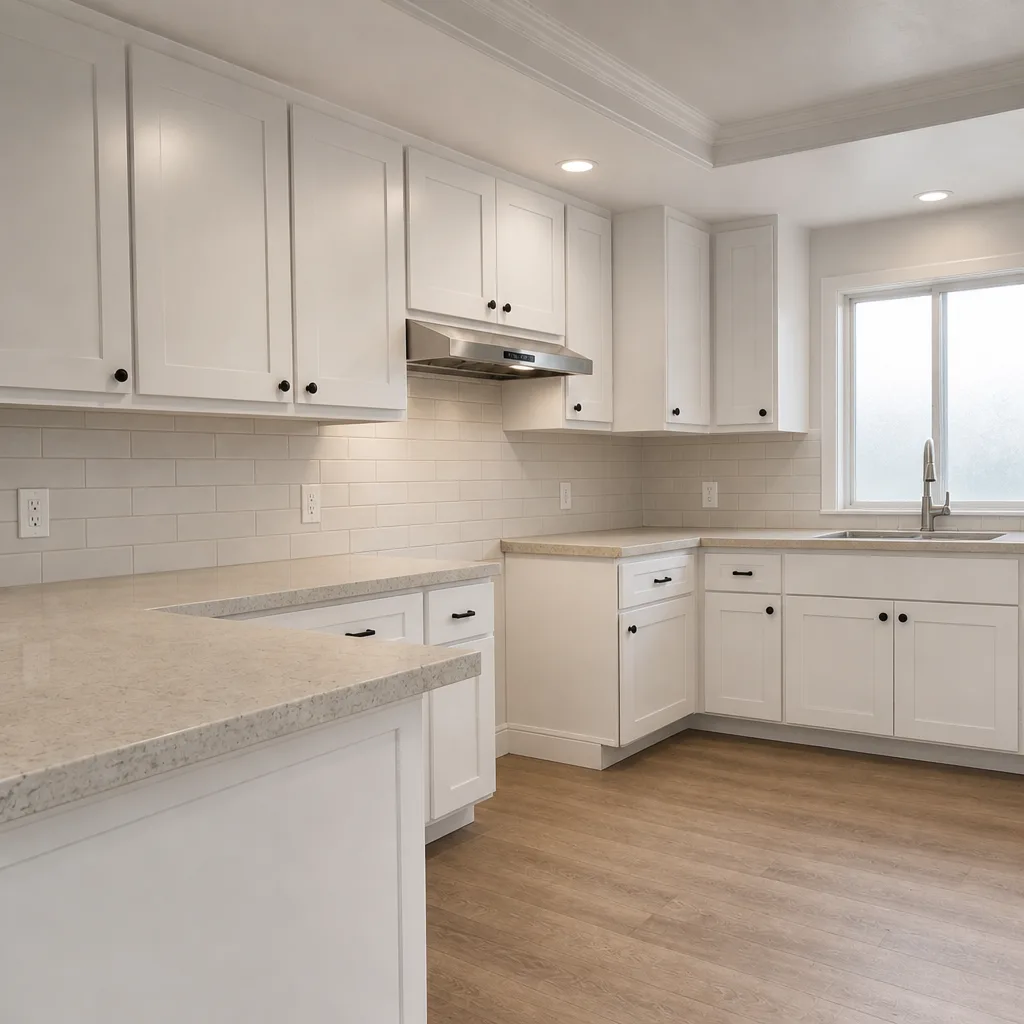
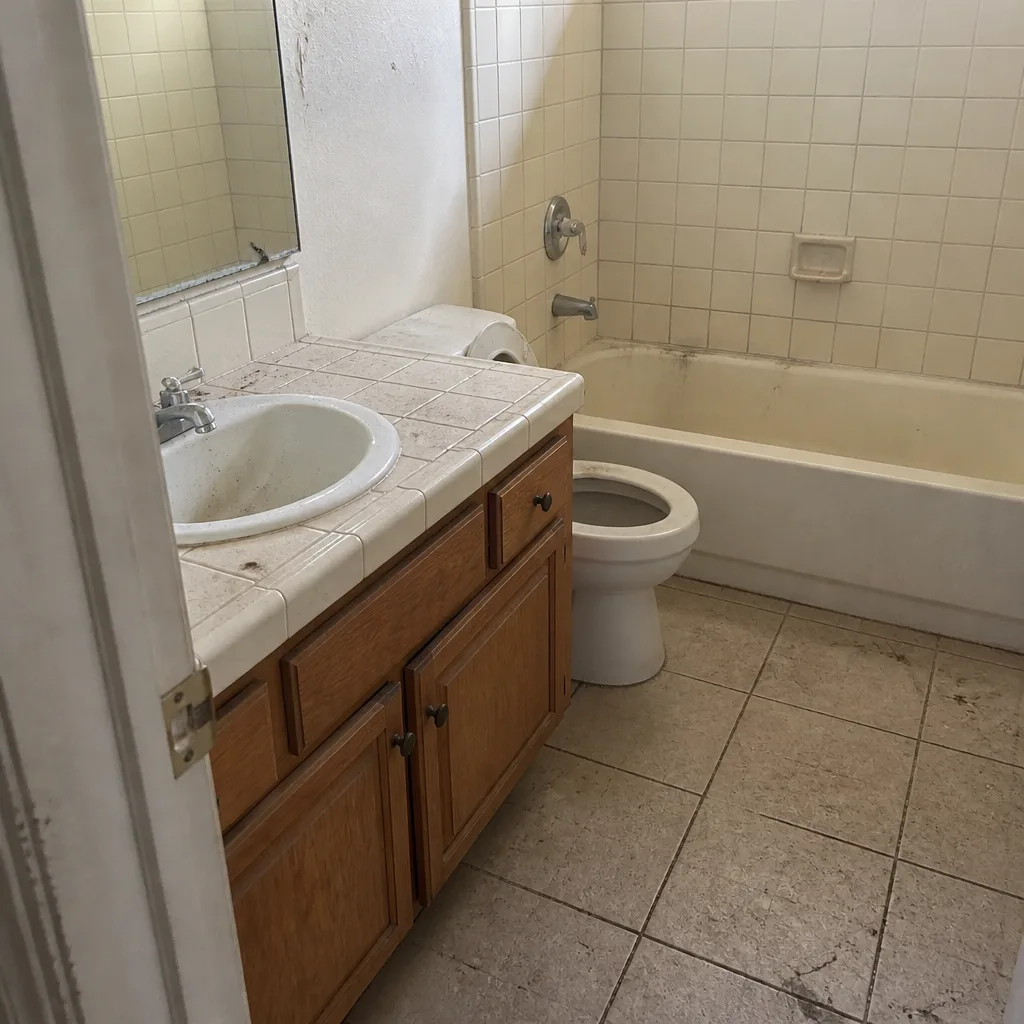
See the difference
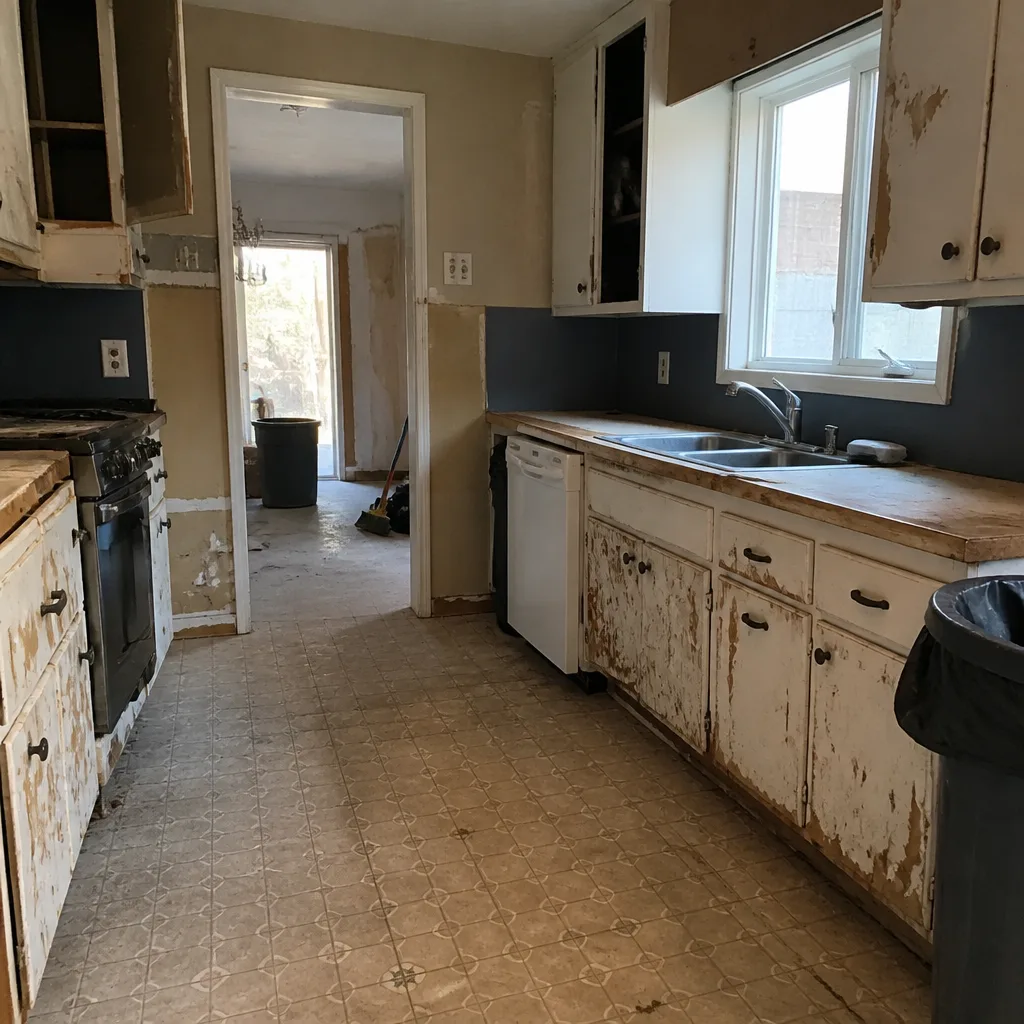 Before
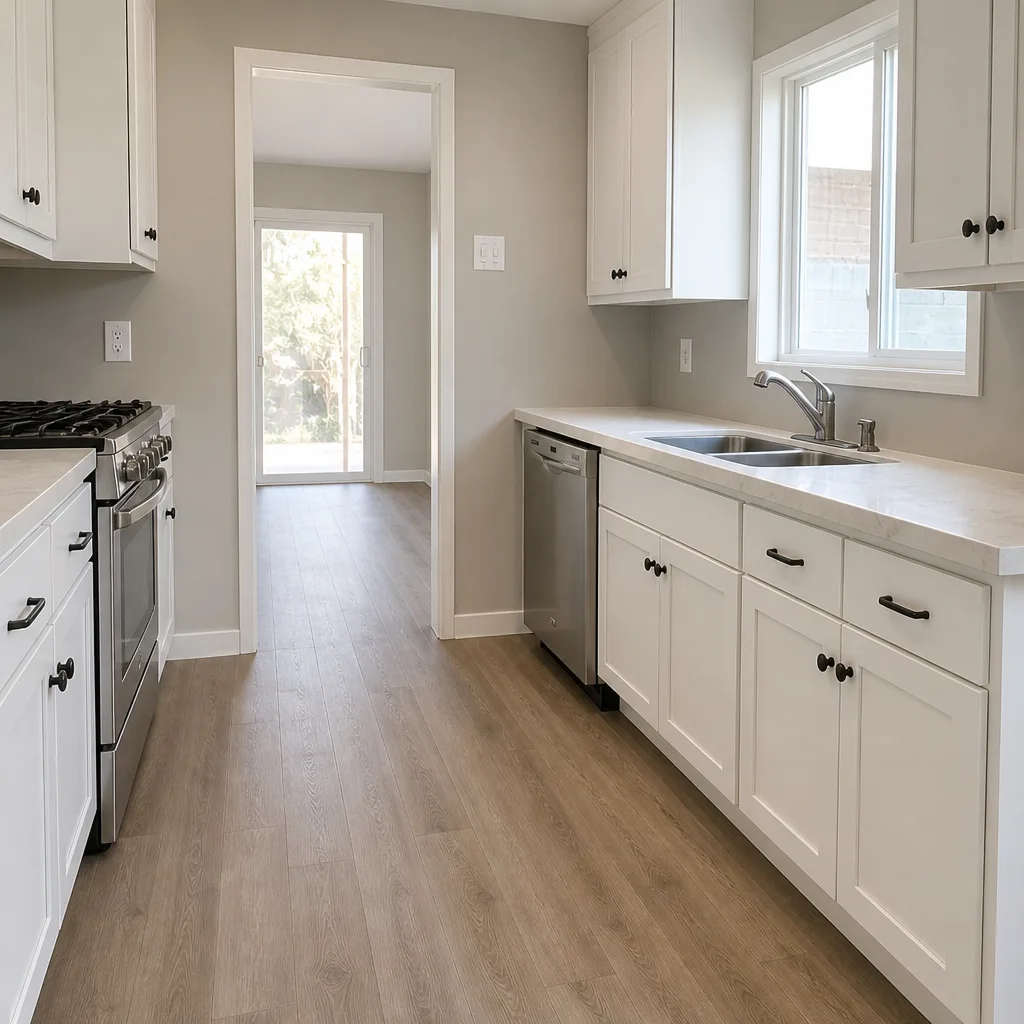 After
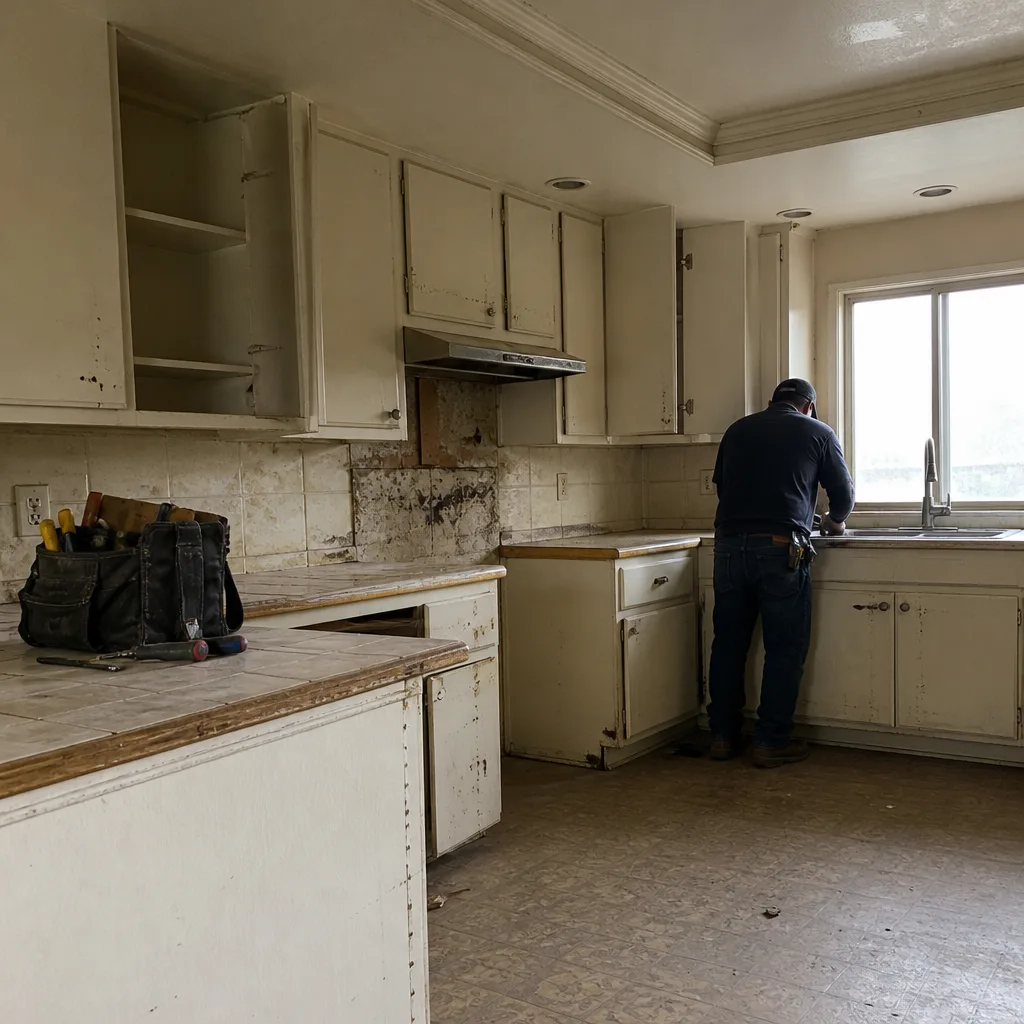 Before
 After
 Before
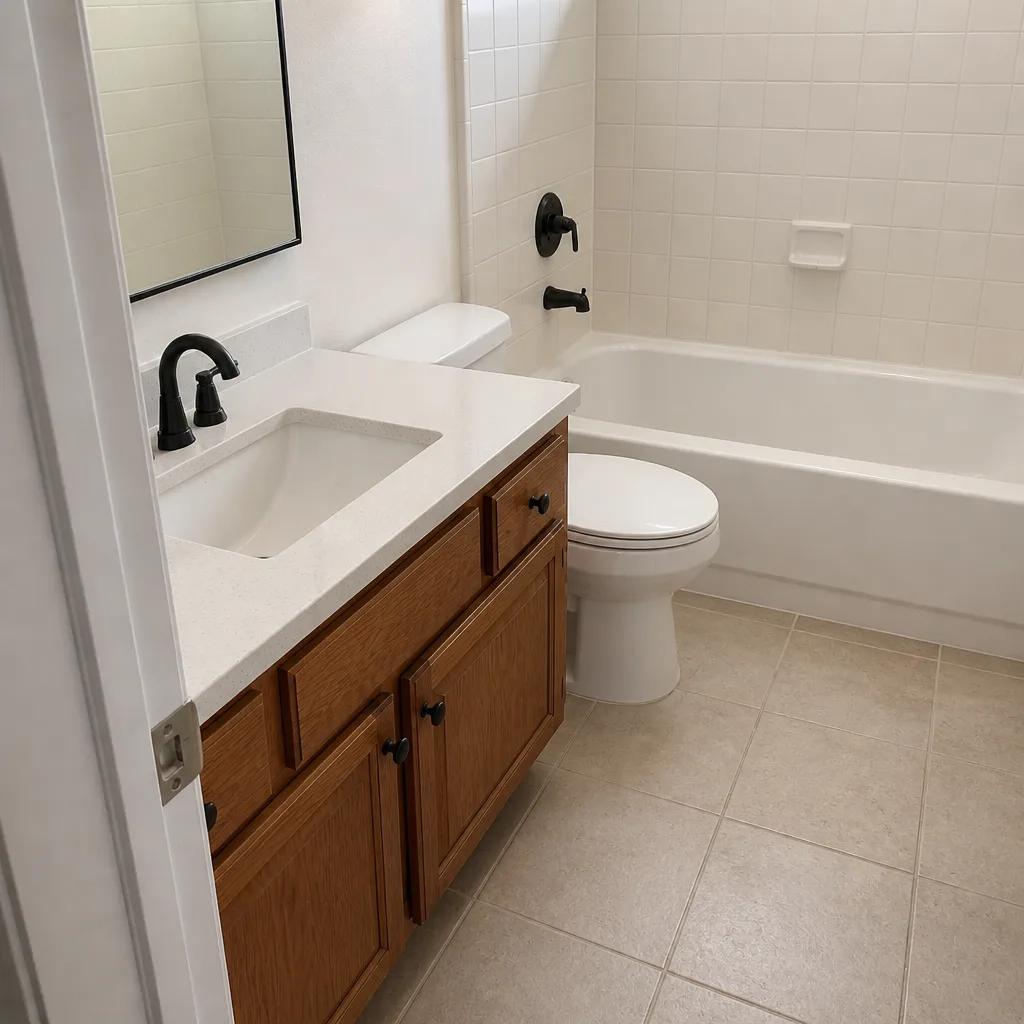 After
When to Call a Professional

Call a licensed contractor when the problem in front of you involves structural framing, gas lines, electrical panels or any unpermitted wiring, asbestos or other hazardous material, or a failed building inspection. Those four areas are not DIY, and they’re not a job for a handyman working under a cash arrangement. Call a professional quickly, too, if a mid-project communication breakdown has stalled the work – the longer a standoff runs without a written scope or a next scheduled conversation, the more leverage you lose. Penhallow Remodeling Irvine offers free estimates in Irvine – call (888) 704-4104 to talk through your project, get a written opinion, and decide your next step before demo day.
Frequently Asked Questions
Photograph the installed material, the sample card, and the written spec, then request a written explanation from the contractor for the substitution. A contractor working under a written scope is obligated to deliver what the agreement names, or to offer the specified product on re-install or a written credit. If the conversation stalls, the paper trail from day one is what protects you. Call (888) 704-4104 for a free estimate if you’d like a written second opinion on scope.
Yes, if the project involves opening walls, floors, or ceilings. A typical contingency clause is 10 to 15 percent of the project cost, held aside to cover conditions that could not be discovered before demo (rot, old wiring, asbestos, undersized framing). Without one, hidden damage becomes a fresh negotiation with the walls open and your schedule at risk. Call (888) 704-4104 to talk through a written scope before your project starts.
The general contractor pays, when the contract names the general contractor as responsible for trade coordination. When the scope is silent, the redo cost drifts to the homeowner in most disputes. Confirm in the written scope that scheduling and coordination of all trades sit with the general contractor, not with you. Call (888) 704-4104 for a free estimate if you’d like your current scope reviewed.
The contractor corrects the failed item, pays the reinspection fee, and absorbs the schedule slip – if the contract names correction of code deficiencies as the contractor’s cost. Most failed Irvine inspections we see come from framing headers, drain-line slope on rough plumbing, or missing GFCI/AFCI protection on rough electrical. All three are corrected before drywall closes. Call (888) 704-4104 for a free estimate and we’ll walk your project’s inspection sequence with you.
A written punch list is the single strongest document you have at the end of a project. It’s a room-by-room list of every unfinished or defective item, signed and dated by both parties, with a target completion date and a defined retainage. Without one, “it’s done” and “it’s not done” are two opinions. With one, both sides walk the same rooms off the same page. Call (888) 704-4104 to schedule a free estimate.
A 365-Day Done Right Promise covers workmanship and installation defects for twelve months after project completion, and the visit to make it right carries no fee. It doesn’t cover damage from misuse, exterior water intrusion, or acts of nature. Ask for the guarantee in writing before demo. If your contractor’s version is a verbal “call us if anything comes up,” ask for it on paper – if they won’t put it there, that’s your answer. Call (888) 704-4104 for a free estimate with a written guarantee included.
The Bottom Line
Mid-project problems in home remodeling are almost always two problems wearing one coat: a technical failure and a paperwork gap. Fix the material substitution, the hidden structural surprise, the trade miscommunication, the inspection failure – and then fix the paperwork that let it become a negotiation. The written price you hold on day one, the written scope that names brand, line, and responsibility, the written punch list, the written guarantee: those four documents are what turn a standoff into a fix. Penhallow Remodeling Irvine builds to that standard on every project. Written price before any work starts, a defined arrival window, background-checked uniformed technicians, and a 365-Day Done Right Promise you can hold us to. That’s The Kingswell Way, and it’s what we mean when we say the number on day one is the number on the invoice. Call (888) 704-4104 to schedule your free estimate.
Written by the team at Penhallow Remodeling Irvine.