
Last updated November 18, 2026








Free written scope consultation - allowances, timeline, and change-order rules on paper before a single trade is scheduled
General Contractor Troubleshooting: Common Problems and How to Fix Them
Here’s the statistic that should reframe how you think about your remodel: the number-one complaint filed with the California Contractors State License Board isn’t shoddy workmanship. It’s contractors who walked off a job mid-project. Which means your biggest risk isn’t a bad tile cut or a cabinet hung two inches off level. It’s a half-finished kitchen, a stack of receipts, and a phone number that doesn’t answer anymore.
We’ve watched this play out across Irvine, from Northwood kitchens to Great Park bathroom builds, long enough to know that most “construction problems” started as contract problems. This guide gives you a decision tree: how to diagnose what actually went wrong, and the specific leverage you hold to get it fixed.
Quick Answer
Most remodel problems are either workmanship defects (covered by your contractor’s warranty and fixable at their cost) or scope and contract failures (design changes, vague written agreements, or nonpayment). First, identify which category you’re in by comparing the finished work to your written contract and any change orders. Then document everything in writing with dated photos before making an approach. In California, you have concrete tools: a written notice to cure, the CSLB complaint process, and the small claims court system – all of which work far better when you’ve kept a paper trail from day one.
Styles & brands we work with
- Kitchen remodeling
- Bathroom remodeling
- Home additions & ADU
- Roofing
- Windows & doors
- Driveway & pavers
- Fence
Table of Contents
- Is It a Workmanship Defect or a Design Change?
- The Exact Language to Use in the First Conversation
- How to Document a Problem So It Holds Up Later
- The CSLB Complaint Process, Step by Step
- Mechanic’s Liens and the 20-Day Preliminary Notice
- The Three-Step Written Escalation Sequence
- How the Right Contractor Prevents These Problems Up Front
Is It a Workmanship Defect or a Design Change?

The distinction matters more than almost anything else in a remodel dispute, because it decides who pays. A workmanship defect is work that doesn’t meet the standard your contract promised or that fails within its expected life: a tile that cracks because of improper substrate prep, a door that doesn’t latch because the frame was set out of plumb, a grout line that fails in a shower. It’s covered by the contractor’s warranty.
A design change is something you asked for after the contract was signed: you wanted the vanity moved six inches, you switched from a fixed showerhead to a rain head, you added an outlet. Even if the change was verbal, you likely own the cost – and if it created a downstream problem, that’s usually on your side of the ledger too.
Here’s the test we use:
- Compare it to the written scope. Does the finished work match what the contract described? If not, it’s a defect.
- Check for a change order. If a written change order exists, the work is measured against that, not the original contract.
- Look at the failure pattern. Is it isolated (one tile) or systemic (the whole wall lippage)? Systemic usually points to a workmanship or substrate issue.
In Irvine, we see this play out around water. A cracked grout line in a secondary bath can be a defect from a too-thin cement board substrate (the moisture-resistant layer behind your tile), or it can be normal movement in a house settling on clay soil. That distinction is why a contractor who documents the substrate before tiling is worth the extra cost.
The Exact Language to Use in the First Conversation
How you open the conversation often determines whether it gets fixed quietly or escalates. Go written first, and keep it factual. Here’s a script that works because it removes blame and creates a record:
“On [date], your crew completed [specific item]. As of [date], [specific problem] has occurred. My written contract specifies [exact scope language]. I’m requesting you inspect this and either correct it or explain in writing why it falls outside the scope. I’d like to hear back by [date].”
Three things make that effective. It’s dated, it references the contract instead of your feelings, and it gives a response window without a threat attached. Contractors respond to calm, specific letters because they signal someone who will pursue it. A phone call saying “the shower’s leaking again” invites a shrug. A written notice invites a calendar entry.
Also: put it in email or text, never just a voicemail. If your contractor has a live person answering the phone (like the line at the Penhallow Remodeling Irvine home page describes), you can call to confirm receipt of a written note you already sent. That combination – paper behind a call – is what moves a stuck job.
How to Document a Problem So It Holds Up Later

If the dispute ever goes to small claims court or the CSLB, your file becomes your case. Most homeowners lose not because they were wrong but because they can’t prove what happened. Documentation is unglamorous and it’s the entire ballgame. Here’s the sequence:
- Photograph with a date stamp. Take the photo with your phone’s location and time metadata on, and also hold a physical note with the date in the frame. Two proofs are better than one.
- Write a dated problem log. A simple note each time something appears or worsens: date, time, what you observed, who you spoke to, what was said.
- Keep every written communication. Emails, texts, change orders, receipts, inspection reports. Screenshot and back up. Don’t delete threads even if you reconcile.
- Send a summary letter. Once a month during an active problem, send a short written recap of what happened and what remains unresolved. Date it.
- Get it on record with a third party early. A building department inspection or a licensed home inspector’s report carries weight your own description doesn’t.
Irvine’s newer construction (the Great Park neighborhoods especially) tends to have tight, well-documented original builds, which helps: your inspector can compare current conditions to the permitted drawings, and that comparison is powerful evidence if the work deviated from what was approved.
The CSLB Complaint Process, Step by Step
The Contractors State License Board is the state agency that licenses and disciplines contractors in California. Its complaint process is free, and it can order a contractor to correct work, pay restitution, or face license discipline. It’s also sometimes slow. Here’s the order:
- 1
Try to resolve it in writing first. The CSLB expects you to have given the contractor a real chance to fix the problem. A written notice to cure covers this.
- 2
Assemble your file. You’ll need your signed contract, all change orders, payment records, dated photos, your problem log, and any written notices. The CSLB asks for these; the more you have, the cleaner the case.
- 3
File online or by mail. The CSLB accepts complaints through its website or a printed form. Describe the specific code or scope violation, not general dissatisfaction.
- 4
Respond promptly to the CSLB’s requests. There is a mediation stage and sometimes an arbitration stage. Miss a deadline and your case stalls.
What outcomes are realistic? For clear-cut workmanship failures, mediation often gets the work corrected or a refund. For “we don’t see eye to eye” cases without documentation, outcomes are weaker. In our experience, Irvine homeowners who file with a clean paper trail get answers; those who file angry and undocumented get form letters. Note that the CSLB’s license search is public – always check a contractor’s license before you sign anything, not after.
Mechanic’s Liens and the 20-Day Preliminary Notice

A mechanic’s lien is a legal claim against your property that a contractor or subcontractor can record if they aren’t paid for work on your home. It’s a cloud on the title: you can’t cleanly sell or refinance until it’s resolved, and it can technically lead to foreclosure if left long enough. In plain terms, it lets unpaid subs reach your house even if you already paid your general contractor.
The rule that protects you is the 20-day preliminary notice. Under California law, a subcontractor or supplier who wants a valid lien generally must give you written notice within 20 days of first furnishing labor or materials (or, if they come on later, they can still give notice with a limited period of retroactive coverage). If you received a preliminary notice, you know that sub can come after the property if they aren’t paid. If you didn’t receive one, their lien rights against your home are typically much weaker.
How to use this: ask your general contractor for a list of subs and material suppliers before work starts, and ask each sub to confirm in writing whether they’ve served a preliminary notice. Keep any preliminary notices you receive in your file. Before your final payment, ask your general contractor for lien waivers (a written statement from each sub that they’ve been paid and waive lien rights). This is standard practice and any contractor who resists it is a problem. On an Irvine remodel this matters most on larger whole-home jobs, where more trades and more suppliers are involved.
See the difference
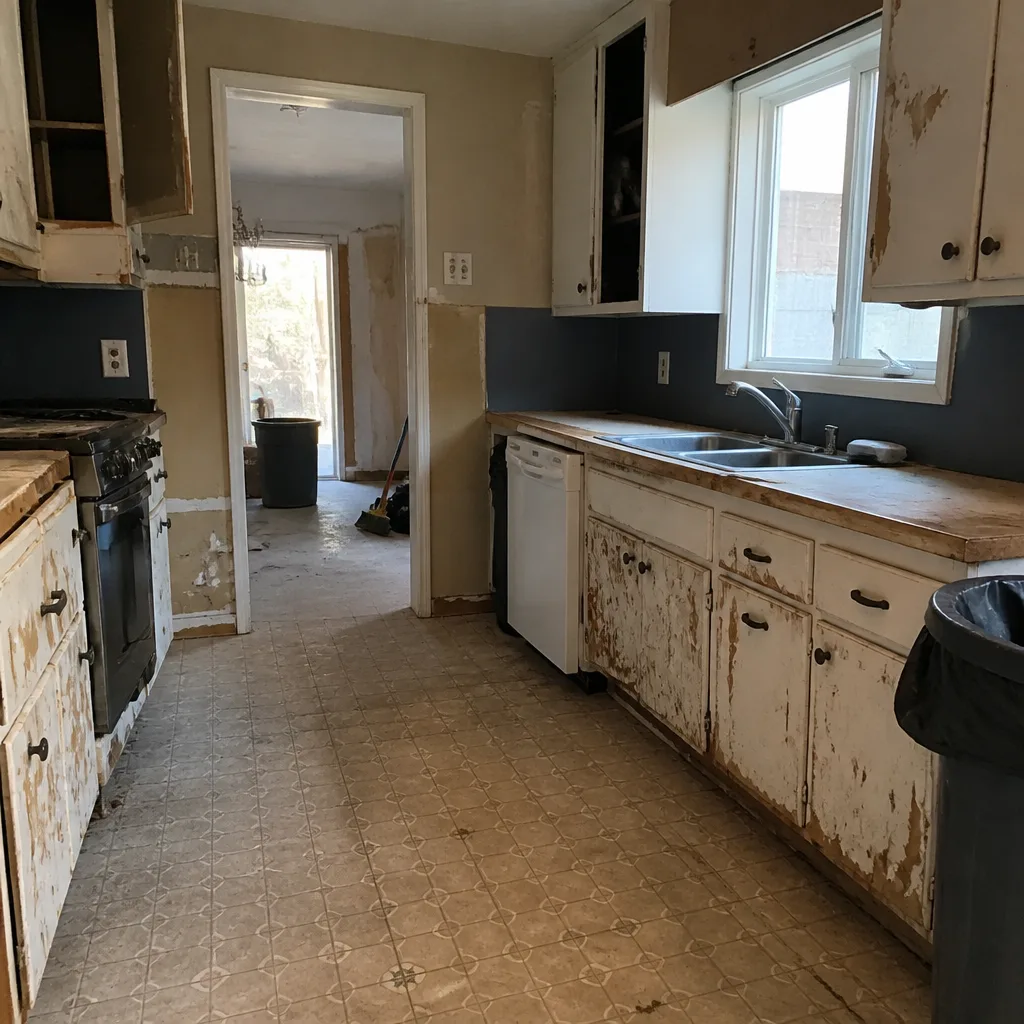 Before
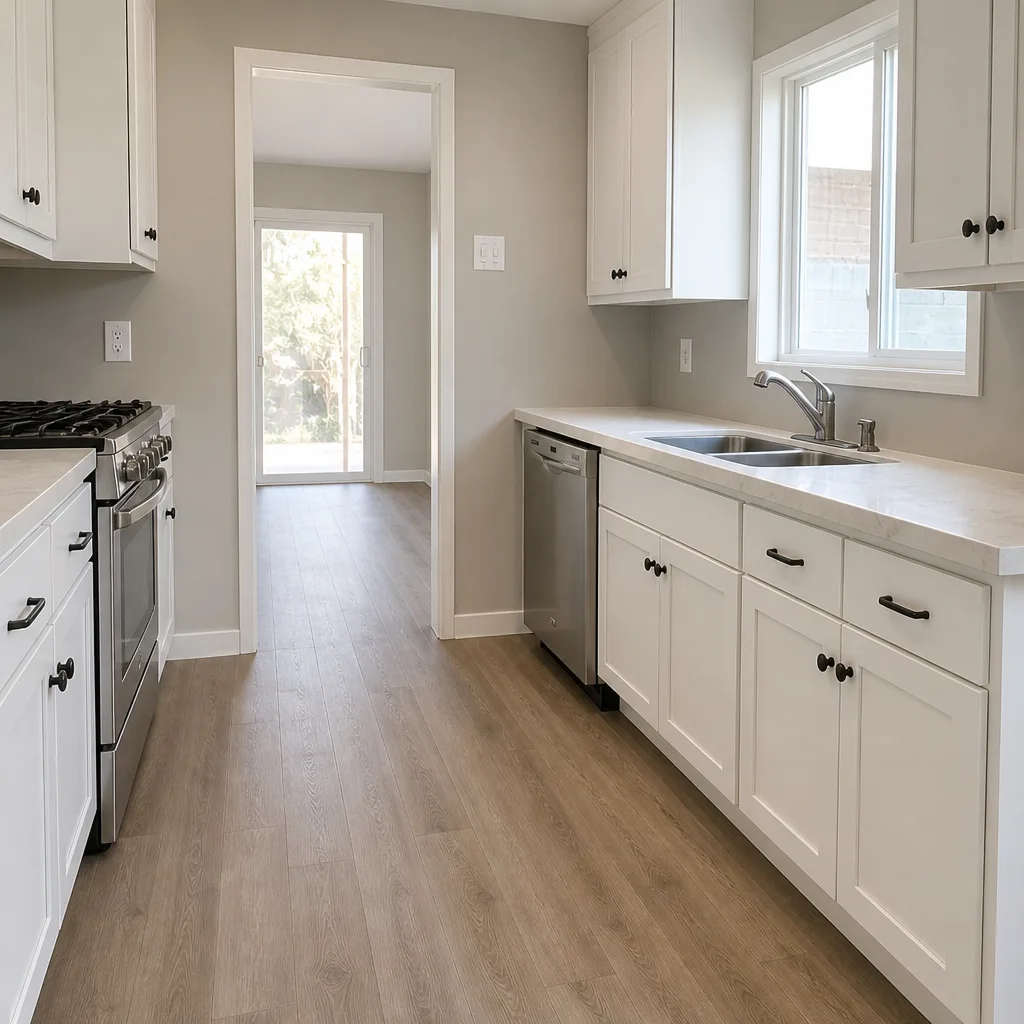 After
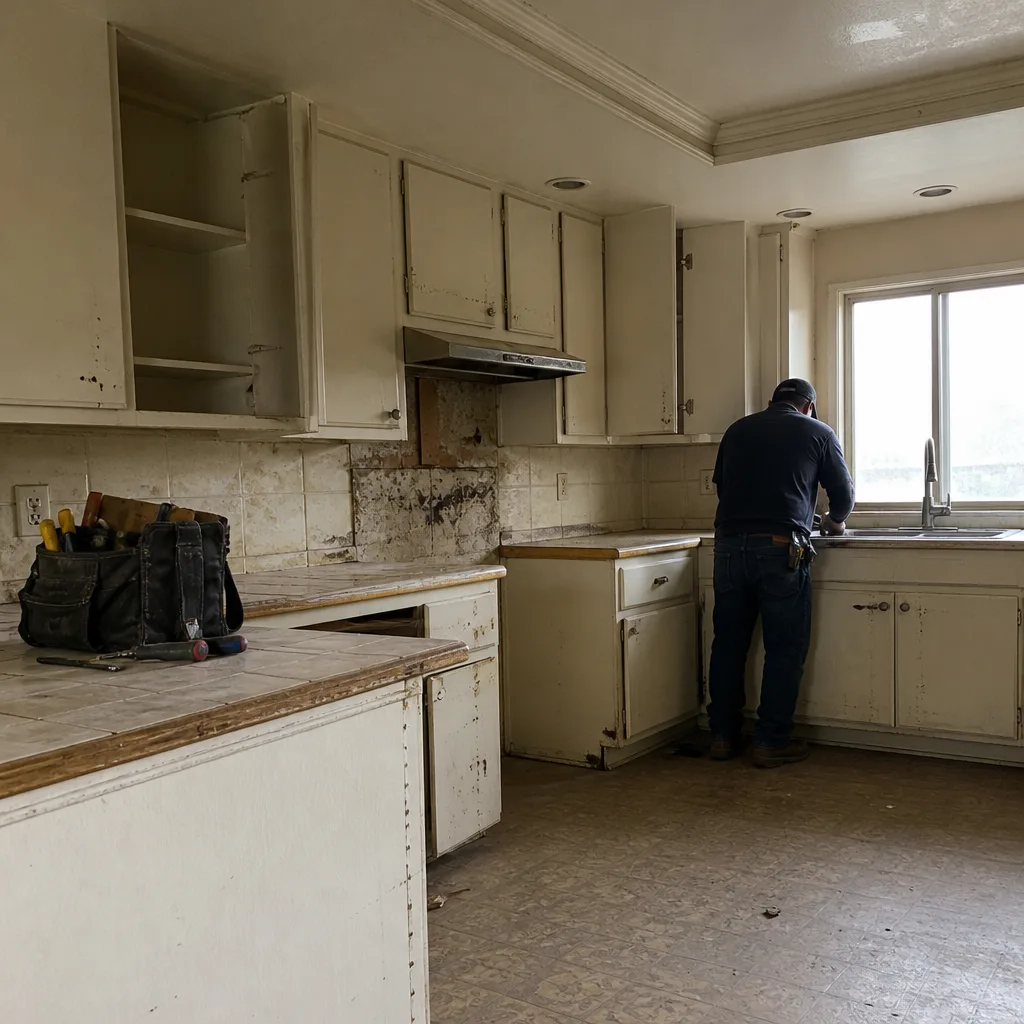 Before
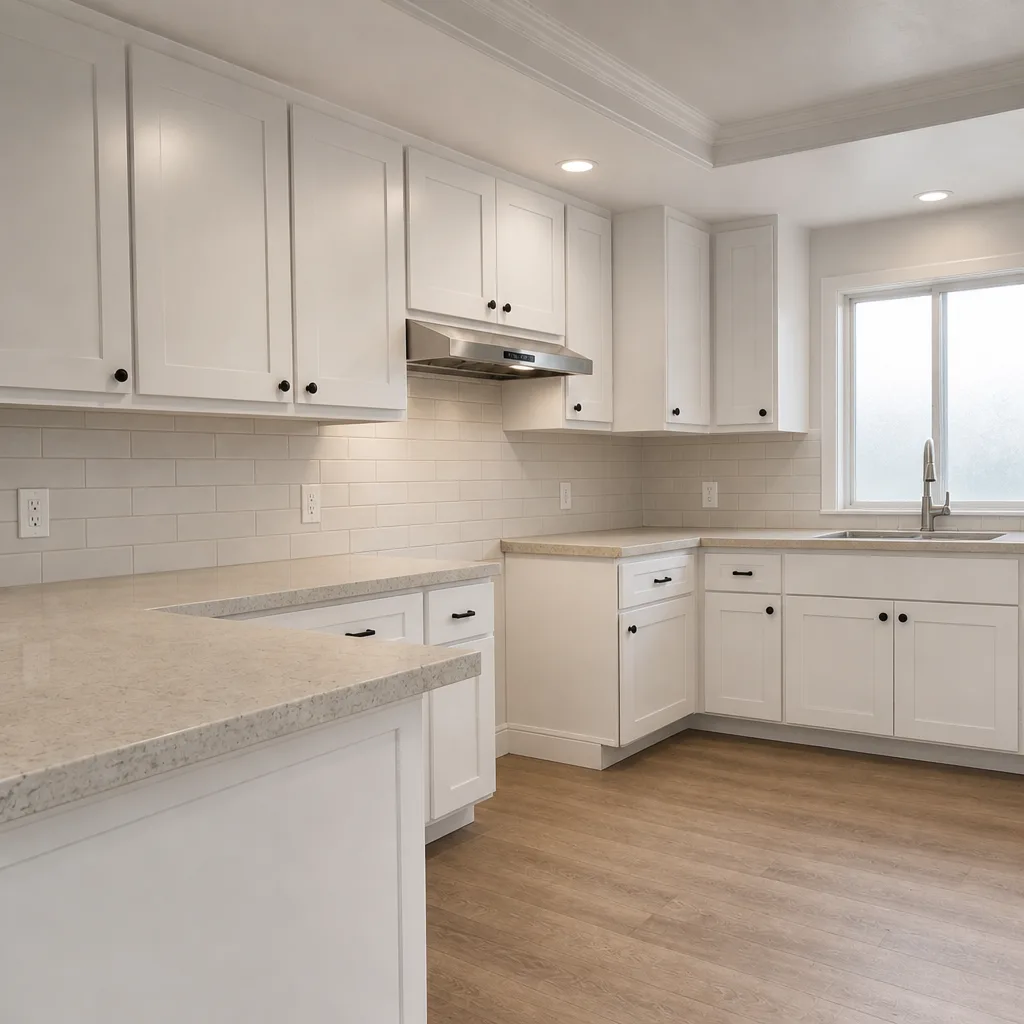 After
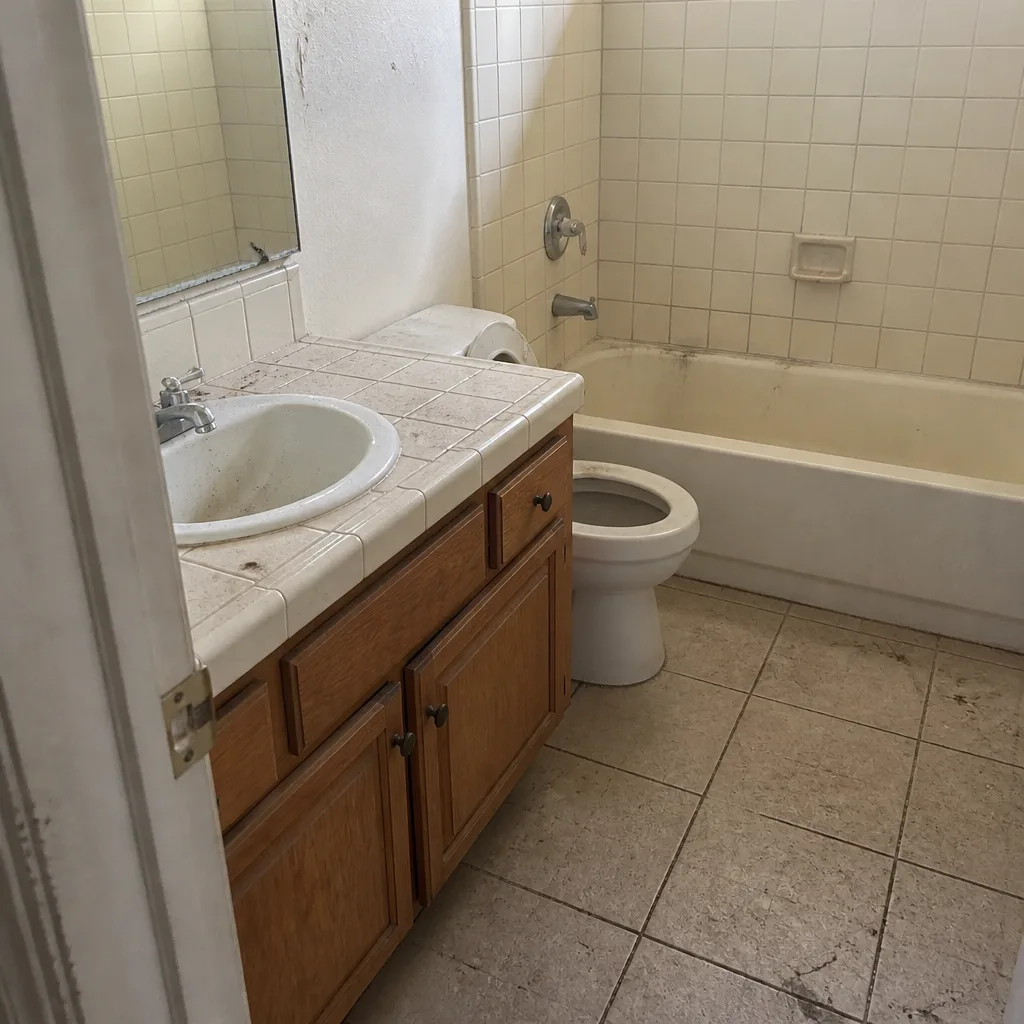 Before
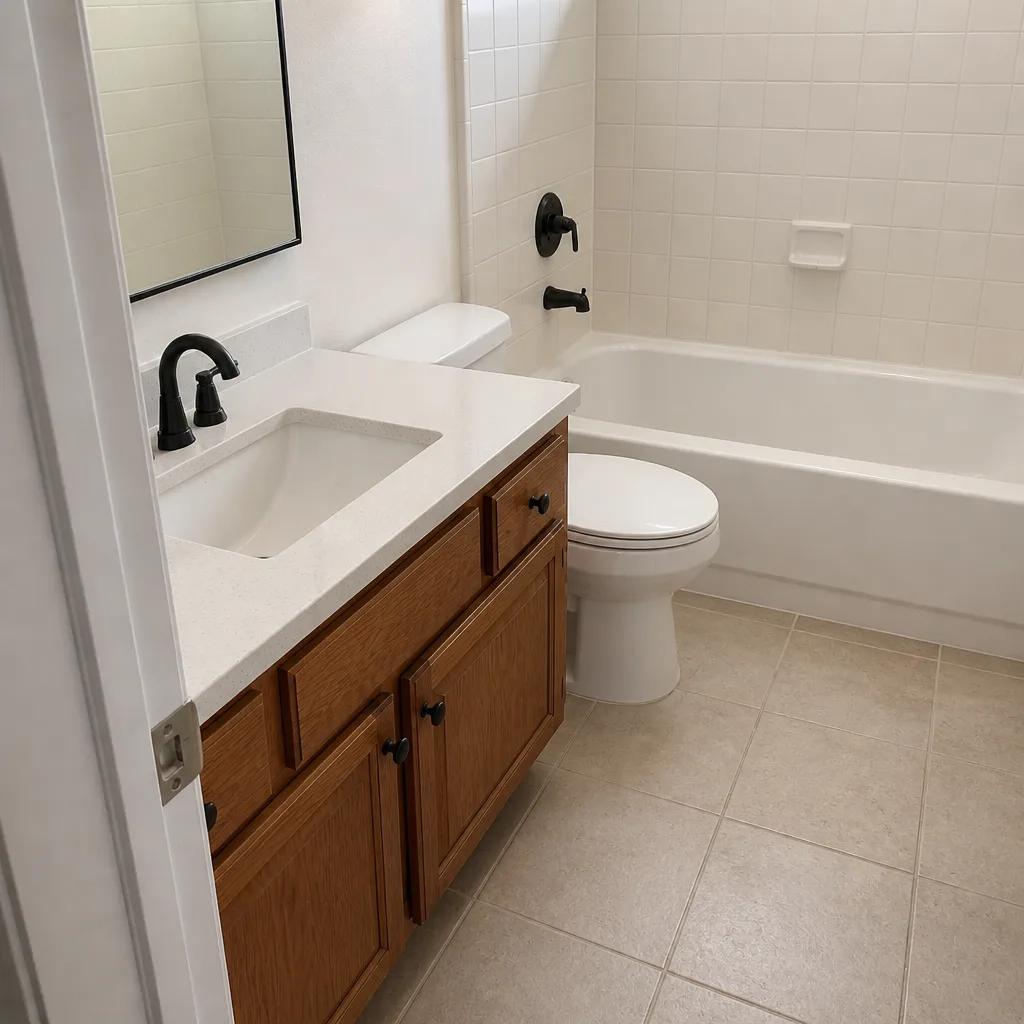 After
The Three-Step Written Escalation Sequence
When a verbal ask isn’t working, escalation should follow a predictable written sequence. Each step is a letter or email, each is dated, and each builds a record for the step after it.
- Notice to Cure. Sent first. It states the problem, the contractual basis, what correction you’re requesting, and a deadline (10 to 14 days is reasonable for most non-emergency items). It offers to discuss. Most disputes end here.
- Notice of Breach. Sent if the deadline passes without correction. It states that the work is in material breach of the contract, restates the outstanding items, and says you intend to pursue remedies if a resolution isn’t reached within another stated window. Attach your evidence (photos, inspection reports).
- Demand for Arbitration or Small Claims Filing. Sent only if step two fails. If your contract has an arbitration clause, this is where you invoke it (or propose it in writing as an alternative). If the contract has no arbitration clause and the amount is small enough, the California small claims court is a fast, low-cost option. Include the amount you’re seeking and a summary of your file.
Which is appropriate when? Notice to Cure for almost every issue. Notice of Breach when you have clear evidence and a deadline has been broken. Arbitration or small claims when the contractor is unreachable, has abandoned the job, or has refused a reasonable correction. Never skip step one, and never send step three with language you can’t back up – a demand letter reads better when it’s calm and specific.
How the Right Contractor Prevents These Problems Up Front
The best fix for contractor problems is a contract and a process that make them rare. Most of the issues in this guide trace back to three gaps: no written scope, no written price, and no written guarantee. When those three are in place before a single cabinet is pulled, you’re starting from a foundation you can hold someone to.
That’s the standard we work to. Every project gets a written price up front, so the number on day one is the number on the invoice; a defined arrival window; a clean job site at the end of each day; and a written guarantee on every job. The 365-Day Done Right Promise means if something fails inside that period, we come back and fix it at no charge. If a repair fails, there’s a free second visit – no service call, no re-inspection fee. Our technicians are background-checked and stay in uniform on every job, and a live person answers the phone around the clock, so you’re never stuck in a voicemail maze when something goes wrong. Materials come from brands like KraftMaid, Wellborn, Cambria, and James Hardie, which carry their own warranties alongside ours.
We’ve seen that when you’re comparing bids on a general contractor in Irvine, the contractor who hands you a written number before work starts is the one whose problems are smallest. Get the price in writing, get the guarantee in writing, and hold both to it. If you’re planning a kitchen remodel in Irvine or a bathroom remodel in Irvine, insist on that before you sign. It’s the single most useful step you can take.
Common Mistakes to Avoid
- Signing a scope-free contract. If the contract doesn’t list materials, quantities, and finish standards, you have no measuring stick when something looks wrong. Insist on a written scope.
- Paying in full before work is signed off. Final payment should follow final inspection and a clean job site, not a “we’re almost done” call. Once you’ve paid, your leverage shrinks to a letter.
- Making changes verbally. A hallway conversation about moving the toilet becomes an unpaid invoice dispute. Put every change on paper, with a price, before the trade touches it.
- Skipping the license check. Irvine permits and inspections are strict, and a licensed contractor has met state requirements and has a CSLB record you can search. Unlicensed work can also void your homeowner’s insurance.
- Not asking for lien waivers. On any project with subcontractors, ask for them at the final payment. In California, a subcontractor’s preliminary notice can outlive a paid general contractor.
- Waiting too long to document. By the time a homeowner calls us about a stuck job, the phone logs and texts have too often been deleted. Start the paper trail the first week a problem appears.
- Settling verbally for a compromise you can’t prove. If you agree to a fix and a refund, write it down and sign it. Verbal compromise is how the same problem comes back six weeks later.
When to Call a Professional
Some of the fixes in this guide are things you can do yourself: writing a notice, keeping a log, asking for lien waivers. Others aren’t. Call a licensed professional when the problem involves structural work, water intrusion, electrical or gas components behind the finish, or anything that’s already failed twice. Water damage in a bathroom you can’t source, a kitchen floor that’s suddenly bouncy underfoot, a wall that’s settling unevenly – those need trained eyes before they become expensive. And if you’re contemplating a new project and want a baseline before committing, that’s a good time for a professional assessment. Penhallow Remodeling Irvine offers free estimates in Irvine – call (888) 704-4104 to schedule one. A written estimate costs you nothing and settles more questions than a forum thread ever will.
Frequently Asked Questions
Write down what’s wrong, compare it to your written contract, and send the contractor a dated notice to cure that references the specific scope language. Do that before you do anything else. That single written message protects you if the dispute escalates, and most contractors will respond to it. If you’re unsure how to phrase it, call (888) 704-4104 and we can point you at the right next step.
Usually far more than the dispute is worth, which is why the CSLB complaint process and small claims court exist. In California, small claims handles many contractor disputes at low cost without a lawyer. For the money many homeowners spend on a consultation fee, a written, dated notice and a clean file often achieve more. Call (888) 704-4104 for a free estimate if you’re comparing a repair against a replacement.
It does real work: the CSLB can order corrections, mandate restitution, and discipline a contractor’s license. The catch is that outcomes depend heavily on your documentation. Homeowners who file with a clean file get action; those who file with a story and nothing else get a form letter. Start the paper trail early.
In California, yes, if the subcontractor met the preliminary notice requirements and wasn’t paid. That’s why you need lien waivers from each sub at final payment. If you receive a preliminary notice, keep it and note which sub it came from. If you’ve received a lien notice in Irvine, call (888) 704-4104 – a licensed contractor can help you sort what’s actually at stake.
Deadlines vary by the type of claim: contract claims have shorter windows than property damage claims, and CSLB complaints have their own considerations. Don’t sit on it. The best move is to start documentation immediately and send your notice to cure within days of discovering the issue, not months.
An estimate is a range. A written price is a number you can hold someone to. Our process gives you a written price before any work starts, so the invoice matches what you agreed to. If your contractor can’t commit to a written price, that alone is your warning sign. Call (888) 704-4104 for a free written estimate on your Irvine project.
The Bottom Line
The core of contractor troubleshooting is diagnosis. Workmanship defects are your contractor’s problem; design changes and vague scopes are usually yours. Get the distinction right, document everything from day one, and escalate in writing using the Notice to Cure, Notice of Breach, then arbitration or small claims sequence. Keep a file with dated photos, your contract, change orders, and any preliminary notices. Ask for lien waivers at final payment. And when you’re choosing a contractor for your next project, insist on a written price and a written guarantee before anyone touches a tool. That one standard prevents most of the problems in this guide.
Penhallow Remodeling Irvine is here for the projects that need a general contractor in Irvine who answers the phone and puts everything in writing. Call (888) 704-4104 for a free estimate.
Written by the team at Penhallow Remodeling Irvine.